

Adults love to say children know nothing. Children love to believe they hold the knowledge of the world in their little hands. Personally, I like to think that I know my mom. Who she is when she is not being a mother, that is. When nobody is looking.
My mom was born to a working-class woman and a man who slipped into the shadows at night. My grandmother held her daughter close to her chest, murmuring lullabies in the evenings as she sat illuminated by the yellow porch light of her trailer home. The man stayed out late playing cards and smoking cigars, and often returned with a six-pack to stock the fridge. The term ‘father’ was not even a consideration for this man, nor did he stick around to earn such a title; he left my mom and my grandma for the big city.
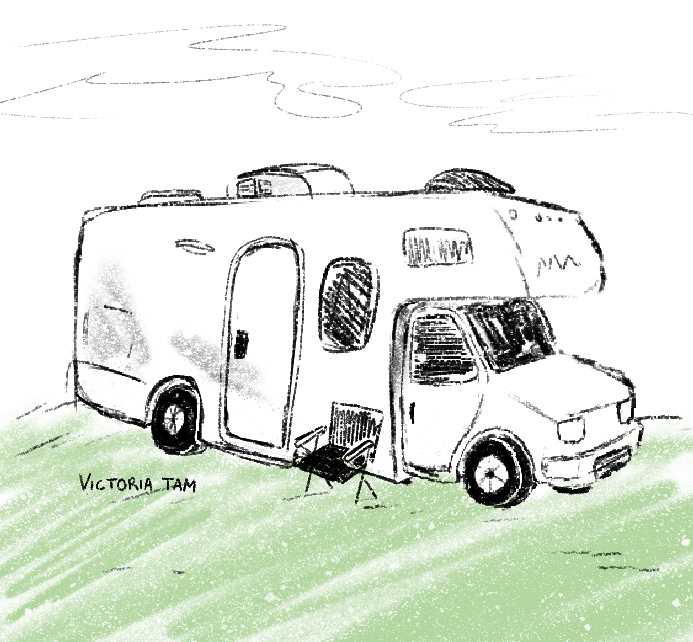
My grandma raised my mom on frozen peas and corn, mushed by a plastic fork into cheap plastic bowls. She scooped them with her finger into my mom’s gummy mouth, smiling at her babbles between the bites. My mom’s room—as much as you could call the back corner of a trailer a room—had a set of bunk beds and a tough little two-seater couch. The top bunk was scattered with stuffed animals and thrifted Barbie dolls, and a celestial mobile was tacked into the upper tough mattress to dangle down above the lower bunk.
After the news that she was pregnant with my mom, my Grandma went to the Dollar Store to prepare that little corner for my mom. She crafted a crib out of foam pool noodles and old bedsheets, fluffing a nest on the lower bunk for my mom to sleep in, safe and sound. My grandma tucked her in every night with a kiss on her forehead and a soft blanket pulled up to her chin.
As my mom grew, so did her curiosity. She would spend days in the woods surrounding the trailer park, chasing squirrels and birds and collecting wildflowers to arrange in a plastic sippy cup. She decorated her little corner bedroom with leaves plucked from their branches and taped to the peeling wallpaper, and daisy chains hanging in place of the mobile. My mom did not remember the man and his stale beer scent, but she would remember the new cloying scent of cologne and the pile of button-up shirts stacked on my grandma’s bed.
Then, my mom had to clear some of her bedroom space for a little sister. My grandma told my mom the big news over boxed mac-and-cheese one night while the tall, clean-shaven, cologne-scented man held her hand. I like to think that my mom was excited to have some company her own age; company aside from birds and wildflowers.
My mom graduated to the top bunk—proof that she was growing up—and her sparse collection of stuffed animals was stacked neatly at the foot of her bunk. The finishing touch to her little sister’s space was the celestial mobile tacked back on to the top bunk, dangling above the pool-noodle crib.
Soon, my grandma fell pregnant with a third child, a sweet baby boy. The clean-shaven man swapped places with a carpenter, and she moved her family into a condo on the outskirts of town. My mom was charged with walking her little brother and sister to school in the mornings and feeding them dinner; the inevitable parentification of eldest children coming to fruition.
My mom and her sister had to share a room when they moved in with the carpenter, while her little brother got his own bedroom. I suppose that is what happens when a house fills faster than the bank accounts can, but my mom and her sister split the room in two and managed just fine. My mom’s nightstand held a digital alarm clock and a simple lamp, and above her headboard hung a handful of Def Leppard posters stuck to the beige wall with scotch tape. Her bed was made every morning—clean, sharp folds with the turquoise sheets tucked under the mattress’ edge. Her sister, on the other hand, always left her blankets crumpled at the foot of her bed, and dirty laundry littering the floor.
I will have you know that while my mom was a diligent student, she knew how to have fun. She studied late into the night by the light of her small lamp, memorizing the periodic table with Guns ‘n’ Roses playing on her walkman. The weekends were spent at her friends’ houses, especially after the carpenter moved out and my grandma began bringing home a slew of “work friends”. Eventually, one of them stayed, but there was a time when my mom met a new man every month.
During this time, my mom found herself in the kitchen more often than not, hunched over the rickety stove and making up recipes for her siblings to try. Frozen peas, instant mashed potatoes and pan-fried hot dogs were her signature. Salt and pepper were a constant, and on occasion, a spoon of fresh garlic mince and some roasted asparagus would make an appearance for a gourmet celebratory meal. When my grandma surprised her with a bag of chocolate chips, she spent time perfecting a chocolate chip cookie recipe, soft and gooey on the inside and golden on the outside. Sometimes, she wished her mother was home to taste her culinary creations rather than being downtown sharing a pack of cigarettes with her co-workers, or scrubbing toilets to pay the electricity bill.
My mom got her first job at fifteen, clearing tables at a truckstop near her high school. She collected tips in her apron pocket, wrinkled bills and grimy coins left on the wooden tables after customers had licked their plates clean. She counted them on her walks home, her fingertips feeling the ridged edge of the quarters, the smooth edges of the nickels, and the endecagonal edge of a loonie—her favourite. She stashed her savings in the top drawer of her nightstand in a washed-out sauce jar, and she would splurge periodically on a thick cozy sweater or a sparkly pair of shoes during trips to the mall with her friends.
In her last year of high school, my mom was working full-time at that diner: seventeen years old and managing the night shifts. She supervised and trained employees twice her age and carried the heavy weight of responsibility at home, where her siblings were now old enough to cook, but not quite responsible enough to clean up after themselves. She studied obediently for biology tests and trudged her way through English papers; wielding words was never her strong suit. She attended concerts with her friends and picked up extra shifts at the diner when her co-workers called in sick.
The career fair came in early spring. Every day at lunch, a few recruiters from local organizations set up collapsible tables by the cafeteria doors and draped them with squeaky vinyl tablecloths. They would lean forward in their creaky plastic chairs, handing out information leaflets and answering students’ questions.
The day the Canadian Armed Forces sent Recruitment Officers with a stack of clean edged tri-folded pamphlets, the forest green camouflage of their uniforms caught my mom’s eye. She squared her soldiers, crossed the hallway from the library towards their little table, and reached for a pamphlet.
She brought home a business card with the Recruitment Centre’s address and phone number printed on it in neat lettering. I like to think she pinned it on her wall above her bed, alongside all her band posters. I do know for sure that a few weeks later she took the bus downtown and spent her Saturday interviewing and filling out paperwork at the Centre.
My mom built her career from the bottom up. She dragged herself through basic training and clawed her way up the ranks. She beamed at my grandma in the crowd during the enrollment ceremony. She shook her bosses’ hands as she accepted promotion after promotion, observing the world around her as she rose high and steady. She learned how to command a room, and she went on training courses to strengthen her body and mind. I can tell you, she loved her job. She still does.
She met my dad while working in administration, and still she knew how to have fun. She spent her nights dancing at the local bars, friends by her side and music in her ears, and her days filing away documents and sending emails. My parents walked across the office to each others’ cubicles throughout the days, exchanging daily news and offering crumbs of their lives. My mom brought him homemade chocolate chip cookies one day, and then more often. That must be why he fell for her. Her cookies are amazing.
Their life together started on New Year’s Eve, when my father bundled up his courage and handed it to her in the form of an invitation: a New Year’s Eve party at his friend’s apartment followed by a trip downtown to watch fireworks decorate the night sky. My mom read the card at her desk and looked over the cubicle wall towards him. He was watching her for a reaction, a creeping blush staining his face. She smiled at his bashfulness, and told him of course she would go.
That party was the end of the beginning. She felt herself propelled towards a destiny she had thought unattainable in the years before: a family of her own. She had climbed into the taxi all dolled up, dressed in sleek maroon dress pants and a flowy cream blouse and her best costume jewelry. She had straightened her auburn hair so that it swooped down and brushed her shoulders. When I see pictures of that night, I think my mom is the most beautiful person in the world. I bet my dad thought so too.
When I came into the world, all wrinkly and screaming, I like to think that my mom saw her life stretching out before her, intertwining itself with mine. When she got married to the love of her life seven months later—looking like the most beautiful woman on earth, might I add—I like to think she saw her world expanding infinitely to every corner of her existence. That is how I think it should feel, at least—like you are following your unique yellow-brick road down the path of life, to experience what everyone at some point wishes for.
Sometimes, after my mom has scolded me for neglecting my chores or skipping out on schoolwork, I lay on my bed beneath my popcorn ceiling decorated with glow-in-the-dark stars. I look around the room that she once told me is the same size as her first home. That old trailer by the woods with her little corner bedroom. I look at the family photos hung on my wall, snapshots of my parents, me, and my little sisters at Disney World, or cooking Christmas dinner, or playing at the park. I try to picture it all, how it was before those photos could exist.
I see my mom’s youth in her excitement to finally see Def Leppard live. She has listened to their music for thirty years, after all. I saw her inner child that night when she came home, joy shining in her eyes and a million videos filling her camera roll. She posted them to Facebook the next morning.
I see her youth in the way my father can make her smile after hard days. He whispers sweet nothings into her ear when he thinks us kids are not paying attention. She lets herself fall into his arms while they laugh; I can see the comfort they hold for each other. I watch them talk about work and their life—the same way I speak with my friends—and I remember that he is her friend, too. The friend she chose to spend the rest of her life with.
I see her youth in the way she calls my grandmother, bright-eyed to tell her about a new craft she is working on or a new recipe that she wants her to try. I remind myself that she is a mother, but she is also a daughter.
I like to think of my mom when she was younger. I try to step into her shoes. She has lived a life that I never saw, just as I live a life that my future children will only ever see through old photos stashed on hard drives. She is my mother, yes, but she was also once a girl. And I think that is important to remember.


Casey Wintonyk is a BA English student at Carleton University. She loves trying new foods, thrifting
and driving; she often compiles poetry in her head during late-night drives. Words are her favourite
way of perceiving and processing the world around her, and she is excited to be able to share some
of her work through Sumac’s newest issue.