Category: Issue 2 Poetry

  • Fate Lies In Red Thread

    Fate Lies In Red Thread

    Two people, connected.

    Connected through two lives.

    A life that could have been beautiful

    Was hard and exhausting instead.

    You cut it short in a night full of tears

    Raising that cold metal to your temple.

    You could no longer withstand the pain,

    Knowing acceptance

    Wasn’t going to come anytime soon.

    Your families soon saw

     They were keeping you from

     True happiness, and so

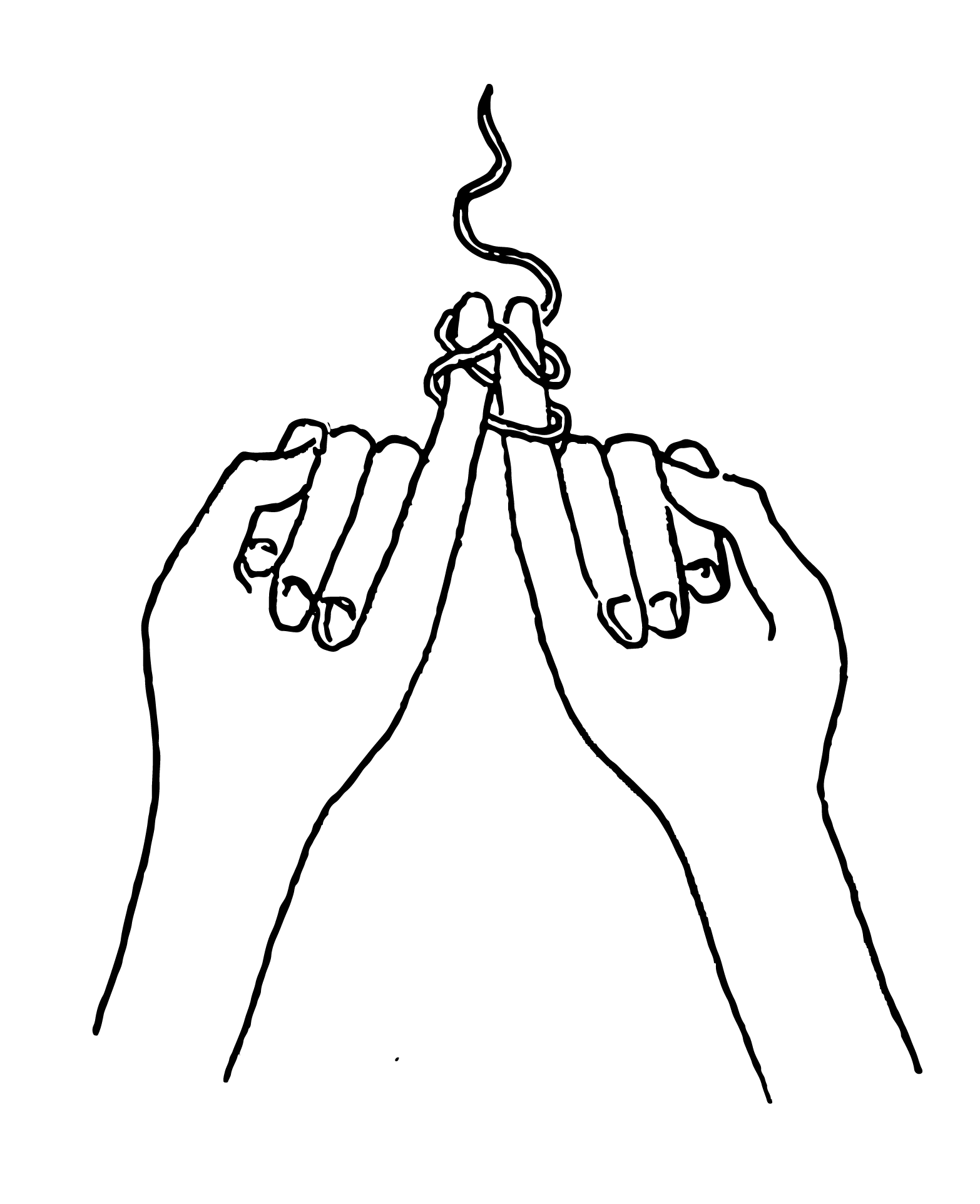
    At the funeral, your pinkies were tethered

    With a string in the colour red;

    Legend promises it links lovers

    Together in their next life.

    The world was ready for you this time.

    The moment your eyes met: overwhelmed.

    You couldn’t describe the feeling, but

    You knew you’d found the one you’d been missing.

    Fate tied you together so your love could blossom;

    Another chance for you, and

    The people who made your past

    Impossible–the ones that missed you dearly.

    No more pain, no more sadness,

    Only your love out in the open.

    All thanks to an attraction that existed 

    Despite no body to harbour it in, and

    A dainty red string, whose meaning is

    Entirely simple, yet so complex:

    “Until we meet again.”

    Sydney Jordan is a third year Carleton student in the BA of English program. She can be contacted via sydneyjordan@cmail.carleton.ca or 343-260-9593. The piece of literary work submitted is titled “Fate Lies in Red Thread” and is a poetry piece with a word count of 201 words (33 lines). Sydney has not published any of her works in the past.

     

  • Well that’s Rich! (2020)

    Well that’s Rich! (2020)

    I stand

          in line

    for the

           fruit punch 

    boxed juice

           and straws

    to pierce the

            plastic 

    clutching three

             new ‘scripts

    can’t remember

             whether it’s 

    red pill

              or blue wire

    they only 

              serve tea 

    twice a

              day to

    keep our

              caffeine intake 

    in check

               I like

    sitting

              on the window

    ledge of the

              conference rooms

    I go to

              to take my 

    calls in in the

               evening

    one night

               I wandered the hall 

    at 2am

              sat in

    the TV room

              to watch the snow 

    that’s when

               I met Maria

    “I need to

               put on my 

    moisturizer” and she

               took out 

    one of

               those Becel 

    margarine cups

               they bring            

    with break-

               fast and     

    rubbed it

                into her pores

    Maria said

               she was going 

    back to Tehran

               to kill 

    the man

               who killed

    her father and when I

               left she

    waved goodbye

                and yelled 

    through the self-

               locking

    doors

               and she 

    told me

              she loves me

    she called

               Vlad 

    Michelangelo

               because of

    the angles

               of his cheekbones 

    Vlad gave me

               a shirt

    with holes

               I think 

    because I only

               wore

    the hospital

               gowns 

    and Maria

               gave me

    a dead 

               pen the ink

    already crisp

               as the November           

    air when 

               I smoked 

    my first

               dart

    in ten

               days.

    Simon Turner’s poetry has most recently been published by Sumac Literary Magazine, The Fiddlehead, and flo. Simon is a disabled student in the English PhD program at Carleton, lives with a potato of a cat, and has had four plays staged in Peterborough/Nogojiwanong, either at or in collaboration with The Theatre On King.


  • generic vampire poem

    generic vampire poem

    I sink my

    teeth

    into

    your text.

    I scroll through

    vineyards

    of

    unskippable ads

    and wonder what

    I’ll have

    for lunch.

    Simon Turner’s poetry has most recently been published by Sumac Literary Magazine, The Fiddlehead, and flo. Simon is a disabled student in the English PhD program at Carleton, lives with a potato of a cat, and has had four plays staged in Peterborough/Nogojiwanong, either at or in collaboration with The Theatre On King.


  • EXERCISING WONDER

    EXERCISING WONDER

    I go for walks like I did at age 6

    6-year-olds don’t follow one path, 

    They don’t regulate themselves

    Or know when they’ll get tired

    6- year- olds get lost or wander off

    They stop when they see something 

    That excites them

    They ask questions and

    Look for answers around them

    I like to walk like that

    I like to read all the signs

    And jump in the middle spot on the bridge

    I take pictures of the ducks 

    That I can send to my mom

    And lean too far over the railing

    To see them better

    I get distracted by bugs

    And I stop to watch some the snails race

    I take a leaf home with me

    And wonder if a stick is good for walking

    6-year-olds step on spots that no one else will

    Now when I walk, I never know the steps

    As I’m walking where I never have before

    They know the world in a way I want to

    I go for walks now, like I did at age 6

    And try to wonder like them too

    Rey Duff is a writer, wanderer and lover. They write about identity, transit, and, like everyone, love. He’s currently a student at Carleton University where he spends his time walking along the canal, listening to music too loudly and having late-night ice cream cake parties. He’s been previously published in flo. Literary Magazine, Young Voices Magazine, TOP Zine and their bedroom wall.


  • CAN I KISS YOU?

    CAN I KISS YOU?

    can i kiss you?

    when we were little that made it all better

    there’s so much i want to make better

    i don’t want you to ache. I don’t want you to hurt. i don’t want you to hide.

    can i kiss you?

    it’s so scary. to love. to live. 

    do it anyways. do it with me. 

    can i kiss you?

    It feels as though no one like you and i have kissed before. no one so strange. no one so similar.

    can i kiss you? 

    can you love me? can i love you?

    let’s make it all better. 

    and if it doesn’t

    i’ll love you all the same

    Rey Duff is a writer, wanderer and lover. They write about identity, transit, and, like everyone, love. He’s currently a student at Carleton University where he spends his time walking along the canal, listening to music too loudly and having late-night ice cream cake parties. He’s been previously published in flo. Literary Magazine, Young Voices Magazine, TOP Zine and their bedroom wall.


  • Short-Circuit

    Short-Circuit

    I’ve seen you five times now
    (or six, or seven),
    my eyes catching on your silt-coloured hair
    hanging three years longer
    than it used to, a forgotten bowl cut
    turned curtain, shifting
    to reveal an echo
    of the know-it-all smirk you once had;
    I saw you with a book once,
    or rather, my friend did, at a book club
    (didn’t say hi),
    told me she’d been shocked
    to see you and moved on, but my brain
    stayed trapped, circling around
    that dingy Tim Hortons booth,
    that table in the food court where you sat
    in a zip-up hoodie,
    at a dying laptop, learning about
    circuits, or
    maybe it wasn’t circuits, maybe I
    misread the diagrams
    while pretending to look away—
    we shared a bus once, only a few stops,
    me in a throng of bodies, you on an elevated seat
    and for a brief moment I
    thought I caught your eye and
    you waved, so I waved back,
    but then I saw your eyes lock onto another man
    waving, pushing himself towards your seat,
    starting conversation
    about homework and labs and electronics tests
    and I shrunk, sinking
    into the depths of the vehicle, wondering
    if it was my mask
    or my height or if
    perhaps, you’d never known me,
    perhaps, I wasn’t even worth a glance;


    I did see you with a book once
    at the Tim Hortons, eating ramen noodles
    with a tome next to you,
    perhaps Eldest,
    its red coat and gilt letters
    sitting just out of reach of your hands
    and I wondered if your reading was banal
    and nostalgic—or, perhaps, sarcastic,
    self-assigned homework for a scathing critique
    of the novel’s oft-cited failings—
    I remember how snarky you were,
    or could be, latent gems of wit
    a backbone, buried so deep
    it rarely surfaced, emerging as defence
    after months of silence,
    swiftly cutting in its descent, or maybe
    it was always there, but
    only unveiled around friends—
    I saw you with your friend a few weeks ago,
    a girl I’d passed in hallways and classes and bus stops
    and she must have noticed, must have looked me up,
    because she followed me back on Instagram;
    and I keep seeing your hair,
    keep being startled when it sweeps past
    and I see it’s you,
    keep wondering what I’ll say when I’m brave—
    maybe hi, maybe I wish I could say
    I miss you,
    but I’ve never tried, since I barely knew you,
    and you can’t see my face
    with a mask on anyway.

    Rebecca Kempe is a writer and multidisciplinary artist from Ottawa, Ontario. Her work has been published or is forthcoming in flo., The Ampersand Review, and elsewhere. Her plays Each on Our Side and Signal Breakdown were performed in the 2019 and 2021 editions of the Youth Infringement Festival, respectively. She recently self-published There’s Nothing to See Here/Nothing Happens Here, a two-part zine which explores the stagnant (but at times welcome) stillness of the suburbs she grew up in through photography and prose. More of her work can be found at www.rkempe.ca and you can find her online as @arbeeko.


  • Memory Tree

    Memory Tree

    Thick fog, hanging in the air like a bleak curtain. Remembering, picturing blurry silhouettes standing three feet away. Days like this are easiest, the atmosphere so washed out even dull echoes feel real. Days like this are hardest. A self-indulgent lie. On the ground, lying on a bed of pine leaves and moss and torn bits of receipts and oak leaves from last September. Fists clenched, gripping phantoms that will never heal. Rain falls and the echoes grow louder. If only they were here, corporeal, with matching droplets running down their faces. Would you scream, demand explanations? Or stare, until someone looked away?

    Rebecca Kempe is a writer and multidisciplinary artist from Ottawa, Ontario. Her work has been published or is forthcoming in flo., The Ampersand Review, and elsewhere. Her plays Each on Our Side and Signal Breakdown were performed in the 2019 and 2021 editions of the Youth Infringement Festival, respectively. She recently self-published There’s Nothing to See Here/Nothing Happens Here, a two-part zine which explores the stagnant (but at times welcome) stillness of the suburbs she grew up in through photography and prose. More of her work can be found at www.rkempe.ca and you can find her online as @arbeeko.


  • Culture Shock, A Dream

    Culture Shock, A Dream

    your eyes protest | it shouldn’t be this dark when you wake up | turn the lights on | pack umbrellas, tickets and cameras | when the sun rises you will uncover its beauty | get dressed | stumble to the bus stop | board, crash asleep | when your brain wakes, uncover your destination | when the noise fails you will uncover your mother’s reticence | why leave when there’s everything you need, she said | is there anything to see there?

    how do people breathe here | the wall of walls is suffocating and blind | alone, wandering among glass facades and jammed traffic | wires crisscrossed above your head | everything is timely, so orderly and narrow | could you survive the pool of raw ambition | when the crucible burns brighter, will you melt or will you harden?

    gawk at city dwellers | walk in circles, puzzle your way through public maps | wander the busy parts of the city that aren’t real | so spoiled, does anyone actually live here | the fragments of scattered hopes are everywhere | buskers playing horns on a sidewalk | colourful graffiti fills entire streets | every door a history, every street a museum | is there quiet here, or is quiet for the weak of will | for those with shallow dreams

    how exhilarating must it be to live here | not forever, but for a while | feeding on the energy but not adding to it 

    girls hover near a theatre, illuminated from behind by car light | the square is empty, announcing nothing but its own existence | you stumble back to the bus station | camera out, capturing skyscrapers and moving cars | everything you ever wanted was here | but nothing you truly needed

    Rebecca Kempe is a writer and multidisciplinary artist from Ottawa, Ontario. Her work has been published or is forthcoming in flo., The Ampersand Review, and elsewhere. Her plays Each on Our Side and Signal Breakdown were performed in the 2019 and 2021 editions of the Youth Infringement Festival, respectively. She recently self-published There’s Nothing to See Here/Nothing Happens Here, a two-part zine which explores the stagnant (but at times welcome) stillness of the suburbs she grew up in through photography and prose. More of her work can be found at www.rkempe.ca and you can find her online as @arbeeko.


  • Speed Racer

    Speed Racer

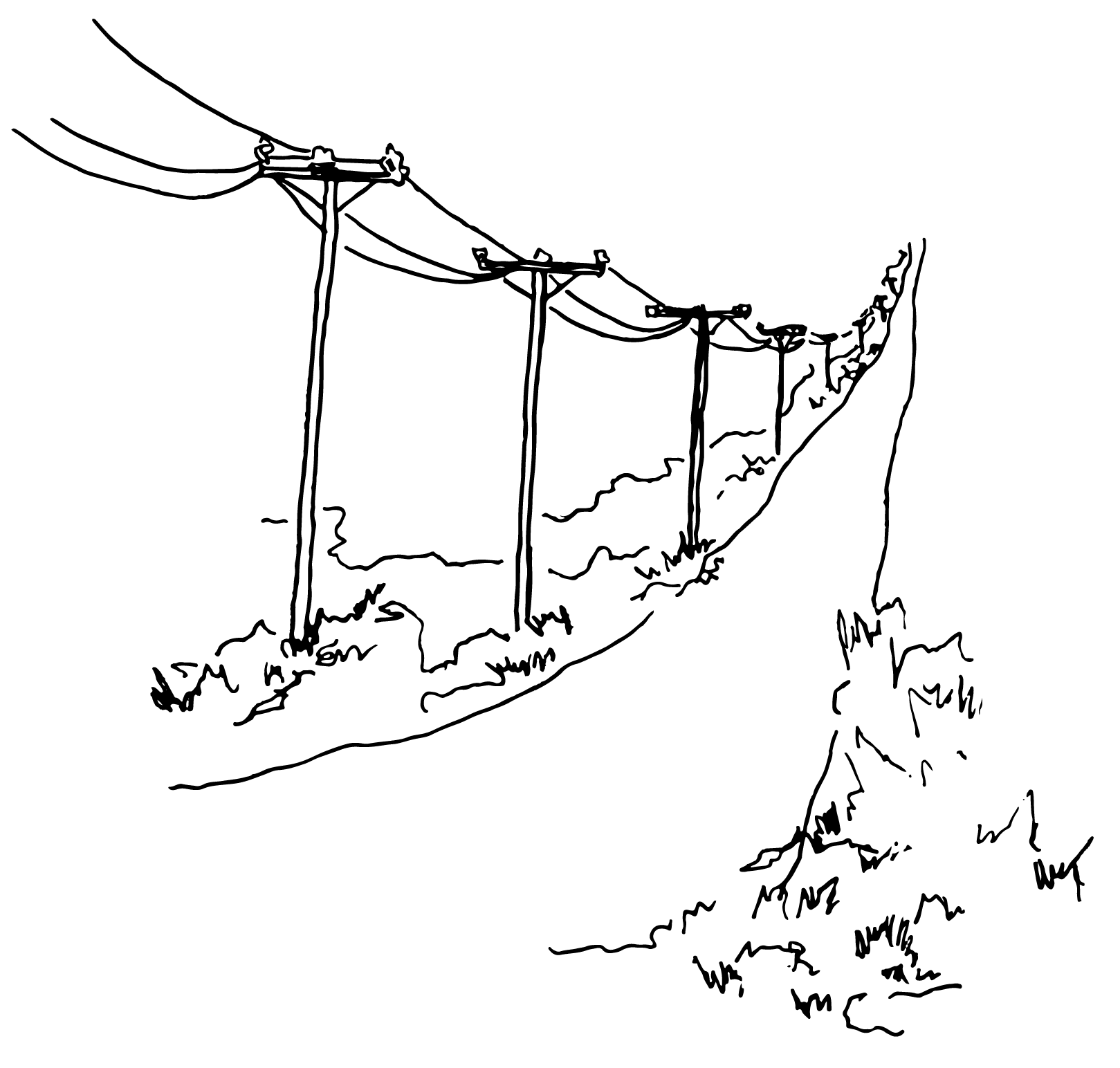
    I remember a straight tarred line piercing this dry and arid land, there was a single powerline to the left of me as I headed to a murky lake, the shrubs that adorned the land were perpetually thirsty due to the seemai karuvelam, a thorny bush left behind by the british as a gift that matched their colonial tendencies, the seeds of the bush were thrown from planes to dry out the land and make it uninhabitable for the revolutionaries and now the only things it deters are pesky cyclists like me who enjoy peddling in deserted roads like this, heading to points of interest in the middle of nowhere, such as the murky lake which houses tiny fish, and then I cycle back home with the sun now leaning closer to the powerline, this road is as constant as my isolation, unceasing and persistent, though at times turning and showing signs of becoming less bumpy and less fraught with thorns. The land being consistent, the wind being the only noise I hear, it carries no scent with it except the sense of freedom that resonates with me.

    Omar Shaji is a first year Undergraduate English Major with a concentration in Creative Writing. He hails from India and is an international student who’ll be going through his winter term from January 8th. He finds the act of talking about himself 3rd person odd and hopes that you bear with him as he tries to sound ‘correct’. Omar’s experiences with Carleton, resting on the unceded algonquin territory is acknowledged by him and the rest of the students at Carleton.


  • Spitfire

    Spitfire

    The curve of a droplet reminds me of your lips. 

    I then think to the light refracting through a summer rain,

    To the rainbows you speak into existence. 

    Nick McKay is a 22 year old English major in their 4th year at Carleton University. They are a non-binary and pansexual poet, but enjoys writing in all its forms, from criticisms to fiction to poetry. While they have written many pieces, they are only at the beginning of what they hope to become a long journey of being published in many different spaces.