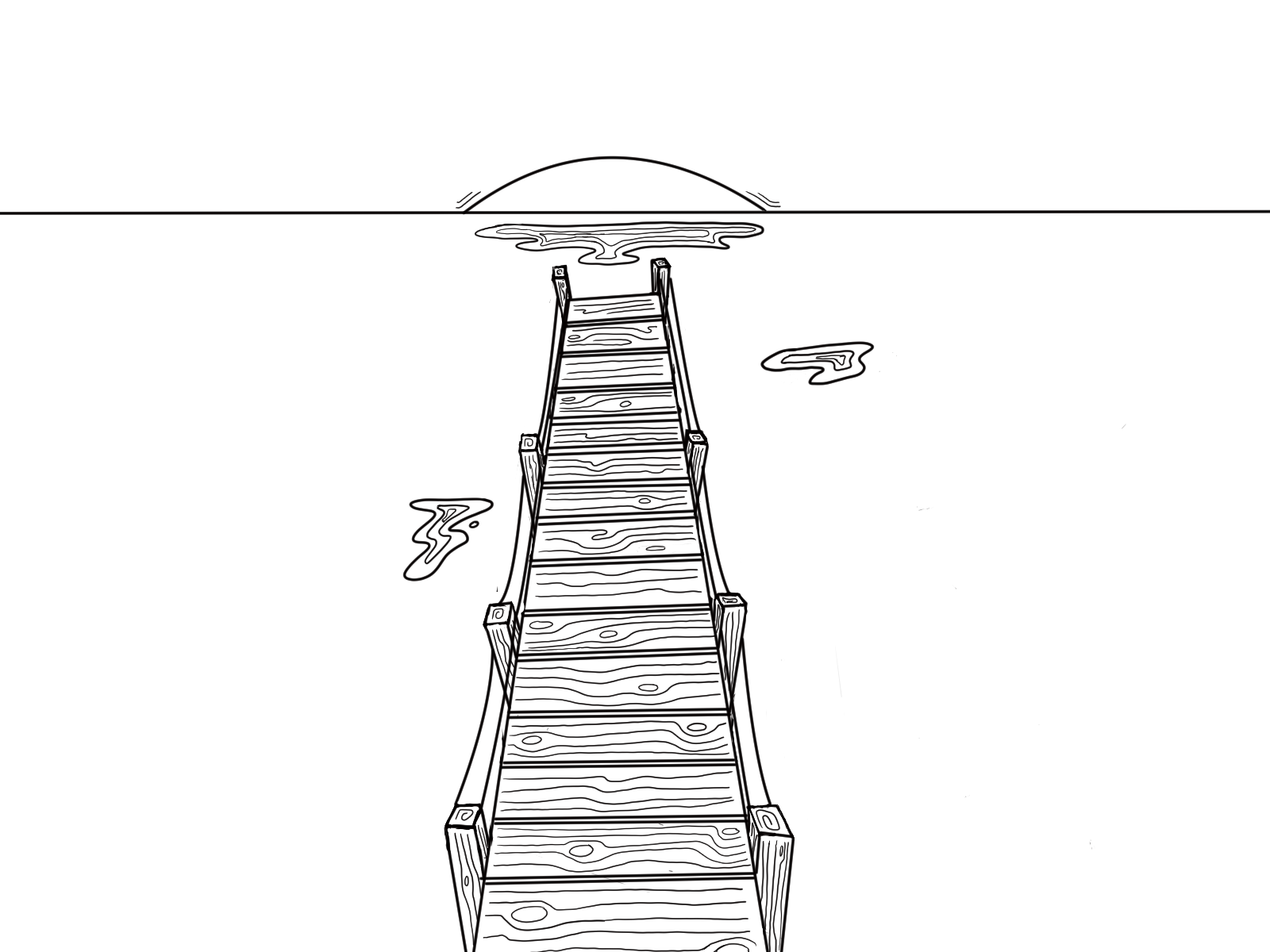
I want to live by the ocean. Trade city slurs for crashing waves
and live on the edge of mother’s fertile frame.
I don’t look in the mirror much. There is a cry calling out to me
from somewhere deep within.
A plea, carried over the water’s face, skimming the spray of the surface— a siren call within my soul, a tension, begging for my attention, between seemingly solid, and not so solid space.
As I breathe in, life pools and moves through, almost releasing as I edge to the bank on the shore where I stand and wait for the waves again.
Alicia Feizo is a Canadian writer and poet from Ottawa, Ontario, land which is recognized as unceded Algonquin Anishnaabe Territory. Her work largely focuses on the themes of trauma, the holistic nature of life, and what it means to be human. She finds inspiration in everyday experiences and draws from the well of her rich inner life and the connections that nurture her soul.
We forage for beef jerky, transform water into Red Bull, barter for maps with broken prayers of safety.
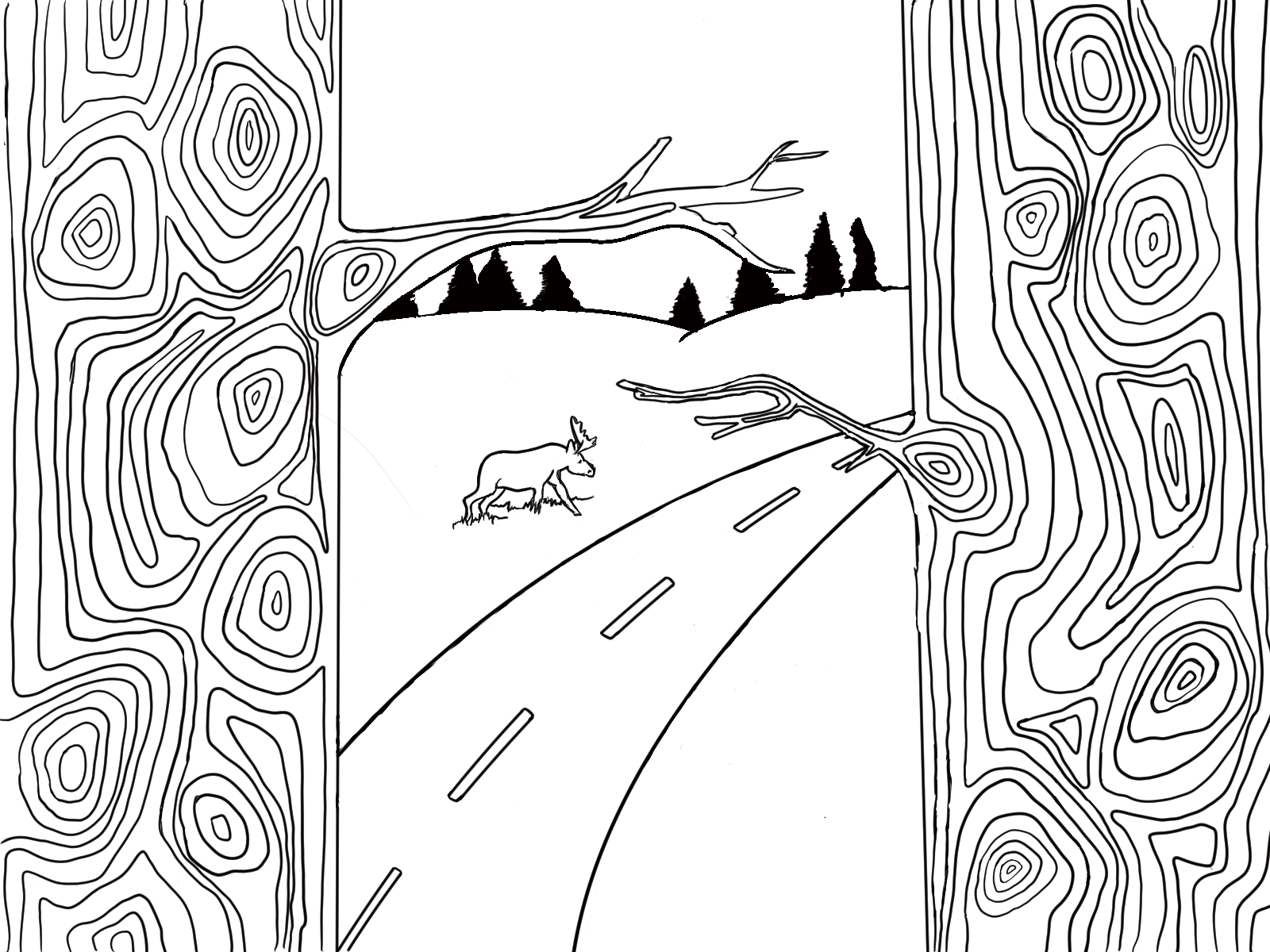
Last Stop Moose Watch —the only signs of civilization for 140 km. The last lights burn out in the rearview mirror.
Your brother tells me this is how he’d do it. An accident. Swerve off the shoulder,
blame the forest.
Forehead to forehead, flesh to antlers, crystalline windshield blankets gravel, thicker than first frost.
Moss grows heavy on the engine, erasing all proof of your existence. If no one is around to take a picture, did you ever even live?
We pull into the next town under careful watch of moose eyes, glowing green between the trees.
Abigail Rabishaw is a 4th-year English major. Abigail is originally from Pembroke but has been in Ottawa since 2015. Abigail typically writes poetry and flash fiction, and her work expires the themes of grief, complicated relations, and the definition of home. Abigail was the runner-up in the 2019 Carleton Fiction Competition, and won the 2023 Lilian I. Found award. Abigail’s work has appeared in bywords.ca, and talking about strawberries all of the time. She also runs a small press called Prime Press with her partner.
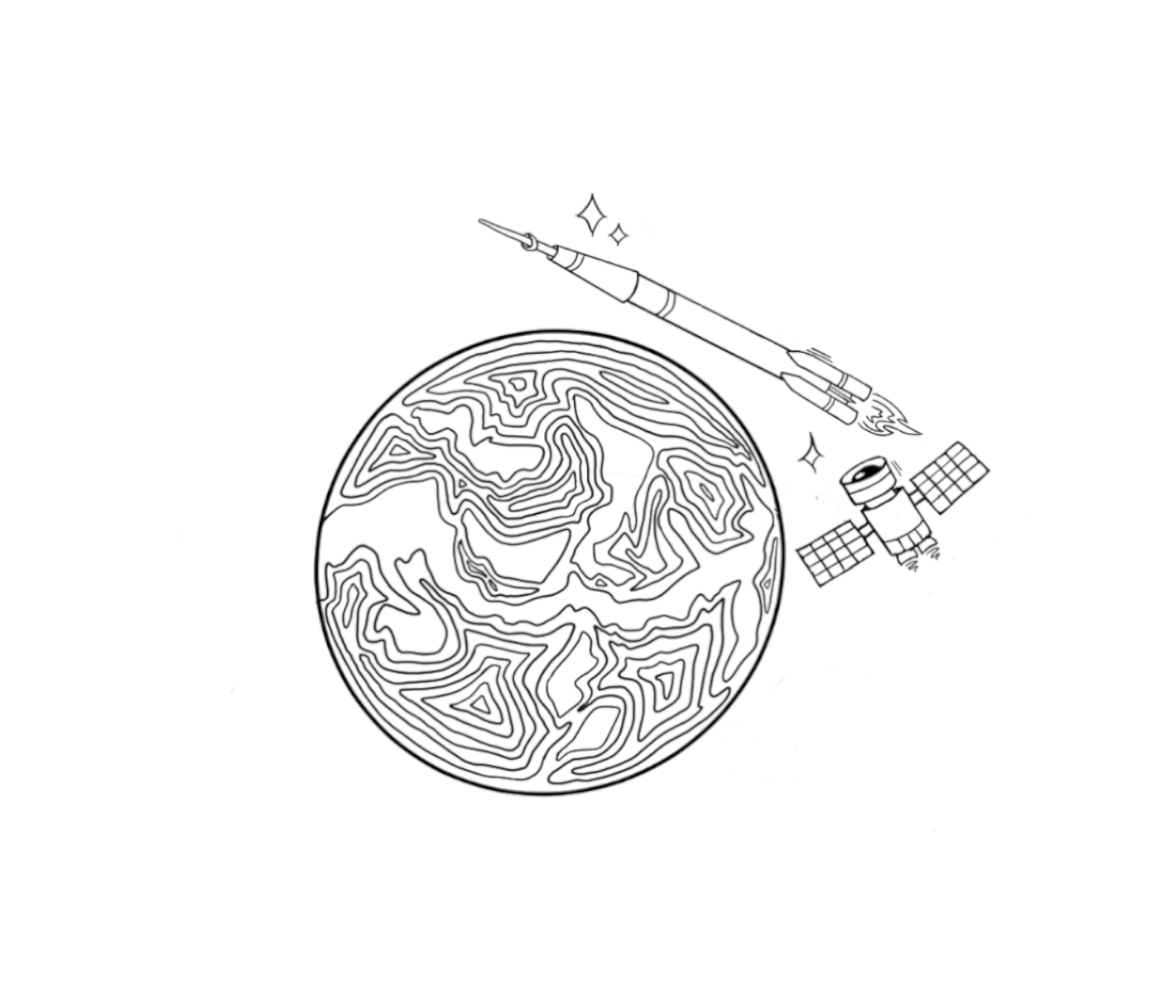
By way of lodestar, we find our way to a dark trampoline, thin crust of frost crunching beneath our backs.
Under November sky, we unearth constellations. Calloused hands trace maps on icy skin, while
you tell me a story of a billionaire and his out of control rocket exploding in the night.
I ask if you think Venus ever considers how the other planets perceive them,
and you tell me to be quiet, to make a wish as it crashes into the moon. Choke on your words, smothering your very own errant satellite.
Abigail Rabishaw is a 4th-year English major. Abigail is originally from Pembroke but has been in Ottawa since 2015. Abigail typically writes poetry and flash fiction, and her work expires the themes of grief, complicated relations, and the definition of home. Abigail was the runner-up in the 2019 Carleton Fiction Competition, and won the 2023 Lilian I. Found award. Abigail’s work has appeared in bywords.ca, and talking about strawberries all of the time. She also runs a small press called Prime Press with her partner.
i was lost, so i killed my sanity/ honed my discipline/ trained to solve non-problems chosen by tortured people/ because i thought i needed to/ to amount to what i wanted to be/
(because society tells us to know the ends before we define the means/ and the means are specific/ the means are the same/ the means are specific and the same)
i wade through this wretched system/ where people look into their futures and see blank pages/ where people desperately type with blunt pencils/ unless they’re too stressed or too buzzed or too tired or too dead to see their failure/ or / unless they’re gods/
(and there are always a few gods/and everyone hates the gods/ everyone envies the gods/ everyone has wanted to murder the gods/ but no one has/ but no one can)
the state of the system: contradiction in and of itself/ amorphous, square/ rigid, fuzzy/ cotton candy, turned to choking hazard/ park bench, turned to avalanche/ sprinkler, turned to hurricane/
(study, turned to survival.)
II.
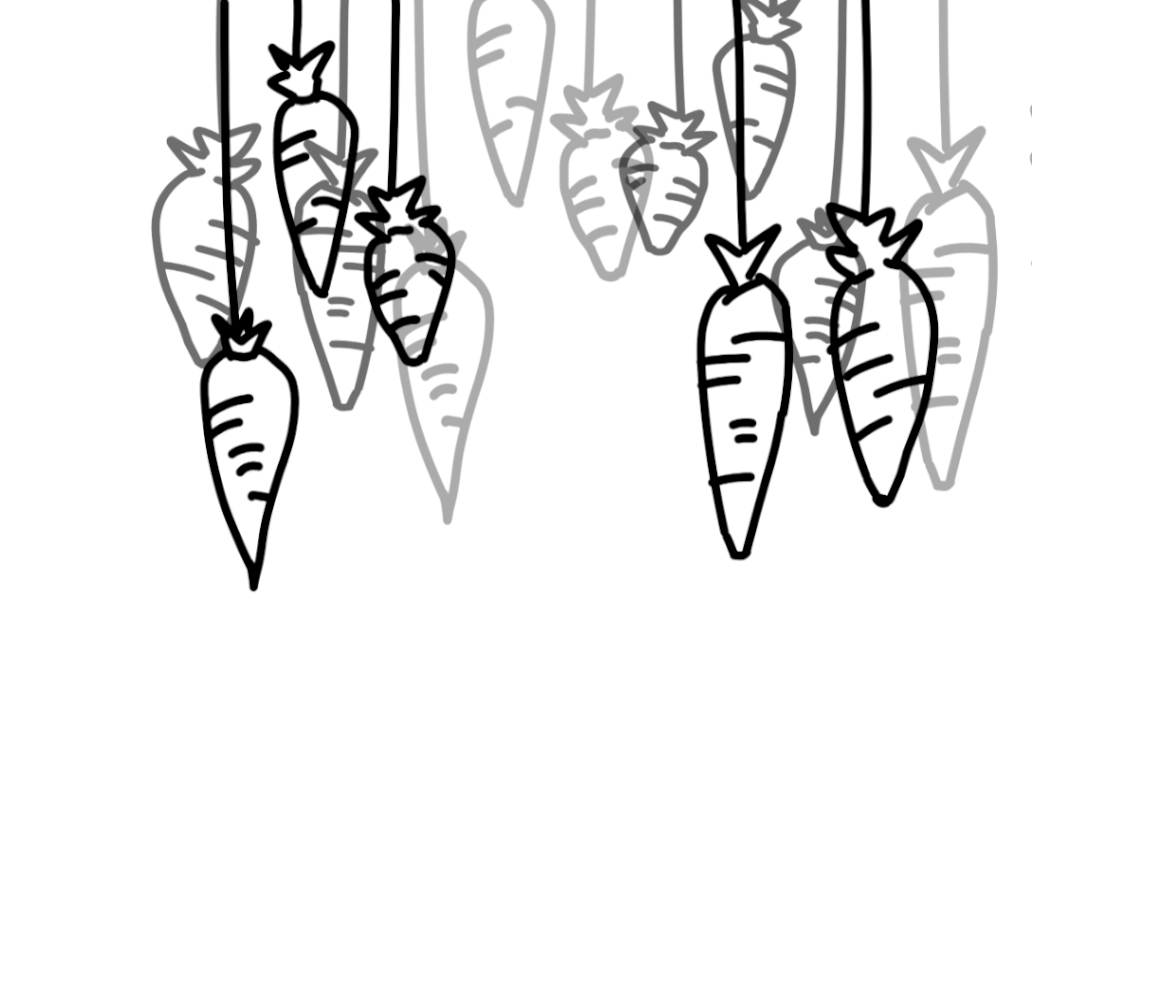
dangle job carrots from classroom ceilings/ too far out of reach/ what’s in reach: long sticks/ stick equals: obscure guidelines/ stick equals: disastrous midterm/ stick equals: impossible workload/ stick equals: disastrous final/ stick equals:/ equals:
(we only think they’re gods/ but deep inside they’re just like us/ trying/ waiting/ sometimes/ like/ like)
are we supposed to build our own ladders somehow/ climb to heights we never wished to achieve/
(like they’re just as lost as we are/ like they feel the pressures we feel)
why reach for the stars when we have no help to get there/ are we supposed to fly when the ladders fall over/ blame ourselves for the fall back to earth/
(like it’s too much effort to pretend to be immortal.)
III.
sit on divine perches/ let the plebes reap the scars of failed bids for ascendance
(as if icarus never fell from the sky/ as if your wax doesn’t melt as you speak)
being a student: like rushing into the line of fire/ feels like: follow your orders/ feels like: flying cockpits into bombfights/feels like: becoming a swashbuckling kamikaze/sounds like: be a good soldier at all costs, my little boy/ good soldier, read: stressed student/ little boy, read: panicked teenager – slash – almost adult – slash – is adult/
(you pretend you were once god at the peak of your powers/ but forget those powers weren’t transferred to us)
when thrown on the fireground with conflicting orders/ do you save yourself though the towers are burning/ do you rush in though you have no training?/
(read: how do i succeed when all i envision is burning/ read: how do i avoid failing?)
and when i revisit the crime scene ten years later/ tell me: should i feel elated or cry/
(read: how do i grow up?)
Rebecca Kempe is a writer, zinester, and multidisciplinary artist from Ottawa, Ontario. Her plays Each On Our Side and Signal Breakdown were featured in the 2019 and 2021 editions of the Ottawa Youth Infringement Festival, respectively. She is the author of “There’s Nothing to See Here/Nothing Happens Here”, a two-part zine which explores the stagnant (but at times welcome) stillness of the suburbs she grew up in through photography and prose. Her work is forthcoming in flo. More of her work can be found at www.rkempe.ca.
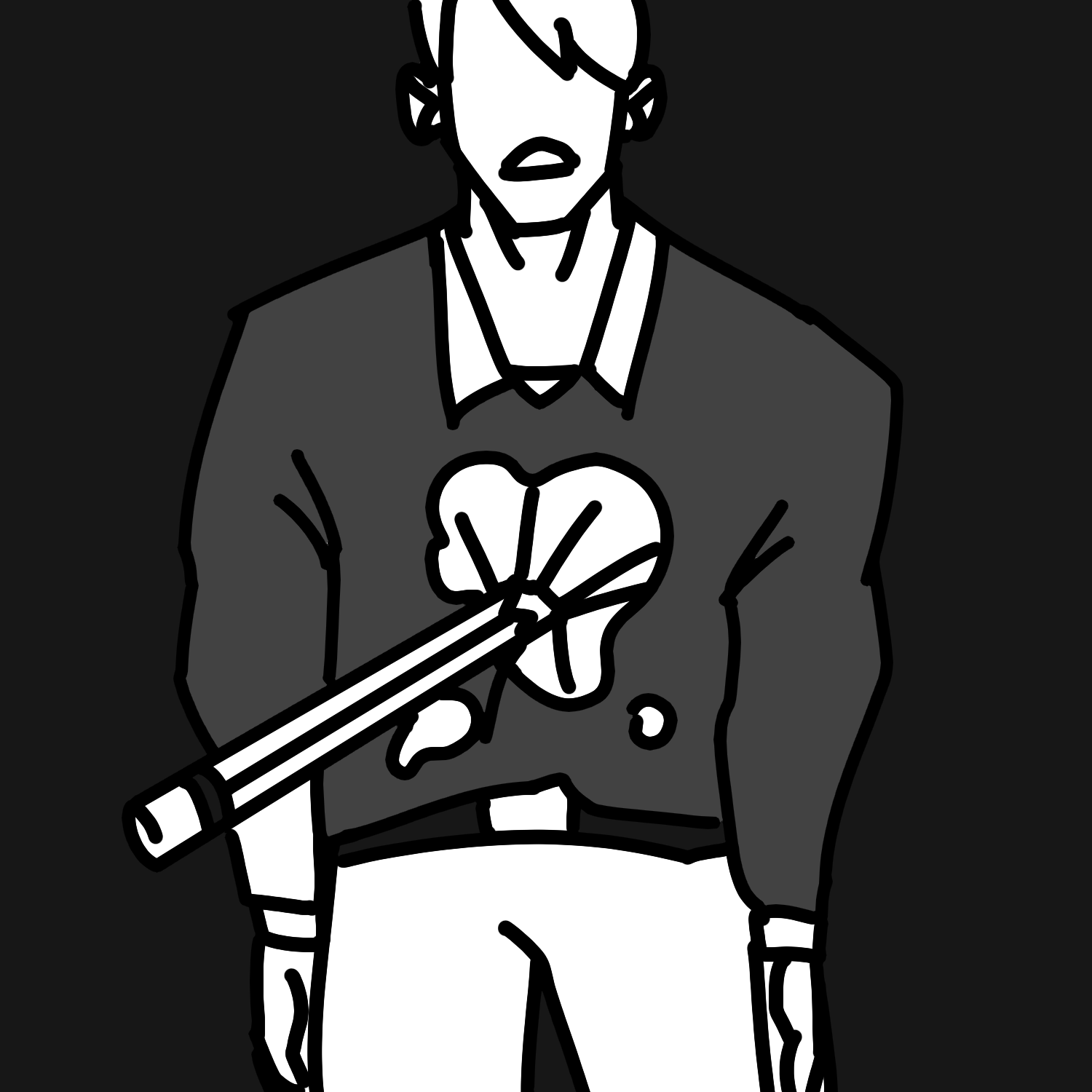
Under the benches of the girl’s locker room, in a small private elementary school, is my deadname, calligraphy in the wood. A pencil with my deadname on it.
Last night my mother finally choked up and admitted, I think you’re beautiful. You’re a beautiful girl.
I’m watching my little girl die.
Is my childhood handwriting feminine? OR DID MY MOMMY STAB ME IN THE SOLAR PLEXUS? With a pencil, with— —my deadname on it. I got compliments once people finally understood what I was mumbling.
That’s a very nice name.
I’m just a mouldy sandwich on the side of the road with parents for bread.
I wish I had nothing to do with the dead little girl I have been dragging around. Why can’t I be beautiful and not a girl, Maman?
Ma petite fille. Je t’aime.
You can’t make a corpse grow any taller or realer. I had to amputate this thing to save myself. Don’t you understand? I will be my own pallbearer.
Li Conde (they/them) is a nonbinary amateur artist and writer. Conde’s poetry is meant to be meticulously paced and easy to absorb. They strive to create art moments that are meaningful to everyone, and are fostering an impulse of imbibing their life with as much art and literature as possible.
This year’s theme for Sumac is “Planting Roots.” As the third issue of this magazine, we wanted to continue with past themes of adventure, but also play with the idea of finding home. Just as the staghorn sumac grows its roots on the land we share, we at Sumac Literary Magazine are establishing ourselves in this community.
We received quite a few submissions that explore the ideas of finding familiarity and comfort in places, objects, and food. In fact, if Sumac received a nickel for every time we received a submission featuring potatoes, we would have three nickels—which isn’t a lot, but it’s weird that it happened thrice. So, we decided to integrate them into our theme in some way, hence the focus on roots (and root vegetables).
A lot of hard work and love went into this issue of the magazine, and we want to acknowledge everyone who helped us along the way. First and foremost, thank you to all of the contributors who submitted to our little magazine. Whether your piece made it into the final product or not, it was a joy and a pleasure to read your beautiful words. We wish we could have included all the pieces that were submitted. We also want to thank all the fine folks on the Sumac team that busted their butts to make this magazine what it is. And a very special thank you to the mentors who guided us along this journey, including Larry Thompson, Master Printer; Kiah Russell, our Teaching & Learning Technician; and our very diligent and very patient instructor, Chris Johnson.
Overall, curating this magazine has been such a remarkable experience for all of us. Without further ado, we present the third issue of Sumac Literary Magazine, “Planting Roots.”
Cheers, The Sumac Issue 3 Editorial Team
The Sumac Issue 3 Editorial Team consists of students who participated in Carleton University’s ENGL 4139 course during the Winter 2025 term.
What is a magazine? How do you carve out something unique while also staying true to what has come before? Can you make that red a little darker? Actually, can you make it a little lighter? What about a little bit more purple? Nope, too much. Can we just go back to what it was before?
These are just some of the questions we here at ENGL 4135 had to tackle while curating and crafting the 2nd issue of Sumac: Finding Your Footing.
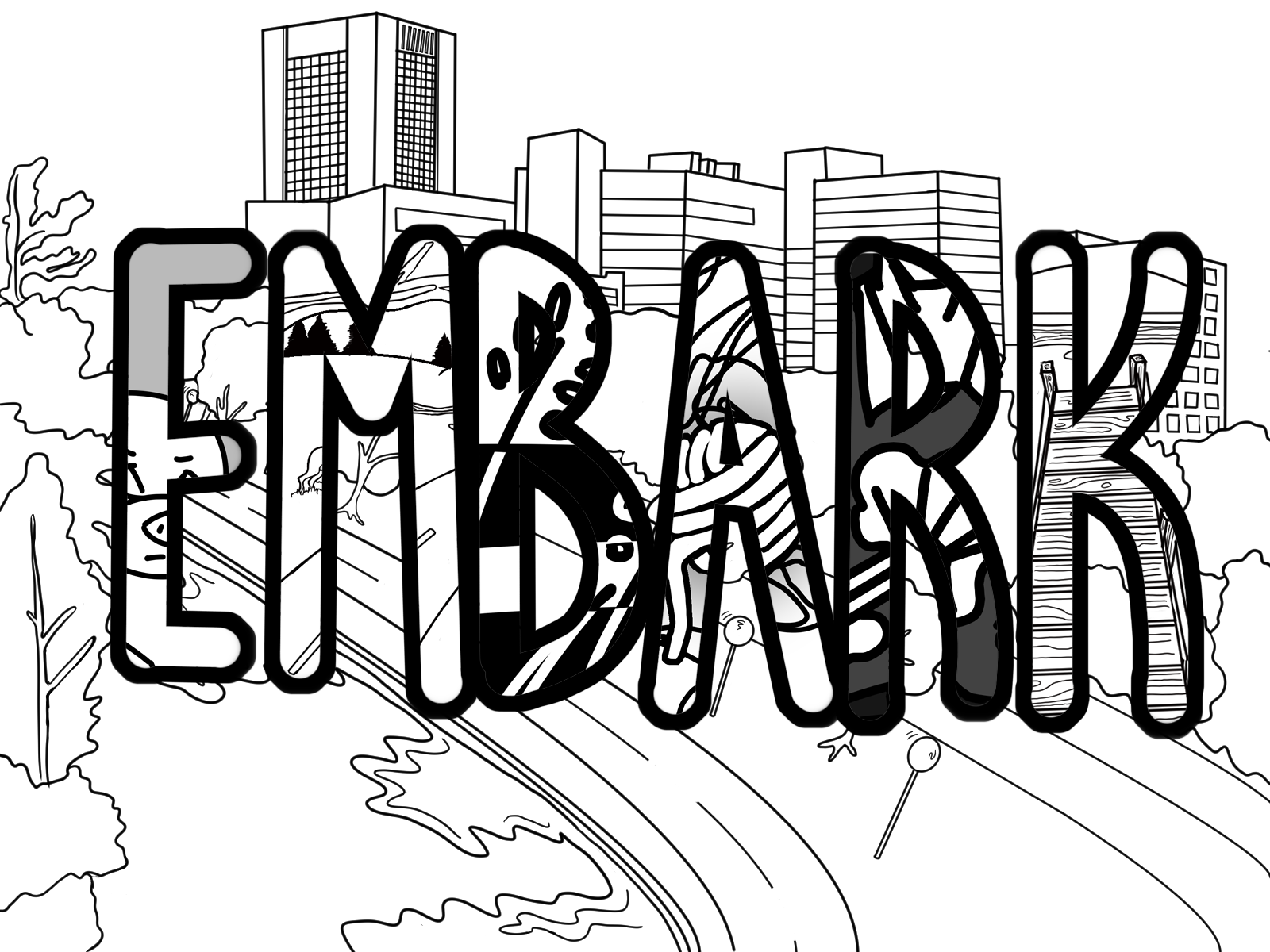
This class is titled Studies in Publishing, but that is a bit of a misnomer. While we did study in this class, most of what we did was, well, doing. We learned on our feet, thrown into the deep end of literary magazine publishing. It was hard to choose the 25 pieces we are publishing from the myriad of wonderful submissions we received from people all across the Carleton community. This year’s theme, Finding Your Footing, continues the journey of words and poetry that the first issue of Sumac, Issue 1: Embark, embodies—many of our contributors are students who are beginning to embark on their life’s journeys and finding their footing in the literary world. Without your submissions, our magazine wouldn’t be able to exist, so to all those who have sent us your writing, from the bottom of our hearts, thank you.
We would also like to thank the incredible work done by the entire Sumac team: our dedicated managerial, editorial, and promotional team members. We could not have completed Sumac Issue 2 without the expert mentorship and guidance of Chris Johnson, our instructor, and Larry Thompson, Master Printer of the Carleton Book Arts Lab, as well as the team that worked on the 1st Issue. You laid the groundwork for us to build upon and inspired us to uphold the standards you set for the magazine.
We hope these stories of discovering places, community, and yourselves will move you as they have moved us. And to any future Sumac team members, remember to take a breath and ensure you’re on solid ground. If you try to run without being sure-footed, you’ll just trip.
— Sumac Editorial Team 2024
The Sumac Issue 2 Editing Team consists of students who participated in Carleton University’s ENGL 4135 course during the Winter 2024 term.
Whether you are finally putting pen to paper, encouraging yourself to start a new hobby, or taking the first step in a journey to self-discovery, starting something new can be daunting. This leaves a choice: keep things the way they are, or embark on a new chapter.
For us students in ENGL 4135, we’ve had the chance to begin something new at Carleton; we were tasked with creating the first Issue of a new literary magazine that would launch in the spring. Each one of us on the team was challenged to make this a reality. Over the course of the winter semester, we made hard decisions, had disagreements, laughed, stressed, and worked hard to bring together this first Issue of Sumac.
We are proud to feature amazing work from many talented writers within the Carleton community with a wide range of diverse perspectives and topics. From relatable tales about living through the pandemic to dynamic portrayals of love, Issue 1 of Sumac brings with it a variety of works that represent the many stories that stem from our campus.
The sumac plant, the namesake of our project, represents the connection between these stories and their authors. Sumac is not only native to Canada, but can be found internationally, symbolizing the far reach of our community, which is made up of many different names, backgrounds, and walks of life. The symbol of the sumac encompasses the roots that bind us together.
We would like to thank our artists/editors, Autumn Swan and Amirah Alam, for their invaluable contributions to the illustrations of this Issue. They both worked tirelessly to create the visual art that complements the amazing pieces of literature from our contributors. Additionally, we would like to thank and credit our website designer Xinpeng Liu, without whom we would not have our magazine. We have been so fortunate to work with such amazing, artistic talent.
We would also like to thank our professor Chris Johnson, our TA Sarah Pelletier, and the Master Printer of the Carleton Book Arts Lab Larry Thompson for guiding us through this very rewarding journey. Their guidance has been imperative to the creation of Sumac, and we hope to leave behind a legacy they can be proud of.
Lastly, we thank everyone who submitted to this first Issue for their contributions. We could not have accomplished this project without our contributors, submitters, and supporters. Your talent, vulnerability, and passion for writing is what keeps little magazines like ours alive.
Sumac Issue 1, “Embark,” marks the beginning of a journey that will hopefully continue within Carleton for years to come. We are grateful for this opportunity to bring Sumac to life and we hope you enjoy the selected works.
The Issue 1 Editing Team ♥
The Sumac Issue 1 Editing Team consists of 11 students who participated in Carleton University’s ENGL 4135 course during the Winter 2023 term.
Introducing the debut issue of Sumac Literary Magazine, “Embark,” created by students of ENGL 4135 over the course of the winter 2023 term. It features 26 works ranging from prose to poetry from members of the Carleton community.