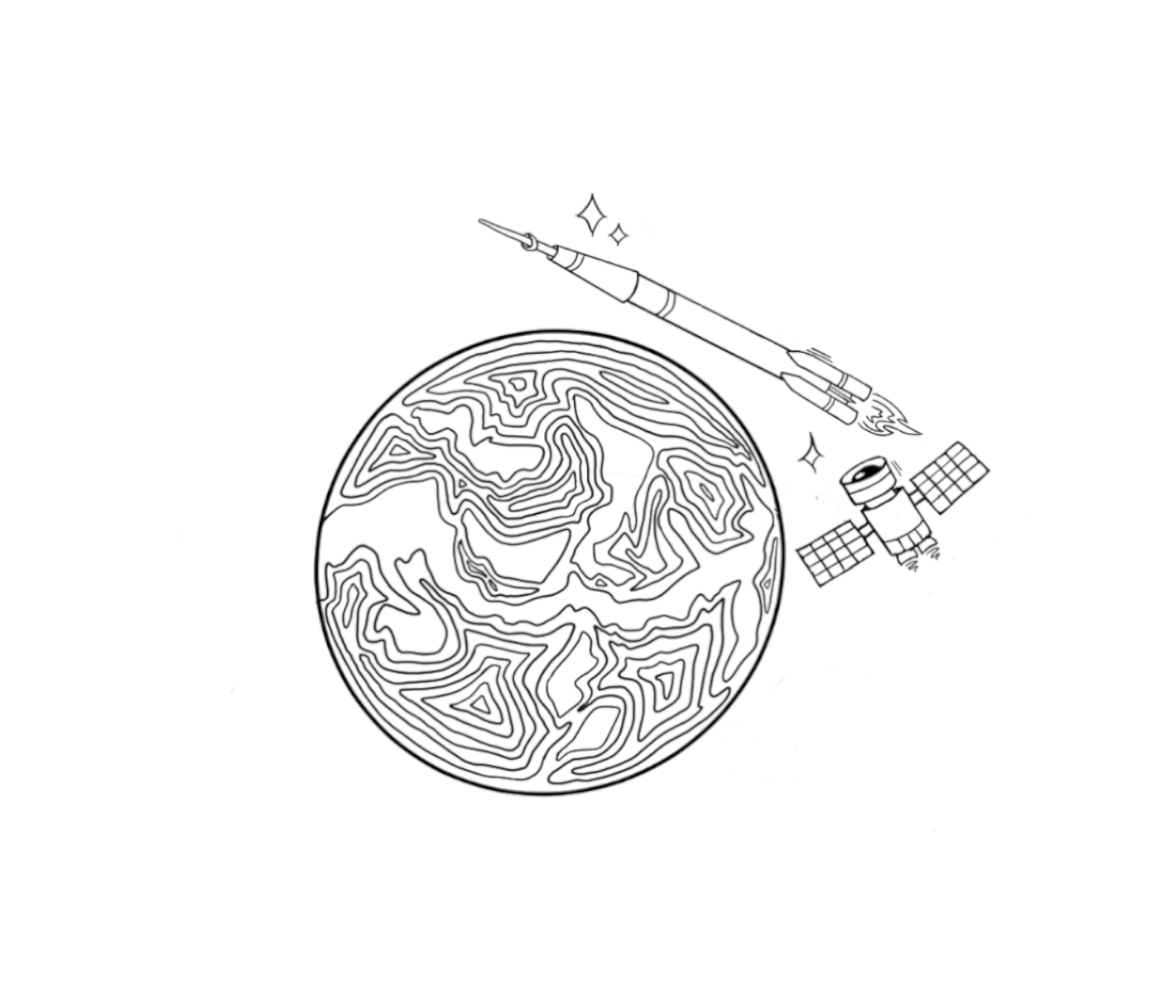
By way of lodestar, we find our way to a dark trampoline, thin crust of frost crunching beneath our backs.
Under November sky, we unearth constellations. Calloused hands trace maps on icy skin, while
you tell me a story of a billionaire and his out of control rocket exploding in the night.
I ask if you think Venus ever considers how the other planets perceive them,
and you tell me to be quiet, to make a wish as it crashes into the moon. Choke on your words, smothering your very own errant satellite.
Abigail Rabishaw is a 4th-year English major. Abigail is originally from Pembroke but has been in Ottawa since 2015. Abigail typically writes poetry and flash fiction, and her work expires the themes of grief, complicated relations, and the definition of home. Abigail was the runner-up in the 2019 Carleton Fiction Competition, and won the 2023 Lilian I. Found award. Abigail’s work has appeared in bywords.ca, and talking about strawberries all of the time. She also runs a small press called Prime Press with her partner.
i was lost, so i killed my sanity/ honed my discipline/ trained to solve non-problems chosen by tortured people/ because i thought i needed to/ to amount to what i wanted to be/
(because society tells us to know the ends before we define the means/ and the means are specific/ the means are the same/ the means are specific and the same)
i wade through this wretched system/ where people look into their futures and see blank pages/ where people desperately type with blunt pencils/ unless they’re too stressed or too buzzed or too tired or too dead to see their failure/ or / unless they’re gods/
(and there are always a few gods/and everyone hates the gods/ everyone envies the gods/ everyone has wanted to murder the gods/ but no one has/ but no one can)
the state of the system: contradiction in and of itself/ amorphous, square/ rigid, fuzzy/ cotton candy, turned to choking hazard/ park bench, turned to avalanche/ sprinkler, turned to hurricane/
(study, turned to survival.)
II.
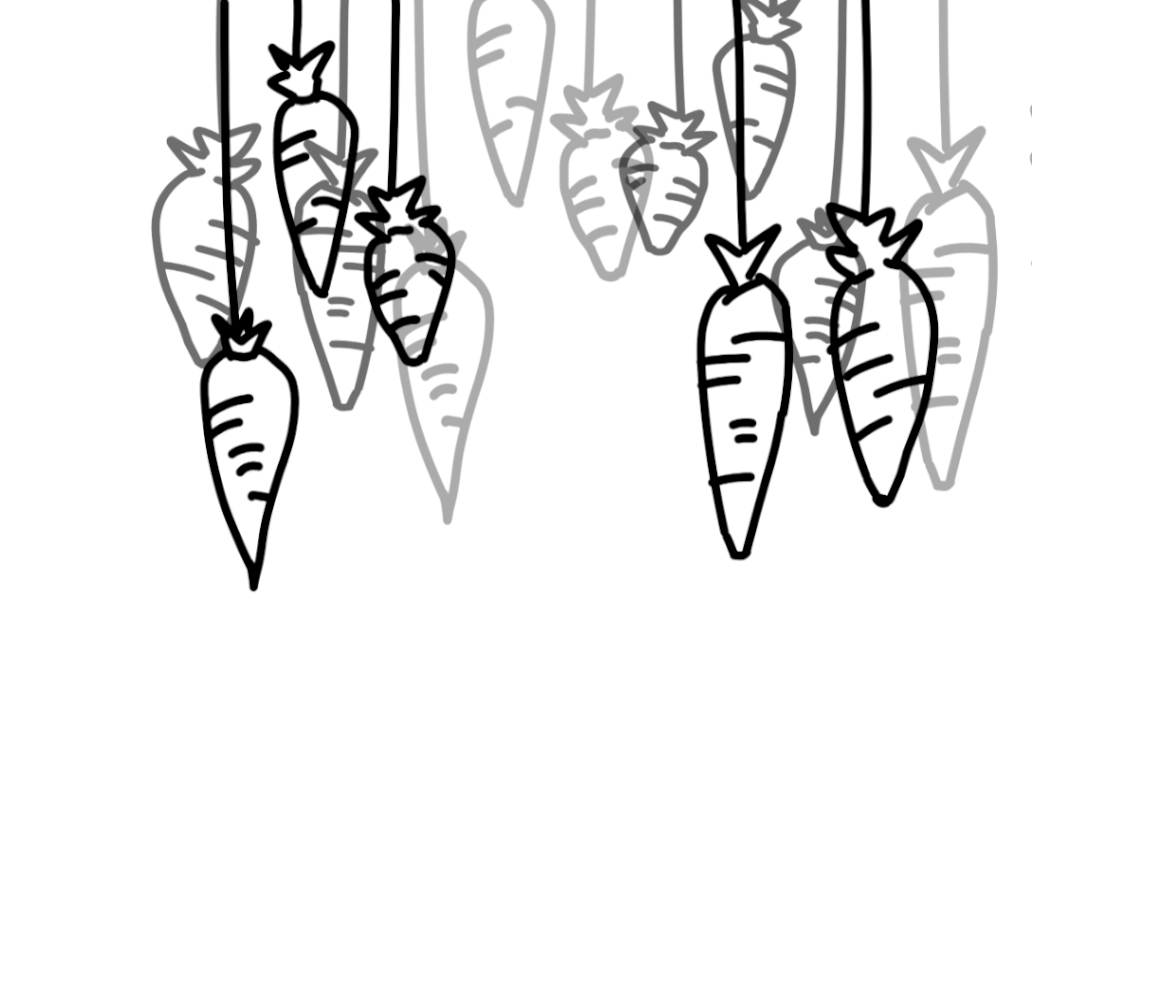
dangle job carrots from classroom ceilings/ too far out of reach/ what’s in reach: long sticks/ stick equals: obscure guidelines/ stick equals: disastrous midterm/ stick equals: impossible workload/ stick equals: disastrous final/ stick equals:/ equals:
(we only think they’re gods/ but deep inside they’re just like us/ trying/ waiting/ sometimes/ like/ like)
are we supposed to build our own ladders somehow/ climb to heights we never wished to achieve/
(like they’re just as lost as we are/ like they feel the pressures we feel)
why reach for the stars when we have no help to get there/ are we supposed to fly when the ladders fall over/ blame ourselves for the fall back to earth/
(like it’s too much effort to pretend to be immortal.)
III.
sit on divine perches/ let the plebes reap the scars of failed bids for ascendance
(as if icarus never fell from the sky/ as if your wax doesn’t melt as you speak)
being a student: like rushing into the line of fire/ feels like: follow your orders/ feels like: flying cockpits into bombfights/feels like: becoming a swashbuckling kamikaze/sounds like: be a good soldier at all costs, my little boy/ good soldier, read: stressed student/ little boy, read: panicked teenager – slash – almost adult – slash – is adult/
(you pretend you were once god at the peak of your powers/ but forget those powers weren’t transferred to us)
when thrown on the fireground with conflicting orders/ do you save yourself though the towers are burning/ do you rush in though you have no training?/
(read: how do i succeed when all i envision is burning/ read: how do i avoid failing?)
and when i revisit the crime scene ten years later/ tell me: should i feel elated or cry/
(read: how do i grow up?)
Rebecca Kempe is a writer, zinester, and multidisciplinary artist from Ottawa, Ontario. Her plays Each On Our Side and Signal Breakdown were featured in the 2019 and 2021 editions of the Ottawa Youth Infringement Festival, respectively. She is the author of “There’s Nothing to See Here/Nothing Happens Here”, a two-part zine which explores the stagnant (but at times welcome) stillness of the suburbs she grew up in through photography and prose. Her work is forthcoming in flo. More of her work can be found at www.rkempe.ca.
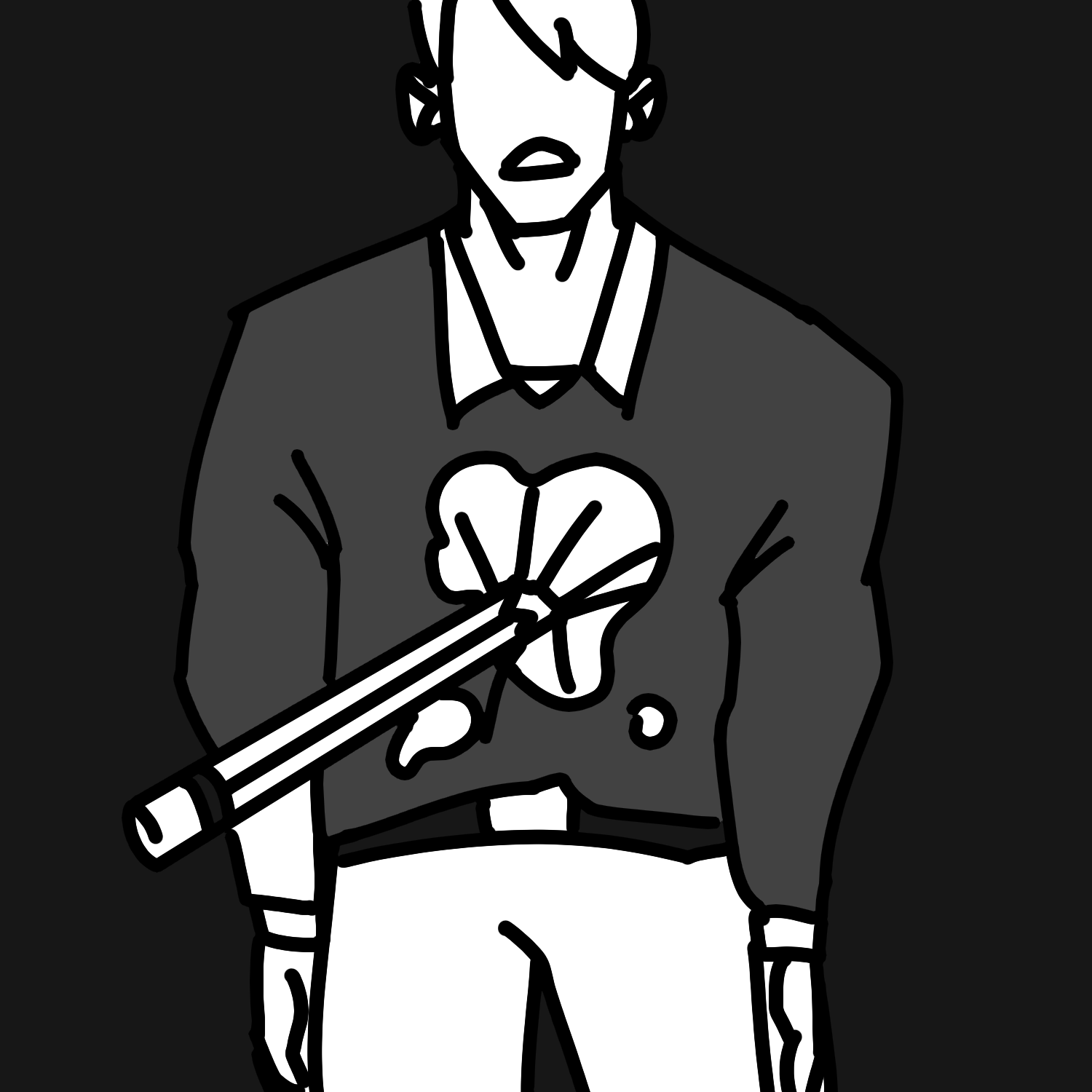
Under the benches of the girl’s locker room, in a small private elementary school, is my deadname, calligraphy in the wood. A pencil with my deadname on it.
Last night my mother finally choked up and admitted, I think you’re beautiful. You’re a beautiful girl.
I’m watching my little girl die.
Is my childhood handwriting feminine? OR DID MY MOMMY STAB ME IN THE SOLAR PLEXUS? With a pencil, with— —my deadname on it. I got compliments once people finally understood what I was mumbling.
That’s a very nice name.
I’m just a mouldy sandwich on the side of the road with parents for bread.
I wish I had nothing to do with the dead little girl I have been dragging around. Why can’t I be beautiful and not a girl, Maman?
Ma petite fille. Je t’aime.
You can’t make a corpse grow any taller or realer. I had to amputate this thing to save myself. Don’t you understand? I will be my own pallbearer.
Li Conde (they/them) is a nonbinary amateur artist and writer. Conde’s poetry is meant to be meticulously paced and easy to absorb. They strive to create art moments that are meaningful to everyone, and are fostering an impulse of imbibing their life with as much art and literature as possible.
Fate tied you together so your love could blossom;
Another chance for you, and
The people who made your past
Impossible–the ones that missed you dearly.
No more pain, no more sadness,
Only your love out in the open.
All thanks to an attraction that existed
Despite no body to harbour it in, and
A dainty red string, whose meaning is
Entirely simple, yet so complex:
“Until we meet again.”
Sydney Jordan is a third year Carleton student in the BA of English program. She can be contacted via sydneyjordan@cmail.carleton.ca or 343-260-9593. The piece of literary work submitted is titled “Fate Lies in Red Thread” and is a poetry piece with a word count of 201 words (33 lines). Sydney has not published any of her works in the past.
Simon Turner’s poetry has most recently been published by Sumac Literary Magazine, The Fiddlehead, and flo. Simon is a disabled student in the English PhD program at Carleton, lives with a potato of a cat, and has had four plays staged in Peterborough/Nogojiwanong, either at or in collaboration with The Theatre On King.
Simon Turner’s poetry has most recently been published by Sumac Literary Magazine, The Fiddlehead, and flo. Simon is a disabled student in the English PhD program at Carleton, lives with a potato of a cat, and has had four plays staged in Peterborough/Nogojiwanong, either at or in collaboration with The Theatre On King.
Rey Duff is a writer, wanderer and lover. They write about identity, transit, and, like everyone, love. He’s currently a student at Carleton University where he spends his time walking along the canal, listening to music too loudly and having late-night ice cream cake parties. He’s been previously published in flo. Literary Magazine, Young Voices Magazine, TOP Zine and their bedroom wall.
i don’t want you to ache. I don’t want you to hurt. i don’t want you to hide.
can i kiss you?
it’s so scary. to love. to live.
do it anyways. do it with me.
can i kiss you?
It feels as though no one like you and i have kissed before. no one so strange. no one so similar.
can i kiss you?
can you love me? can i love you?
let’s make it all better.
and if it doesn’t
i’ll love you all the same
Rey Duff is a writer, wanderer and lover. They write about identity, transit, and, like everyone, love. He’s currently a student at Carleton University where he spends his time walking along the canal, listening to music too loudly and having late-night ice cream cake parties. He’s been previously published in flo. Literary Magazine, Young Voices Magazine, TOP Zine and their bedroom wall.
I’ve seen you five times now (or six, or seven), my eyes catching on your silt-coloured hair hanging three years longer than it used to, a forgotten bowl cut turned curtain, shifting to reveal an echo of the know-it-all smirk you once had; I saw you with a book once, or rather, my friend did, at a book club (didn’t say hi), told me she’d been shocked to see you and moved on, but my brain stayed trapped, circling around that dingy Tim Hortons booth, that table in the food court where you sat in a zip-up hoodie, at a dying laptop, learning about circuits, or maybe it wasn’t circuits, maybe I misread the diagrams while pretending to look away— we shared a bus once, only a few stops, me in a throng of bodies, you on an elevated seat and for a brief moment I thought I caught your eye and you waved, so I waved back, but then I saw your eyes lock onto another man waving, pushing himself towards your seat, starting conversation about homework and labs and electronics tests and I shrunk, sinking into the depths of the vehicle, wondering if it was my mask or my height or if perhaps, you’d never known me, perhaps, I wasn’t even worth a glance;
I did see you with a book once at the Tim Hortons, eating ramen noodles with a tome next to you, perhaps Eldest, its red coat and gilt letters sitting just out of reach of your hands and I wondered if your reading was banal and nostalgic—or, perhaps, sarcastic, self-assigned homework for a scathing critique of the novel’s oft-cited failings— I remember how snarky you were, or could be, latent gems of wit a backbone, buried so deep it rarely surfaced, emerging as defence after months of silence, swiftly cutting in its descent, or maybe it was always there, but only unveiled around friends— I saw you with your friend a few weeks ago, a girl I’d passed in hallways and classes and bus stops and she must have noticed, must have looked me up, because she followed me back on Instagram; and I keep seeing your hair, keep being startled when it sweeps past and I see it’s you, keep wondering what I’ll say when I’m brave— maybe hi, maybe I wish I could say I miss you, but I’ve never tried, since I barely knew you, and you can’t see my face with a mask on anyway.
Rebecca Kempe is a writer and multidisciplinary artist from Ottawa, Ontario. Her work has been published or is forthcoming in flo., The Ampersand Review, and elsewhere. Her plays Each on Our Side and Signal Breakdown were performed in the 2019 and 2021 editions of the Youth Infringement Festival, respectively. She recently self-published There’s Nothing to See Here/Nothing Happens Here, a two-part zine which explores the stagnant (but at times welcome) stillness of the suburbs she grew up in through photography and prose. More of her work can be found at www.rkempe.ca and you can find her online as @arbeeko.