We forage for beef jerky, transform water into Red Bull, barter for maps with broken prayers of safety.
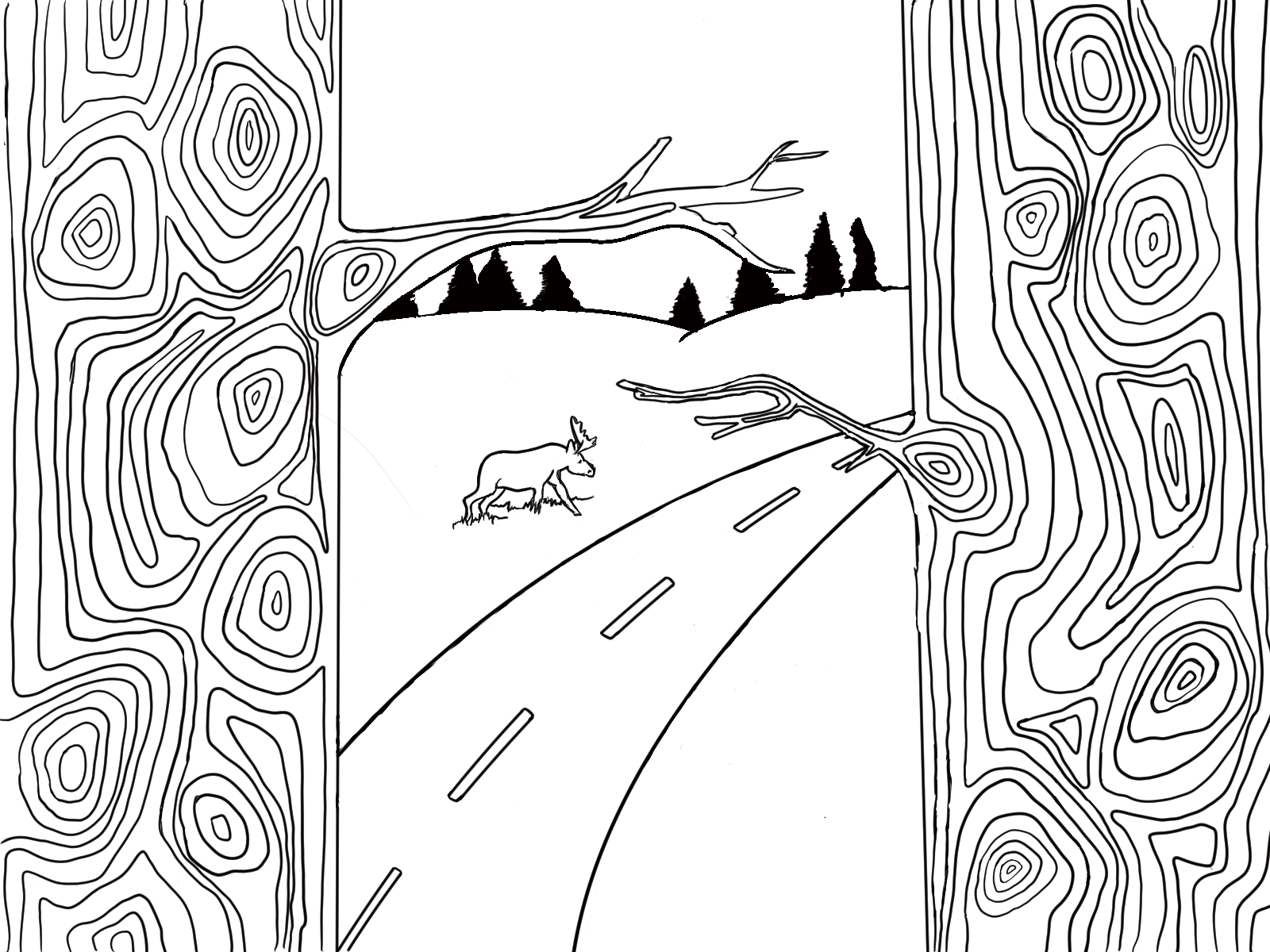
Last Stop Moose Watch —the only signs of civilization for 140 km. The last lights burn out in the rearview mirror.
Your brother tells me this is how he’d do it. An accident. Swerve off the shoulder,
blame the forest.
Forehead to forehead, flesh to antlers, crystalline windshield blankets gravel, thicker than first frost.
Moss grows heavy on the engine, erasing all proof of your existence. If no one is around to take a picture, did you ever even live?
We pull into the next town under careful watch of moose eyes, glowing green between the trees.
Abigail Rabishaw is a 4th-year English major. Abigail is originally from Pembroke but has been in Ottawa since 2015. Abigail typically writes poetry and flash fiction, and her work expires the themes of grief, complicated relations, and the definition of home. Abigail was the runner-up in the 2019 Carleton Fiction Competition, and won the 2023 Lilian I. Found award. Abigail’s work has appeared in bywords.ca, and talking about strawberries all of the time. She also runs a small press called Prime Press with her partner.
By way of lodestar, we find our way to a dark trampoline, thin crust of frost crunching beneath our backs.
Under November sky, we unearth constellations. Calloused hands trace maps on icy skin, while
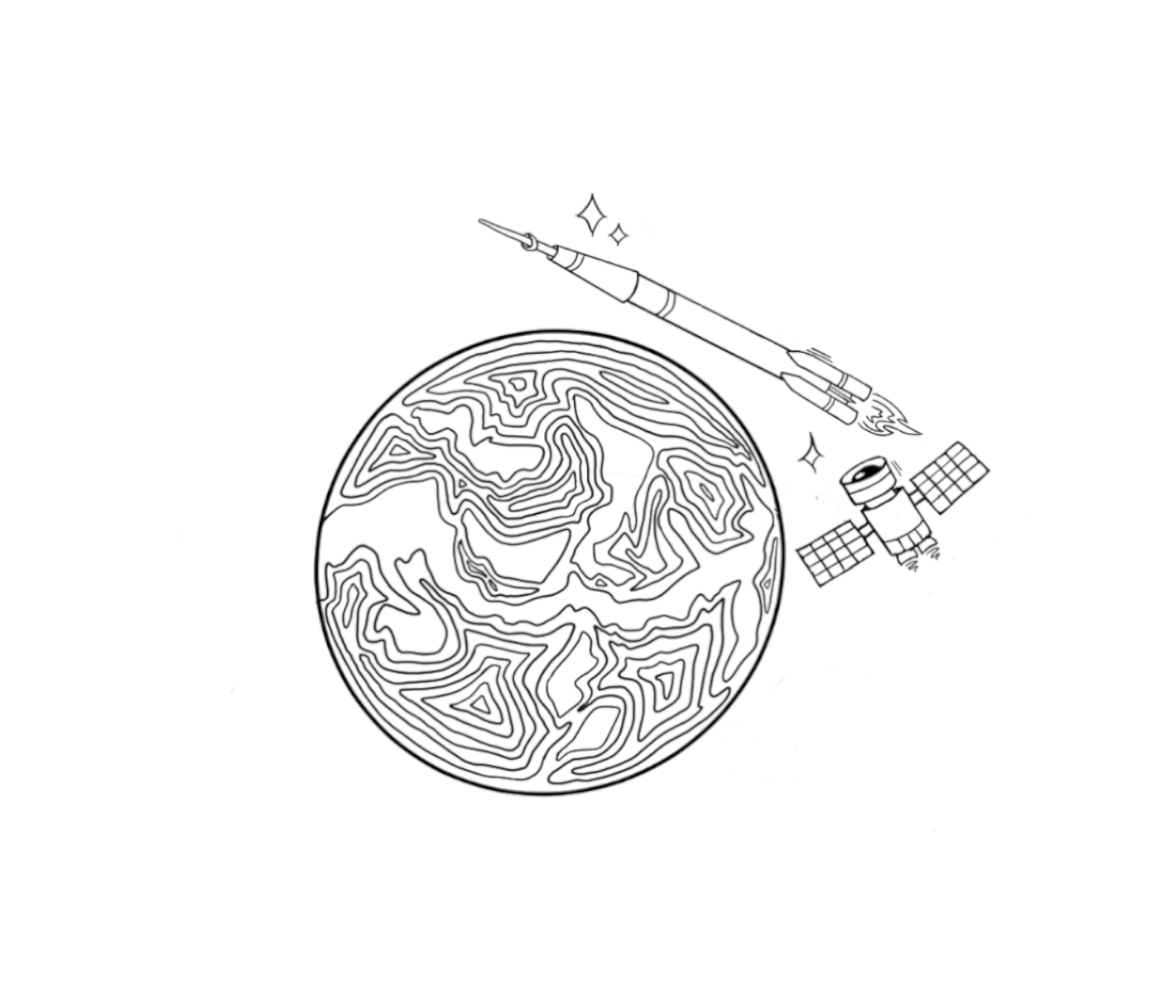
you tell me a story of a billionaire and his out of control rocket exploding in the night.
I ask if you think Venus ever considers how the other planets perceive them,
and you tell me to be quiet, to make a wish as it crashes into the moon. Choke on your words, smothering your very own errant satellite.
Abigail Rabishaw is a 4th-year English major. Abigail is originally from Pembroke but has been in Ottawa since 2015. Abigail typically writes poetry and flash fiction, and her work expires the themes of grief, complicated relations, and the definition of home. Abigail was the runner-up in the 2019 Carleton Fiction Competition, and won the 2023 Lilian I. Found award. Abigail’s work has appeared in bywords.ca, and talking about strawberries all of the time. She also runs a small press called Prime Press with her partner.
i was lost, so i killed my sanity/ honed my discipline/ trained to solve non-problems chosen by tortured people/ because i thought i needed to/ to amount to what i wanted to be/
(because society tells us to know the ends before we define the means/ and the means are specific/ the means are the same/ the means are specific and the same)
i wade through this wretched system/ where people look into their futures and see blank pages/ where people desperately type with blunt pencils/ unless they’re too stressed or too buzzed or too tired or too dead to see their failure/ or / unless they’re gods/
(and there are always a few gods/and everyone hates the gods/ everyone envies the gods/ everyone has wanted to murder the gods/ but no one has/ but no one can)
the state of the system: contradiction in and of itself/ amorphous, square/ rigid, fuzzy/ cotton candy, turned to choking hazard/ park bench, turned to avalanche/ sprinkler, turned to hurricane/
(study, turned to survival.)
II.
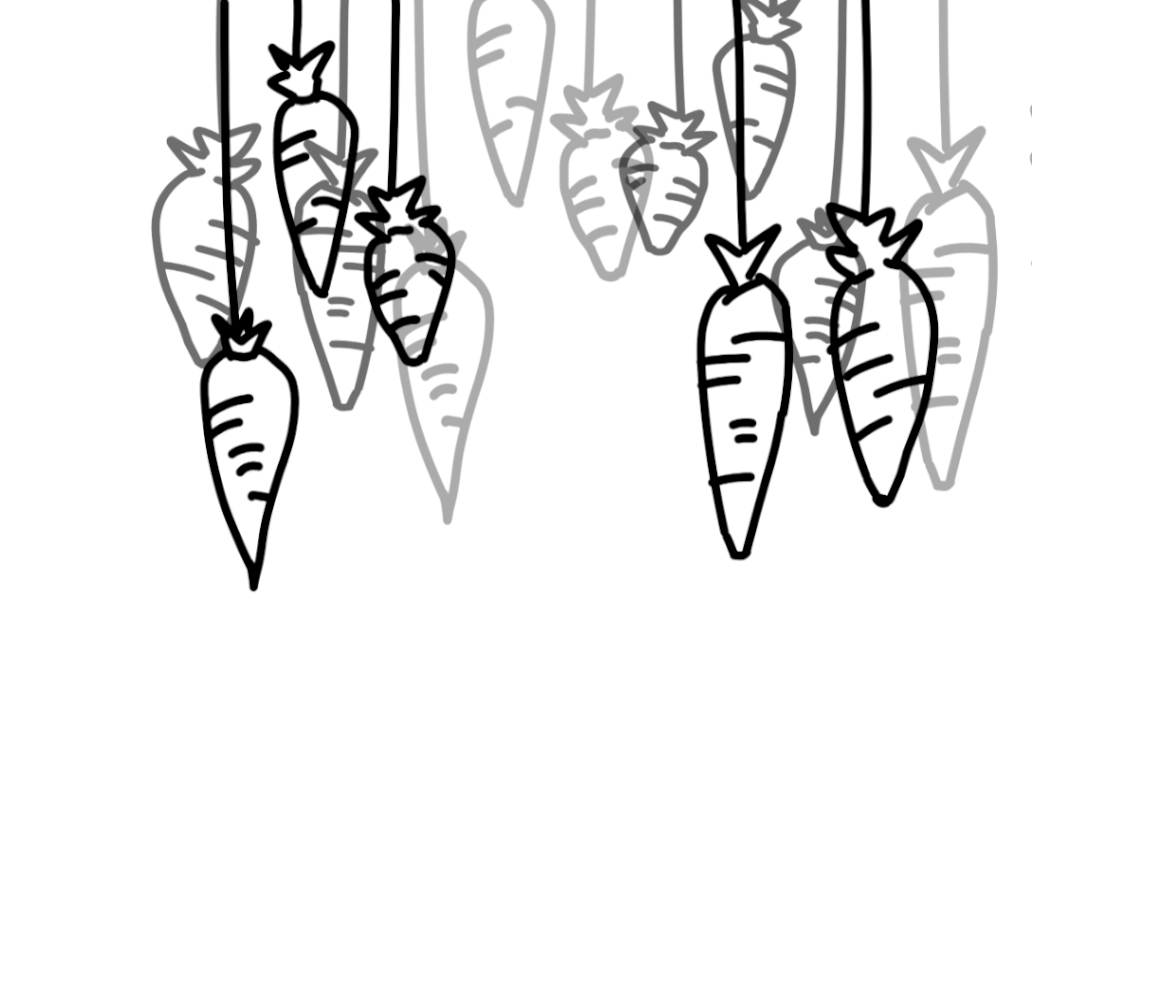
dangle job carrots from classroom ceilings/ too far out of reach/ what’s in reach: long sticks/ stick equals: obscure guidelines/ stick equals: disastrous midterm/ stick equals: impossible workload/ stick equals: disastrous final/ stick equals:/ equals:
(we only think they’re gods/ but deep inside they’re just like us/ trying/ waiting/ sometimes/ like/ like)
are we supposed to build our own ladders somehow/ climb to heights we never wished to achieve/
(like they’re just as lost as we are/ like they feel the pressures we feel)
why reach for the stars when we have no help to get there/ are we supposed to fly when the ladders fall over/ blame ourselves for the fall back to earth/
(like it’s too much effort to pretend to be immortal.)
III.
sit on divine perches/ let the plebes reap the scars of failed bids for ascendance
(as if icarus never fell from the sky/ as if your wax doesn’t melt as you speak)
being a student: like rushing into the line of fire/ feels like: follow your orders/ feels like: flying cockpits into bombfights/feels like: becoming a swashbuckling kamikaze/sounds like: be a good soldier at all costs, my little boy/ good soldier, read: stressed student/ little boy, read: panicked teenager – slash – almost adult – slash – is adult/
(you pretend you were once god at the peak of your powers/ but forget those powers weren’t transferred to us)
when thrown on the fireground with conflicting orders/ do you save yourself though the towers are burning/ do you rush in though you have no training?/
(read: how do i succeed when all i envision is burning/ read: how do i avoid failing?)
and when i revisit the crime scene ten years later/ tell me: should i feel elated or cry/
(read: how do i grow up?)
Rebecca Kempe is a writer, zinester, and multidisciplinary artist from Ottawa, Ontario. Her plays Each On Our Side and Signal Breakdown were featured in the 2019 and 2021 editions of the Ottawa Youth Infringement Festival, respectively. She is the author of “There’s Nothing to See Here/Nothing Happens Here”, a two-part zine which explores the stagnant (but at times welcome) stillness of the suburbs she grew up in through photography and prose. Her work is forthcoming in flo. More of her work can be found at www.rkempe.ca.
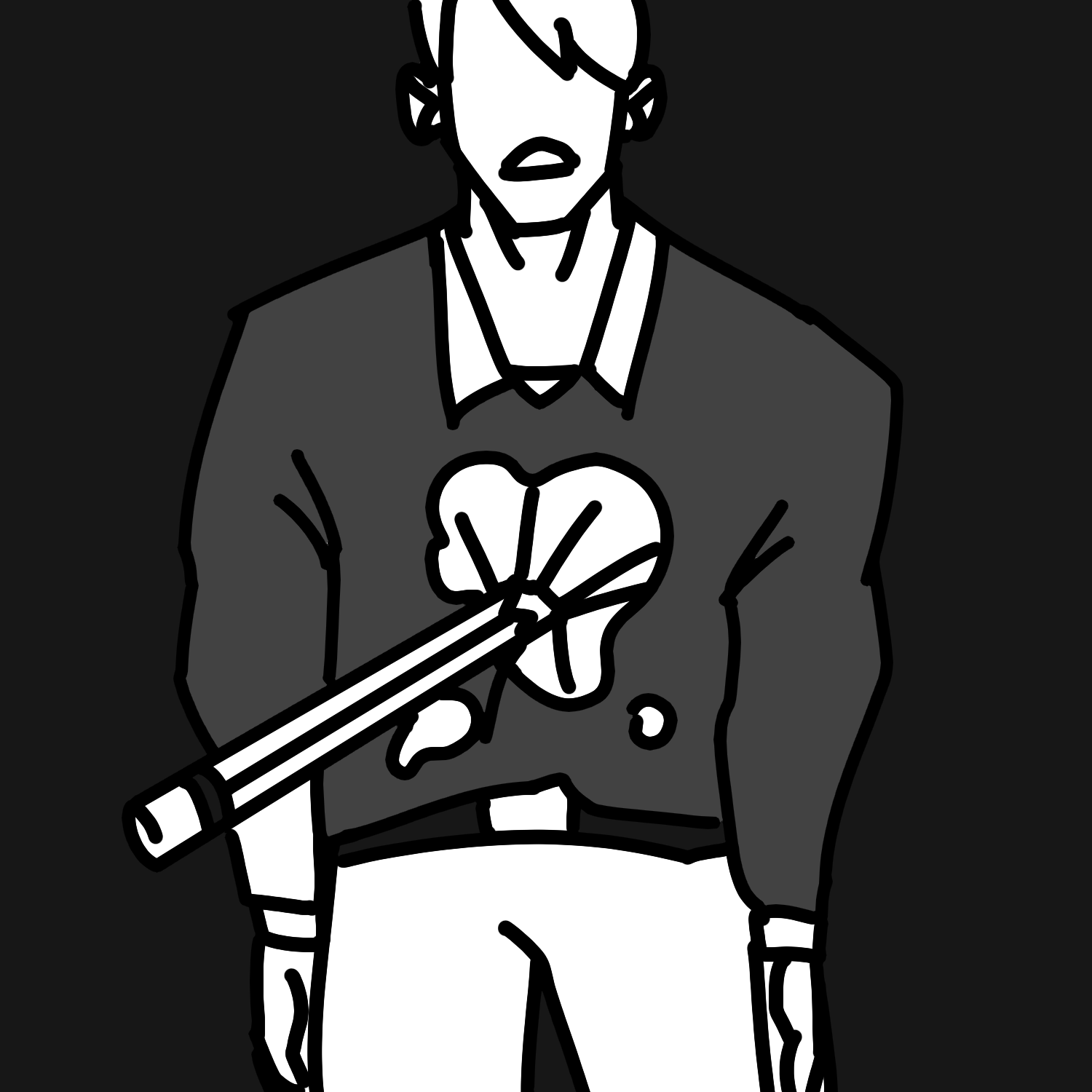
Under the benches of the girl’s locker room, in a small private elementary school, is my deadname, calligraphy in the wood. A pencil with my deadname on it.
Last night my mother finally choked up and admitted, I think you’re beautiful. You’re a beautiful girl.
I’m watching my little girl die.
Is my childhood handwriting feminine? OR DID MY MOMMY STAB ME IN THE SOLAR PLEXUS? With a pencil, with— —my deadname on it. I got compliments once people finally understood what I was mumbling.
That’s a very nice name.
I’m just a mouldy sandwich on the side of the road with parents for bread.
I wish I had nothing to do with the dead little girl I have been dragging around. Why can’t I be beautiful and not a girl, Maman?
Ma petite fille. Je t’aime.
You can’t make a corpse grow any taller or realer. I had to amputate this thing to save myself. Don’t you understand? I will be my own pallbearer.
Li Conde (they/them) is a nonbinary amateur artist and writer. Conde’s poetry is meant to be meticulously paced and easy to absorb. They strive to create art moments that are meaningful to everyone, and are fostering an impulse of imbibing their life with as much art and literature as possible.