Category: Issue 1

  • The Autobiography of Credence Crow

    The Autobiography of Credence Crow

    PART I


    I want to deflect any assumptions that you might have already made to yourself, dear reader. This is not a publicity stunt; this is the true, honest words of the one Credence Crow, Moonlite Montreal model. I want to make it clear right from the start that this is my story, my struggles, and it begins in a humble English village. The greatest gratitude to my therapist, without whom I would not have had the courage to be able to share this with you today.

     I cannot recall much from the days of my youth, but this moment I will remember forever: the bleak skies, the grey grasses and trees, the haunting wind carrying with it the moans of the ghosts who had not so long before called this place their home. That is, before the Death took them.

    Historians have since labelled these two years the Black Death, the wiping out of nearly the entirety of the English population from some foul sickness they called the bubonic plague, the coughing and shivering and exploding boils of pus, leaving you as good as out to pasture for the carrion to finish off. Of course, we were none the wiser back then, thinking we had done something to anger the Almighty God, and that this was his form of punishment. These were dark days, and even the least pious of us had turned to prayer for our salvation, for redemption of whatever sin we had committed.

    I lived in an old farmhouse with my family—well, what was left of them, anyway. Being a family of eight who had to share one room and three beds, we were easy pickings for the Death. The first to go was my twelve-year-old brother, who had been prone to a chronic runny nose, so it wasn’t at all surprising the scythe cleaved him first. We were too scared to touch the body for fear the Death would latch onto us, so we wrapped him in burlap and put him in a wheelbarrow, pushing him out into the stream. Then came my eleven-year-old sister, who caught a chill playing outside in the rain, and she, too, we put in a wheelbarrow. Eventually, we ran out of wheelbarrows (naturally we didn’t think to retrieve our wheelbarrows after dumping the infected corpses) and this was the worst thing of all, as my five-year-old brother had just passed.

    As the eldest child, I was like a third parent, so the duty fell to me to dispose of him. I wrapped his stinking corpse in soiled towels and carried him out behind the shed, digging as quickly as I could. He watched me the entire time I piled dirt on him, staring with his porcelain face and pink lips parted. For a while, I was able to convince myself it was only a doll I had buried out in the yard.

    For a time after that, the Death seemed to have parted from us, and we were stunned by our sudden luck. How was it that we had been spared, but three of my siblings had not? None of us wanted to voice it aloud, for fear the Death would hear and come to finish us off. It seemed we were in the clear.

    And then I got sick. I coughed up blood one morning, and, horrified, my parents shunned me to the shed, where, within a fortnight, my condition had deteriorated so much I was pleading for death. Our previous doctor had succumbed to the disease himself, so my parents sent for another, a newcomer who said he’d come all the way from London. I never learnt his name, nor did I see his face because of the beaked mask all the doctors hid behind to drown out the pungent stench of our rotting flesh, but I would never forget what he did for me.

    He visited me for three days, comforting me and giving me strange–tasting herbs, even though we both knew it was futile, and it was that third day when my time had finally run out. I was shivering uncontrollably, covered in a musty blanket stained with my own bloodied phlegm, that did nothing to warm my aching limbs, yet the doctor only stared at me with his head tilted and his hands on his hips as if he couldn’t quite believe what he was seeing. That’s when he said to me:

    “You cannot perish; you must not. I will never allow someone so beautiful to be erased from this world.”

    I had been stunned; here I was, all but two steps away from Death’s Door, and he was in awe of my…beauty? Was I beautiful? Back then, the only time I had ever laid eyes on myself was from glimpses in the wash bucket or a puddle of rainwater. Maybe the herbs he was plugging his nose with had addled his thinking.

    Alas, no; he knelt next to me, and ever so gently traced the line of my jaw with his gloved hand. “I will make you an offer, but you must decide quickly, for Death is upon you. I can spare this body of yours if you desire, but you must have absolute trust in me.”

    I thought about what he was proposing, certain this had to be some sort of jape. But what if he was telling the truth? What if I could live to see another day, make a life for myself? If I truly was blessed in good looks, why, I could do anything, be anything.

    I didn’t want to die, and I told him so. The doctor nodded, and then instructed me to close my eyes.

    “This will take but a moment, and in that time you might find yourself drifting off—”

    Well, he was right about that, because when I came to, I awoke in a ditch, earth walling me in, roots reaching out twisting fingers to restrain me. My parents stood over me with a shovel. Before I could register what was happening, my mother’s already gaunt face flushed white, and she shrieked, collapsing into my father’s arms. As I rose from what was undoubtedly my grave—though I didn’t clue into this fact right away—my mother was wailing and had her hands thrust before her, her fingers forming the sign of the cross.

    “You are not our son! You are not our son! Satan’s spawn!”

    And that’s how I was kicked out of my own home, my father chasing me with a shovel and my mother lobbing curses in my direction for my ‘unholy wretchedness to go back whence it came.’

    This is it, how it all began—my story. Credence Crow before Moonlite, Credence Crow before Honeycomb. But I’ll get there.

    PART II


    Moonlite Montreal didn’t come into my life until much later; I first had to figure out what the hell had happened and what I was supposed to do now that my family had ostracized me. In those days, there was no transportation in our village, so I had to walk and hope I came across someone who might be able to take me to London.

    I decided rather quickly that London was to be my destination: the doctor had come from there and was the likeliest candidate to be able to explain whatever he had done to make my parents think I had diedI was angry and confused, and knew I had to give him a piece of my mind. How I would find him in such a great city when I didn’t know his name, or even what he looked like, I hadn’t a clue, but I needed some purpose to ground myself, lest I fall into despair.

    I don’t recall how I made it to London, other than the journey having been too traumatizing for my subconscious to retain. It was within that first day wandering around looking for work—I needed an income if I was to rent a place to live—that I first began to experience strange symptoms of the doctor’s work:

    1. The sun hurt my eyes. Had it been so bright before? And then, within a week, if I didn’t cover every inch of my skin, I developed nasty blisters that sizzled at the touch.
    2. I wasn’t hungry. I ate out of necessity, conscious of my scrawny composition, yet I couldn’t find the desire to eat; every morsel to pass through my lips was so bland. The only thing that seemed to satisfy me was cheap red wine, and, even then, I felt hollow.
    3. I could never sleep at night anymore, I became too restless and would start screaming and had to do something with myself, so I would wander the streets, instead.

    There were more changes to my body than this, of course, like how my skin naturally cleared itself of all blemishes, which was unhelpful when I tried to search for any physical evidence of the doctor’s work. I was also always getting stopped in the street and complimented on how my hair looked that day, how bright and shiny my smile was. It got to the point that when I asked my employer if I could work overnight he didn’t bat an eye at the odd request, instead giving me a razor to trim the patchwork that had formed on my face so as to “accentuate my great bone structure.”

    By God, the doctor may have forced me out of my home, but I was starting to realize he may have in fact saved me from a life of perpetual mediocrity. I was gorgeous, and people were noticing. Suddenly, everything came more easily to me; I got my own place, a stable job, and could now take the time to investigate the doctor and my new condition.

    I remained in London for some 700 years, give or take. Okay, you see, here is where I should probably come out and say it—I’m a vampire. Yes, the ‘eternally youthful’ Credence Crow is a bloodsucker, a nightcrawler, a fanged menace. Except, none of those are me, but some disgusting stereotypes imposed upon us because just one of my kind couldn’t satisfy his bloodlust and went on a killing spree. Of course, vampire portrayal in the media will have you believe this is the case for all of us. Sigh. The injustice of the world today.

    But I digress; I never found the doctor, but I did encounter some others of my kind one night while I was sipping my wine at the bar. Apparently, vampires possess an internal radar that makes other vampires completely irresistible, so they sidled right up to me and offered me “a special something” to augment my drink. The “something” was a vial of viscous red liquid that deepened the colour of my wine once it was added.

    “You’re one of us, aren’t you? Try this, and we’ll tell you where you can get more.”

    Lo and behold, nothing had ever tasted so good. The minute the liquid trickled onto my tongue, my senses were alive, and I was immediately energized, shuddering with pleasure. Naturally, it was blood, and I wanted more—needed more. They were able to hook me up with a vendor who extracted blood from rats so we didn’t have to it ourselves, because that, of course, would be uncouth. Plus, London was teeming with rats at this time and no one minded seeing them gone, so our vice was, in fact, dual–purposed.

    Why did I leave, then? To be frank, I just became so bored of London. The city changed too much for me to be able to keep up. It was bad enough I had to relearn English as my birth dialect had fallen to the wayside, but trying to follow every war, political upheaval, and economic drought was a headache. The city was no longer overrun with rats but with reeking automobiles, enormous ugly grey buildings, noise, and so many people. Too many people. Even the vampire community was becoming too large, so that ethical means of acquiring blood was becoming a daily competition. I needed a change. That’s when I thought I would head to America, and the budding Hollywood scene.

    For 700 years I had grown accustomed to being beautiful, so why shouldn’t I flaunt my looks? And, if I could make a living out of it, why would I ever do anything else? I would gaze wistfully at the cinema billboards, at all the pretty faced movie stars that were so above everyone else, and think that that was where I was meant to be.

    I did make it in Hollywood for a while. I strolled into one of the studios one sunny afternoon in my black trench coat, sunglasses, and fedora, and was immediately directed to the soundstage to get headshots taken (apparently they thought I had already been hired they were so floored by my style; who knew it would be so easy?). I was given complete access to all the behind–the–scenes of the film world—the free coffee and doughnuts, and all the cast parties. I was only a background actor, but the perks still applied.

    Now, I was living it up being the only vampire in California, but eventually the glitz and glamour of the red carpet began to lose its novelty, and I was exposed to the “Hollyweird”, as it is so aptly named here in Canada. I’m a very sexy man, of course, (the foreign accent helps: “Oh, you’re British?”) so I was constantly invited to the exclusive VIP clubs, the types with valets and red velour and satin everywhere. Unfortunately, these venues also attracted the crowd who were into some…shall I say, questionable ideas of “a good time.” This is where I discovered that there are freaks out there who enjoy having the blood sucked out of them, which, being a responsible vampire, I was not at all interested in.

    At this stage of my life, I wasn’t sure what to do. I had settled into the “American Dream” and didn’t particularly want to leave it, but I was dangerously close to having my condition be discovered. I had been in California for over a decade, and the Hollywood honchos were beginning to inquire as to how it was I retained my youthful vigour—“Why, if I didn’t know better, I’d swear you haven’t aged a day!” I was outliving the “expiration date” of my acting career, and Hollywood took notice. 

    As it turns out, they weren’t the only ones. While I was beginning to grow anxious of my situation, I received a letter from a modelling agency north of the border; that is to say, in Canada. The letter was sealed in a manilla envelope, bore a small, inked emblem in the corner for one “Moonlite Montreal”, and was addressed to “The Dashing Mr. Crow.” You see, I didn’t know it yet, but Moonlite Montreal had already captured my heart. I tore into that letter, and drank it in with frantic eyes.

    Someone across the border, it seemed, had seen my headshots from when I’d first arrived in Hollywood and, entranced, had proceeded to document my career. Having suspected what I was from the very beginning, the agency confessed to having been founded by vampires itself, and had a policy of only hiring other vamps. It was a haven for our kind was how they framed it; we will protect you and provide you with all your ‘special needs,’ and the public will be none the wiser. No one questions pretty people, after all.

    It was the out that I needed. I was on a flight to Montreal within 24 hours.

    PART III


    THE ‘ADONIS’ OF MOONLITE MONTREAL: CREDENCE CROW ISSUE MARCH 2000

    THE CROW COLLECTION: A DARK AND SMOKY WARDROBE THAT WILL LEAVE YOU FEELING AS IF YOU’RE WALKING THE FOGGY STREETS OF LONDON

    THE FOREVER TIMELESS CREDENCE CROW

    Finally, here we are, the true purpose of this memoir. I have included above only a handful of the headlines marking my illustrious modelling career—well, back when I still was a model.

    My transition to Moonlite from Hollywood was rather seamless; I was already used to spending hours in the makeup chair and having countless redoes of the same shot, except this time I, alone, was the subject of the camera. The first thing they had me do was pose in front of a green screen of a beach, though I wore a black satin suit instead of bathing shorts and my trademark sunglasses, only a tantalizing bit of my ivory midriff showing, the idea being: show us Credence the vampire without showing us Credence the vampire. My looks and poses were unconventional; I was blowing up in the media more than any of Moonlite’s other vamp models and was invited to every gala in the city. My face was all over the covers of fashion magazines, portraying me as the “suave slice of seduction on the dark side.” Within five years, I had launched the aforementioned Crow Collection, which was not only a brand of black, navy, violet, and crimson garments for various occasions, but a makeup pallet (this was during the emergence of the “emo” phase where it was hot for men to have that “smokey eye” look and acrylic nails) and hairspray, in an attempt for common people to mimic my voluminous, silky black waves.

    There were many benefits to being part of an all-vampiric modelling agency. I was housed in a block of town among my own kind and registered as an anemic who needed weekly blood transfusions; in other words, a free buffet at my disposal. My flat was chic, located two blocks from downtown Montreal, and had special tinted windows to block out the sunlight during the day so that I could get my beauty rest.

    For the first time, I felt in control of my life. I still had to be careful about hiding my condition from the rest of society, but at least to my employers I could truly be me. The only downside to Montreal was the cold (the winter wreaks havoc on my skin care regime)…and Saoirse.

    Where do I begin with Saoirse? Saoirse was, technically speaking, my paramour. We had met during Fashion Week in London (Moonlite had sent me to be a representative) and she had clung to me ever since. She had been the first of my “groupies” to breach my security team and, because I was powerless to resist her charming demeanour and flattery (“Why, you’re just the most gorgeous man I’ve ever seen!”), I was more than eager to invite her back to Canada with me. Maybe her V-neck top, short skirt, and fierce tangle of golden hair might have had something to do with that, but can you fault me? I am still a man, after all. So she left her native Ireland and moved into my flat with me.

    Over the years I had dabbled with many lovers: humans, vamps, and one time a werewolf (he had a habit of “marking his territory,” pardon my crudeness); but I had never settled in with anyone, mainly because I knew none of them were worthy of me. I was simply beyond them; I was a 10, and they were just toys that eventually lost their lustre and needed to be tossed to the curb. But Saoirse had captured my interest. Plus, we weren’t exclusive; neither of us was ready for a serious commitment, and it worked out splendidly. I could gallivant as I needed to, with the knowledge I always had someone to warm my bed. She was constantly energized, shiny, and eager to please me—yes, I do mean that figuratively and literally. Saoirse is a faerie.

    Now, most of you are probably thinking: wow, I would love to be with a faerie! They’re so pretty and magical. Perhaps they are, but what no one tells you about faeries is how invasive and messy they are.

    It is a myth that faeries have wings; instead they have the ability to teleport themselves at will and apparate in your home when you least expect them. It is frankly quite startling: imagine an entire person pops into existence in front of you, depositing a shower of glitter each time they do so. She once apparated to me while I was shaving and I nearly cut my nose off with my razor—which would have spelled the doom of my career! I told her she must text me from then on before “dropping in” unannounced, which she agreed to for about a day before apparently forgetting every time because “Silly me, I’m so absentminded.”

    And that was the other thing—the glitter. I will never despise something with my entire being more than goddamned faerie dust. For some reason (or maybe it’s just Saoirse, she likes to make her presence known), faeries are perpetually covered in glitter; their clothes, their hair is woven through with glittery strands, their slippers leave golden footprints, even their very skin is embedded with the stuff. And it gets on everything. It’s not the big flaky type that comes out of a confetti cannon; more like the clingy ones that come off Christmas tissue paper. I’d find it in my bed sheets, my clothes that had gone twice through the wash, the bathroom sink, the kitchen sink, the fridge, my hair, my shoes, my personal areas—I have had to throw out entire pitchers of bloody marys because Saoirse had decided to spike them with one of her shimmery spells that she claimed would give me a “balmy glow” (as if I need a spell for that). And she never cleaned up after herself, claiming she left it as a “token of my unbounded love for you.” I’d hate her now, if she hadn’t been such a good lover. Unfortunately, we’d coexisted under the same roof for so long that it would be an inconvenience to send her packing. 

    Needless to say, I was in a rough patch with Saoirse when my managers at Moonlite decided to call me to the back office one night, sit me down, and look me dead in the eyes to tell me: “You have to retire, Credence.”

    In that moment, my entire world was ripped off its axis. It was a joke, surely. They would never get rid of me, and I told them as much, laughing it off, but they only looked back at me grim–faced.

    “We’re sorry Credence, but the world is starting to catch on. You’ve had a terrific run, more than most vamps. What’s it been…twenty-two years? Yet you’re still twenty.”

    I could not believe what I was hearing; my entire body felt like it was going to collapse in on itself. They had already gone ahead and hired a fresh-faced vamp who looked all of sixteen, judging by the black-and-white headshots they slid across the table to me. Round face, megawatt smile, well–contoured brows, cupid bow lips, and hair that fell in waves out of frame, presumably down her back. No doubt about it, I was in trouble. This girl was going to turn more than a few heads.

    “Oh but don’t worry Credence, we’ll keep you on as an advisor for the new models,” they reassured me. “Train your replacement because you’re not good enough for us anymore,” was what they meant. If I hadn’t known my managers were vampires too, I might have drained them dry. I was quaking, barely able to contain my rage as I spat out, “Well can I meet her? My…pupil?”

    They took me out into the hall and asked me to wait for a moment (the audacity! Making demands of me, Credence Crow!) and then returned with the woman who would be my archrival, the tormentor of my emotions and dreams, the executioner at the chopping block of my willpower.

    This was when I met the woman who had been created to complete me. This was when I met Honeycomb.

    PART IV


    “Can you tell me, Credence, why you believe you must remain a model?”

    This was the first thing I was asked upon visiting my therapist. The answer: modelling was the only outlet that had ever let me be myself. The lights, the sets, the cameras, my attire, were all there to accentuate menot the poor English stableboy or the vampire–in–hiding lost among the stars of Hollywood, meCredence Crow, the “World’s Sexiest Man.” I had crafted this image for myself, I had brought notoriety to a nameless modelling agency tucked away under the snowy fronds of Montreal—being a model was who I was.

    Was. Because I no longer am one. Honeycomb made sure of that. Her name wasn’t even Honeycomb; I just called her that because she reminded me of it with her caramel skin, long chestnut curls, and amber eyes—her sweet disposition…

    I wanted to hate Honeycomb; I would toss and turn in bed over her, bunching the sheets up in my fists and screaming in frustration, trying to force myself to feel something that I physically could not. I would go out in the sunlight with my skin exposed just to feel pain, as if the burns would somehow cleanse my pores and soul of the emotion that threatened to devour me…unconditional love.

    This love was different. It wasn’t the lust I felt when I wanted a quick lay, like with Saoirse; there was substance to this desire, not one of sexual wanting but of being able to truly cherish someone for all their beauty, inside and out. The feeling was absurd, and I knew there had to be something wrong with me; I was in turmoil over losing my job, that must be it. So I turned to a therapy clinic, one that specialized in vampiric psychology and behaviours (who knew this was a thing?), in the hopes it would save me. 

    “Can you tell me, Credence, why it feels wrong for you to be in love with Honeycomb?”

    What wasn’t wrong with me…god, do I dare say it? Loving her? For one, it was because of her my life as I knew it was on the line, and she was just too nice, it was irritating. She was the type of person who would let spiders make a home in her room because “they’re not bothering me, so why would I hurt them?”

    Honeycomb was different from any vampire I had ever met, any model I’d ever met. There was no vanity about her, nor did she shower me with false affection like every other woman I had encountered—in fact, she had never even heard of me (obviously just another reason I should loathe her) and didn’t want to be a model in the first place.

    “Why are you here then?” I’d asked her during our first official session of modelling training.

    “I didn’t have a choice,” she’d mumbled, frowning, and exposing her adorable dimple, “I can’t pursue my dreams, but I had to get away from home, you know, to deflect suspicion. But after the four years…I don’t know what I’ll do.” 

    Six months prior, Honeycomb had been Turned by her prom date. Having excelled in academics throughout secondary school, she had been set to attend McGill University for a biomedical engineering degree. However, when she discovered her new condition, Honeycomb’s future was dashed; sure, she could go to university for the first four years with little notice about her agelessness, but what then? Become a biomedical engineer for two years—if she was lucky—before her coworkers started to wonder why she perpetually looked eighteen? Unwilling to give up on herself, Honeycomb discovered Moonlite via the powers of the internet, and, having already been destined to go to Montreal for school, regardless, she reached out. Being as stunning as she was, there was no denying her application.

    And then she smiled at me, her pillowy voice hopeful. “But I’m glad you’re here, Mr. Crow. If I’m going to do this, I may as well have the best in the business as my teacher.”

    I was gone after that. I could sympathize with her plight, having experienced it myself 800 years before, and the thing was, she sympathized with me too. When I recounted my story to her, she was distressed. “You lived through the Black Death? Oh my gosh, I’m so sorry, that must have been horrible to experience.”

    Honeycomb was an apt and attentive student, as well. Even though modelling hadn’t been her first career choice, she poured herself into learning all my tips and tricks, all the while buzzing with curiosity. Even I had to admit she had an eye for design, curating herself simple yet elegant looks in bold reds, yellows, and greens.

    “So then, what ails you, Credence? From what I’m hearing, you know what you want, and that’s to settle down. You’re at a stage in your life where this is perfectly understandable; no one can say you didn’t have a great run. And it sounds as if Honeycomb could be that piece to link you to the modelling world and still have your own life. Naturally, I can only make suggestions; it’s up to you to set the ball in motion.”

    Honeycomb did like me; I knew that much. She laughed at all my jokes and was appreciative of everything I did for her. Just yesterday, she stole me into an embrace, rattling me right to my core.

    “I must thank you, Mr. Crow. I don’t know what I would have done without you.”

    When she withdrew to look up at me, there were tears in the corners of her eyes, and I ever so gently brushed them aside with my thumbs, electricity crackling through me at the touch of her skin.

    “Please, just call me Credence.”

    She kissed my cheek then.

    I’m not being very convincing, am I? Here I am trying to tell you how Honeycomb ruined me, yet I have spent three pages rambling on about her. Am I hopeless, destined to forever be longing?

    God, I think I’m in love with her. I’m in love with Honeycomb.

    . . .

    So that is it—my confession. Credence Crow, Moonlite’s most famous model, is a vampire. And yes, even gorgeous people do not always have it together.

    In truth, dear reader, I don’t know what I shall do. I cannot go on living as I have been. Saoirse has begun to notice I have been more distant lately, been pulling away from her touch. I don’t know entirely what I shall do with the rest of my eternity until the day someone comes to drive a stake through my heart, but I do know this: I will do anything it takes to make Honeycomb fall in love with me. I think we could be beautiful together, and I one day hope she thinks so too. Even vampires deserve happiness, after all. We are not monsters, just lonely people. Eventually everyone we grow close to dies whilst we live on. It is why no one else understands us, me and Honeycomb.

    As a final note to those of you who have made it to the end of my sordid romance, I’m leaving an eviction notice for Saoirse once I sign this off.

    Yours truly,

    Credence Crow

    Lindsay Wymark is a current undergraduate student majoring in English with a concentration in Creative Writing. Lindsay is from Ottawa, ON, has been a fiction writer since the age of seven, and will experiment in any genre except romance.
  • To Make A Raspberry

    To Make A Raspberry

    For ten years my husband and I have been counting pollinators. Around mid-February we print off our identification sheets, grab our binoculars and set out into the forest around our house and start counting. 

    In the ten years since we moved out here—from our hometown since the air pollution was too much for our youngest daughter’s asthmatic lungs—we have of course noticed a decline in pollinator populations, particularly bees. There are many reasons for their disappearance. I’m sure you can make some educated guesses as to what they are. 

    We do not discriminate against flies, beetles, wasps, the rare hummingbird, these days. We count them all. The butterflies disappeared two years ago. We sent in our data sheets and were asked by the coordinators if we had forgotten to include them. 

    No, I wrote back. There were none. 

    They confirmed that this was the case in several other areas. I did not tell Ellis. He looks forward to the count each spring, which comes earlier and earlier, and this year he wanted Sophie and Dora to join. Lately, when bad climate news finds us, he wants to be alone. Goes for long walks, sometimes bringing our pup tent and staying out for a few days, alarming the girls and leaving me a single parent. 

    Honestly, I don’t mind that much. I knew when we first met that the dramatic changes in the weather bothered him, made him feel helpless. And I know now that sometimes that feeling can be too much to bear. So, I tell the girls daddy’s on vacation and we make pancakes for dinner and build a fire in the backyard, make smores, and invent new songs to share with him when he comes back. 

    This year, we started the count March 1st. The snow was already gone and the temperature was a balmy fifteen degrees. Ellis had driven the thirty kilometres into what constitutes a town to get the girls some new rain boots and their own clipboard to share. Then, early the next day we took them out of online classes and wandered through the thigh–high grass waiting and watching for our personal sign of spring. 

    That day started well enough. Sophie saw a hoverfly about an hour into the count. It was floating near early clover, its long striped body bright against the still–yellow grass. 

    “I can’t see it,” moaned Dora. I lifted her up to get a better view. 

    When she was finally able to see it, she gasped. 

    “It looks like a bee though.” 

    “Kind of, yeah,” said Ellis. “It looks like that to make predators think it has a stinger, but it doesn’t. It’s a trick.” 

    We came in for lunch after seeing nothing else. Dora played hover fly all afternoon, pretending she was poisonous to anyone that touched her. I could see as Ellis made a salad that he was delighted by the girls’ enthusiasm. They went back to classes for the afternoon and we did chores, his watchful eyes on the fields of slowly blooming dandelions and buttercups. After dinner, we went out again in the twilight, when the bugs are more active. 

    Again, Sophie was the first to spot something. 

    “What is it?” she asked, pointing to the hovering creature near the treeline that marked the end of our property. 

    Ellis got out his binoculars. 

    “Oh my god, it’s a ruby throated hummingbird,” he said. 

    He passed the binoculars to the girls, then to me. The hummingbird was still there, calm as anything, dipping and weaving through the field. 

    “We haven’t seen one in a while. Good spotting sweetie,” he said, hugging Sophie tight. 

    We went back in shortly after. Once the girls were in bed, Ellis and I had a glass of wine to celebrate the first day of the count, as we usually did. 

    “I think it’ll be a good year,” said Ellis. “And it should be a good year for the raspberries. We can make jam.”  

    “That sounds like a great idea,” I said. 

    “The girls need to know what wild fruit tastes like,” he said, downing his glass and pouring himself another one. 

    . . .

    The next few days we saw one or two flies and spotting some non-pollinating beetles, but Ellis remained optimistic. The temperature had plummeted back below zero as it sometimes still does in March. 

    “Most are probably still hibernating,” he told the girls and proceeded to explain why we never raked up the leaves from our small copse of trees at the back of the property. “Bees will sleep under the leaves all winter. They’re good for keeping them warm.” 

    We continued to go out every morning and every evening. The hummingbird never came back, but a few other spring standards came by for a visit. For a brief period between the end of March and early April, our outings turned into birdwatching, which I didn’t mind. I was, however, growing concerned about how few pollinators we had seen. 

    The third week of April, I emailed the count coordinators. I asked if anyone else had reported low numbers. They responded a few days later saying yes, the counts were down, but it might be because of the cold weather, which, in broad terms, was a good thing. They said not to worry. 

    But by the end of April, it was hard not to. We still went out every day with the girls, and still barely saw any signs of pollinators. I went over to the Kellers and the Lamberts, who reported the same. Not only had they seen few pollinators generally, but Idina Lambert, a champion gardener, had not seen a single bee. 

    “Not one?” I said, feeling suddenly dizzy, as if the ground wobbled beneath me. 

    “Not a single flippin’ one,” she said. 

    I wasn’t sure if I should say anything to Ellis when I got back. He’d been scouring the Internet, reading forums and posts from local naturalist groups, and reading the local news to see if anyone was talking about it. A few comments at the end of stories, that was all. 

    The girls were getting bored of going out and seeing nothing. The birds were no longer exciting. Ellis and I started going out by ourselves. 

    “No bees,” said Ellis after an evening count of just five hover flies and twelve beetles. 

    I emailed the coordinators again. No response. But on the first of May I woke up to Ellis, body tense next to mine, reading an email on his phone and cursing under his breath. 

    The count had been suspended. A collapse in the bee population. The coordinators would be doing field research to find any small pockets of the population left. With farmers panicking about possible massive losses to their crops, priorities needed to be set. 

    “You know what this means right?” said Ellis while I was still reading the email. I nodded. 

    . . .

    Countless articles poured out over the next few days, the Prime Minister called for calm and assured the population something would be done, with no specifics of course, and then on the same day brought forward to a bill to open up deep sea mining exploration in the Arctic Ocean.

    I don’t think Ellis slept for three days. He tried to hide his grief from the girls. But they knew something was wrong immediately. Then, abruptly, he left early one morning, before I had woken up. 

    “Is it because the bees are gone?” Dora asked me as I made dinner. 

    “We don’t know they’re all gone,” I said, trying to sound reassuring. 

    My sweet girl shook her head, as if embarrassed by my naiveté. She looked serious. Concerned. It broke my heart. It is not that I didn’t understand Ellis. I had just been through it all before, and I’d known this was coming for far longer than him. It was happening to a lot of our friends. Men who, for so long, were able to bury their emotions about the climate crisis were suddenly forced to see what had been in front of them for decades. There were suicides. Others spread their anger around. Even my sweet, kind—hearted husband realized too late that by insulating himself from the ongoing catastrophe, he’d made the inevitable all the more difficult to take. 

    . . .

    I kept going out for the count, cajoling the girls to join when I had the energy, waiting for Ellis to return to us. But he didn’t. After four days I started to worry. He was usually out for two days at most. I didn’t know if he had any food. When the girls asked me when he was coming back I didn’t know what to say. 

    On the morning of the fifth day, I didn’t take the girls out. 

    “But why not? we might still see one!” said Sophie, tears filling her eyes. 

    “We have to find a way to help daddy, Soph. Let’s focus on that for a bit okay?” I said, having slept poorly, thinking as I drank my coffee that its days might soon be over too if pollinators were declining around the world. 

    Sophie started to cry, then refused to join her virtual class. Dora quickly followed suit. I let it slide. Instead we sat on the couch together, the girls reading while I surreptitiously texted our neighbours and friends asking if Ellis had stopped by, or if they’d seen him out in the woods.

    “Mommy, can you pollinate flowers by hand?” asked Dora. 

    “I don’t know,” I said, surprised by the sudden change in her voice from insolence to curiosity. “Should we look it up?” 

    “Yeah,” she said. 

    Sophie closed her book. “We should look up how to pollinate raspberries. That’s what daddy wants.”  

    So, we looked around, the girls suggesting search terms and reading slowly, carefully, all the information we could find on pollinating raspberries. 

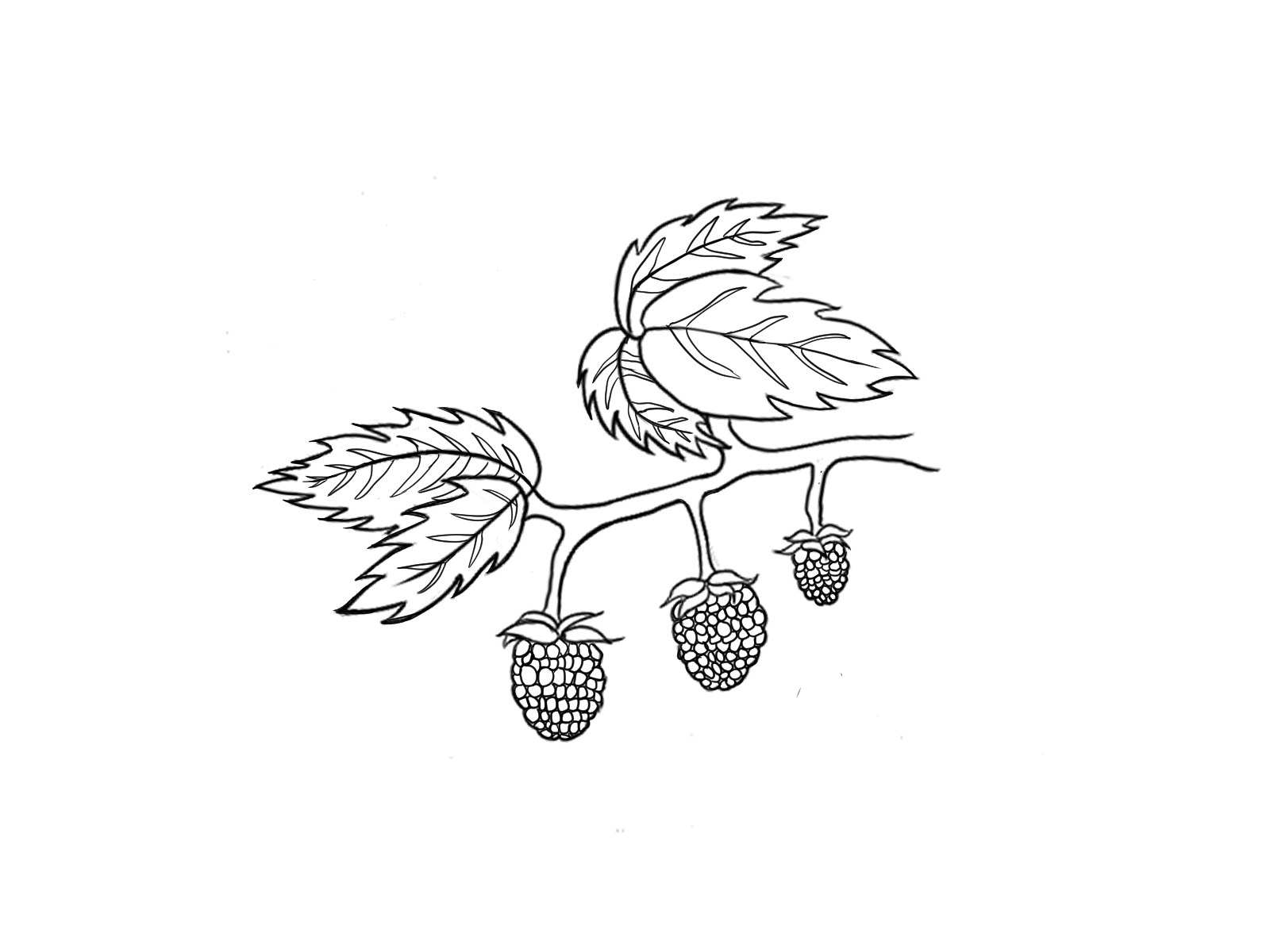
    It turns out raspberries are a lot harder to grow than I thought. Every single little ruby nodule (called drupelets, as the girls enjoyed saying over and over again) that makes up the berry has to be pollinated. 

    “What’s a pistil?” asked Dora at one point as we were reading a gardening article about self–pollination. I had no idea. We searched for that, then went through the entire anatomy of plants. 

    We got into all of it. By the time we’d exhausted everything besides academic articles, it was dark out. I left the girls giggling about fruits and babies to get dinner ready, when I heard the front door open. It was Ellis. Crusty bearded and smelling like days old sweat.  

    “I heard you guys laughing from outside. What were you doing?” 

    “Talking about raspberries,” I replied.

    “Ah.”

    He came over and wrapped his arms around me as I started washing vegetables. I almost gagged at the smell. He let me go and looked out the window into the front yard. The crocuses were already out, and I could see a few tulip shoots, souvenirs from the city we used to live in. 

    “The girls want to try pollinating the raspberry plants by hand, if it’s possible,” I said.  

    “Oh?” said Ellis. But I couldn’t tell if he was paying attention. 

    “I’m going to make dinner. Go shower then come join us, okay?”

    I was just finishing up the lentil stew when I heard the footsteps come down the stairs. He was clean shaven and smiling. Like he’d never left. The girls went over and hugged him tight. I wondered for a moment, how it felt to leave and return all the time, if Ellis ever felt he was pulling at the threads of our family each time he left. He didn’t want to be this way; of that I was sure. He didn’t want the world to be the way it was either. But to my mind, you can’t change either one on your own, much as you may try. 

    Ellis asked Sophie questions about her social sciences class, Dora interrupting to tell him all what she’d learned about raspberries that day. Ellis listened like it was the only thing that mattered. 

    “I think I know how we can try and pollinate the raspberries,” said Ellis as we sipped on whiskey we only brought out on special occasions. The girls were playing some game on the TV behind us. 

    “We can try tomorrow. I’ll go into town and get some things.” 

    . . .

    Ellis was gone when I woke up. Panic filled my body until I looked out the window and saw the car was gone too. 

    He was back before the girls got up. And he was the one who woke them and made them breakfast. 

    It started to rain in the afternoon, but Ellis took the girls out of classes anyway. We all put on our rain jackets and boots and tramped outside in the mud and bright green grass.  

    “Okay, here is how we’re going to get some raspberries.” 

    Ellis pulled out four electric toothbrushes. 

    “Watch carefully.” 

    He turned one on and then bent in front of a raspberry flower. 

    “Petals form the outer layer of the flower. Then we have the stamen and anthers, covered in pollen,” he said. We all leaned in closer. 

    “At the very centre are the pistils. You girls were right, a raspberry can pollinate itself, but to form a full fruit, every pistil has to be pollinated.” 

    With slow deliberation, Ellis pressed the whirring toothbrush bristles against the yellow anthers. A brief shower of pollen fell into the centre of the flower, covering the pistils nestled inside. He did this over and over again, until each anther had released pollen onto the pistils. Then he got up and handed a toothbrush to each of us. 

    “This is just my first idea. I’m sure one of you could think of something better. But I thought we could try this, see how it goes.” 

    From them on all we did was pollinate raspberries. In the morning, I’d download the girls’ homework for the day. Then we’d spend an hour pollinating, before coming in for breakfast and one school activity. Then three hours of pollinating before lunch, then on and on, rotating between pollination and homework until it was dinner time. I started seeing little pink and white flowers in my dreams.

    When he wasn’t pollinating with us, Ellis was calling all our neighbours, asking if they had seen any bees. He started to call our MP and MPP, demanding to know why they hadn’t foreseen this and what they intended to do. 

    He also called other members of the count. They shared information on what they’d seen and what was still missing. More than once I heard Ellis offer low–voiced sympathy to a fellow counter who had not yet seen a bee. 

    But then, others had claimed to see some. 

    “A few honeybees apparently have survived a few hours north,” said Ellis one night in bed. 

    “I might go talk to the beekeeper there, find out what they know, see if they’ve seen any solitary bees.” 

    “Sounds like a good idea,” I said. 

    I was thrilled to have Ellis back, but wary of opportunities for failure. I did not want to lose him again if it turned out that bees were forever a critically endangered species. I was scared that my need for him to stay would become too obvious or the task of hand–pollinating the raspberries would become too overwhelming and he would retreat again. 

    I felt both selfish and cautiously relieved when each day proved me wrong. After a month with the electric toothbrushes, Ellis decided we should try other things and share our results with the people he’d talked to from the count. 

    We tried paintbrushes, bits of sandpaper, small dusters, mini fans, we tried using our hands and we tried scraps of fur from rabbits or deer that Idina Lambert had provided us when I told her about our experiment.

    “Let me know what works,” she said as I made to leave. “I’ve got blueberry bushes. I’d like to make a pie this summer.” 

    It was painful work. The girls had less difficulty, but our backs ached from hours hunched over and we made liberal use of painkillers for the headaches we got from craning our necks to find flowers. After pollinating, Ellis would write down what worked and what didn’t in a shared spreadsheet with other counters and our neighbours. Soon others were collecting data as well and passing on tips for how to create shelter for bees that were still out there. 

    “We’ll have to stop pollinating for a while,” said Ellis one morning. It was mid-May and the temperatures that week were expected to soar past forty degrees.

    The girls were outside watering the raspberries with a hose attached to the back of the house. It had been a dry spring. Forecasts warned that June would bring more drought and potentially brown outs, along with water shortages in our area. 

    Ellis called them in and hugged them close. 

    “We did our best. Now we have to wait and hope our little friends can finish the job. We should open the basement windows, in case there are any pollinators looking for a cool place to wait out the heat.”

    We all stayed low to the ground that day. At eleven we went down to the basement ourselves, its dirt floor cool on our feet. Ellis and I placed some towels on the ground and told the girls to pretend we were at the beach. 

    The hours went by slowly. Sophie read next to Ellis, Dora dozed, and I watched the air fill with dust particles and heat as light breezes wafted in and out of the small basement windows. 

    Then I saw it. A small body drifting through the window, its fuzzy yellow legs a dead giveaway. 

    I said nothing, afraid any noise would send it flying back out into the deadly heat. It came to land on a wooden table with some flowerpots on it, relics of the previous owners we hadn’t bothered to get rid of. The bee crawled into an overturned pot. I got up, aware of every part of my body. Ellis looked up at me. I put my finger to my lips, and he nodded. 

    I went up the stairs as quietly as I could, hoping the bee wouldn’t be disturbed, but aware that it might’ve come to die in a cool, quiet place. As soon as I was up the stairs I ran outside, almost choking on the heat and grabbed some small rocks from the side of the house. I put them in a small bowl, filled the bowl with water, then hastily went back to the basement door. 

    By this time both girls were sitting up and watched closely as I came down the stairs. I placed the bowl on the table as quietly as I could and came back to join them. 

    It took about ten minutes before the bee peered out of the pot and hopped onto the edge of the bowl. 

    “What kind?” whispered Ellis, transfixed. 

    “Leafcutter.” 

    “Can I get closer?” said Sophie, already inching off her towel. 

    “No don’t, you’ll scare it,” said Dora. 

    We waited and watched until the bee had covered itself in a thin film of water and went back into the flowerpot. It was still so hot. My t-shirt was sweat through. I went upstairs once again and grabbed four shallow buckets full of water. We all put our feet in the buckets and that’s how we all fell asleep; half sitting against the wall, four sets of feet in buckets, sticky and exhausted.

    When I woke up, Dora was at the flowerpot, poking a finger inside. My neck was sore from sleeping upright. I got up and she turned and came back towards me. 

    “It’s gone.” 

    “Maybe it’s out getting some food. Pollinating some raspberries,” I said, trying to feign a smile as I rubbed my neck and took stock of the soreness I’d incurred during the night. 

    “I hope so,” said Dora. “It’s nice to have some help.” 

    “Yes. It is, isn’t it?” 

    Ellis and Sophie were still asleep, curled into each other. I looked to one of the windows. It was cloudy out. Maybe we would get some rain after all.

    “Should we go see if our bee has any pals?” 

    “Yeah!” 

    We went upstairs, got a clipboard, some binoculars, and stepped outside to see what we could find in the field. 

    Emma Bider is a PhD Candidate in Anthropology. Emma is from Ottawa and loves speculative fiction, cli-fi, sci-fi.

  • Yarn

    Yarn

    The Sun hangs low over the village of one street. Gripping a basket full of yarn, the witch shuffles past homes with smoking chimneys and arrives at the cottage at the end of the lane. The wooden gate glides open under her wise old hands.

    Elena gazes out of the front window of her cottage, nursing a long–since finished cup of tea. She cycles through the day’s chores, crossing them off one by one and starting over again and again. There is nothing left to do but wait for an appropriate time to go to bed.

    She could knock on the neighbour’s door, brandishing the pie she made today so it doesn’t seem like she’s just begging for company, but she is too tired to watch all her happily–wedded neighbours dote on one another, stealing glances with secret meanings—too tired to pretend she doesn’t notice how the others frustrate and deride one another. Either way, she would rather be alone than be pitied over her husbandless home.

    Elena surveys the pinks of the horizon with vacant eyes and notices an old woman standing in her yard. The moment they lock eyes, the witch motions expectantly to the door with a practised flick of the wrist. Elena cracks open the door, with a smile she hopes is polite but unwelcoming. She thought she had locked the front gate.

    “What brings you here, Elder?” Elena asks.

    “Elena, my dear. May I come in?”

    Elena chuckles airily, searching for a way to say no.

    “These kids have no manners,” the witch grumbles to herself, sighing as she waves her hand before Elena’s face, “Let me in.

    Elena holds the door open for the witch, whose eyes dart hungrily around the clean little cottage. A rocking chair sits before a crackling fire and a pie is cooling on the counter. With a proud smile, the witch settles into the warmed rocking chair.

    Elena watches the witch set down her basket and pull a pair of knitting needles from the deep pockets of her robe.

    “I appreciate your visit, Elder, but I’m quite tired and—”

    “Nonsense. Come help me untangle all this yarn.

    Elena kneels in front of the tangled skeins of yarn overflowing from the witch’s basket and searches for an end.

    “That’s more like it,” the witch mumbles.

    . . .

    The witch’s nimble fingers cast on effortlessly as she knits row after row with the speed of someone no longer concerned with making an error in her craft.

    “It’s been lonely, hasn’t it?” the witch says after a time. Elena shrugs noncommittally. “Be honest with me.”

    Elena prepares to deflect the question but, transfixed by the rosy pink yarn flowing smoothly from her hands to the witch’s needles, she finds herself saying, “Yes.”

    “It’s about time for you to find someone to love, is it not?” the witch asks.

    “All the men around here are spoken for.”

    “You’ll find one sooner than you think. What kind of man are you looking for?”

    To Elena, looking for a man means letting her mind wander up into the sky. There, she imagines someone holding her hand while she walks through the forest, kneading her shoulders the way she kneads dough. She is familiar with the feelings she longs for but she’s never tried putting them into words.

    “Oh, I don’t know. Someone…kind,” Elena replies.

    “Naturally. What about someone smart?”

    “I suppose, but that isn’t the most important thing either.”

    “What is?”

    “A good heart.”

    “We’ll get there. Brains aren’t important to you?”

    “Good sense is important, sure. But I wouldn’t like to be with a man who talks to prove how smart he is.”

    “Someone who doesn’t talk down to you then?”

    Elena nods, “someone who listens.”

    The witch hums agreeably and drops a curious ball of conjoined ovals to the floor. She leaves one long string behind, and begins a new row of stitches. Elena’s eyes follow the yarn in her fingers to the deep, winding grooves on the surface of the deformed ball. Then she looks at the witch, who peers up from her knitting to look back at her.

    “Why are we doing this?” Elena asks.

    An almost tender smile spreads across the witch’s face, “Because I care about you. Now, tell me more.”

    . . .

    Though she privately finds the witch to be nosy and crude, Elena dutifully searches for the words to describe the man she imagines meeting one day, and the witch has another question for every answer.

    “It would be nice if he isn’t a heavy drinker,” Elena says.

    “How about every once in a while?”

    Mounds of knitted pink bundles pile up on the floor, each one linked to another by the single strand of yarn that Elena pulls free from the basket.

    “He ought to keep himself clean.”

    “But he shouldn’t be disinclined to work up a sweat, no?”

    The yarn is so cooperative and the rhythm of the witch’s hands is so mesmerizing that Elena doesn’t notice the sunset surrendering to the Moon.

    “He should notice when supplies are running low and think ahead to harsh winters,” Elena says.

    “As a hunter or a farmer?”

    Elena doesn’t notice the yarn mutating into different shades of pink between her fingers.

    “Wouldn’t it be nice to be with someone who just knows you?” she asks dreamily. “Someone who’s known you for years, who can tell when you’re upset and knows just how to cheer you up. Someone who sees what you need without you having to ask.”

    “Some would call that unrealistic,” the witch retorts.

    “I suppose.” Elena grimaces into the yarn. “Falling in love just seems like more trouble than it’s worth. It seems wonderful in the beginning, but it can all fall apart so fast.”

    “It can come back together just as fast, you know.”

    “But is it worth it? Every time?”

    The witch smiles to herself, “You’ve been watching your neighbours, haven’t you?”

    Elena bristles with guilt. There is a man across the street with a wife who couldn’t keep away from him when first brought home from town. She would come outside while he was cutting firewood just to kiss him and go back inside; and soon after he would follow her in. Before long, she started to complain that there was never enough wood. Now, their bitter fights are punctuated by fleeting, passionate reconciliations that Elena can hear too much of from her cottage.

    “I don’t know how they put up with each other,” Elena says.

    The witch shrugs, “He got what he wanted with that one: fiery, full of life, with eyes only for him. She loves him so much she devoted her life to him, so who do you think she blames when she’s in a foul mood? She wanted more from him than he had to give, and now all he does is disappoint her. He sure didn’t expect that.”

    Elena thinks about the way she catches her neighbour’s wife looking at him—like her saviour and then her tormentor; her treasure, then her captor. Like she owes her life to him. Like she is watching for what he will do to her next.

    “Maybe I want someone more like an old friend,” Elena says finally.

    The witch drops a long, curling tube of yarn on top of a thicker, shorter tube, “Don’t you worry about getting bored?” she asks.

    “I’m bored already. But peace is better than war, don’t you think?”

    The witch considers this, then asks: “What about sex?”

    The flow of yarn stammers between Elena’s fidgeting fingers.

    “You do think about sex, don’t you?” 

    “Of course I wonder,” Elena murmurs.

    “What would you like it to be like? Don’t be shy.”

    “I suppose…” Elena fiddles with the yarn some more then laughs to herself, “I suppose I would just like to feel beautiful to someone.”

    The witch nods approvingly as she finishes knitting a strange shape Elena has never seen before.

    “That’s a fine answer.”

    . . .

    The Moon is at its peak by the time the witch announces she is almost finished. For a while now she has been working on an odd blanket that protrudes with sleeves ending in short, slender branches. It is large enough to cover all the little bundles that came before it.

    “Do you think someone like this exists?” Elena asks, just as the yarn runs out under her fingers. She is shocked to find the basket suddenly empty, save for a pair of shoes atop a pile of folded clothes.

    Casting off the last stitch, the witch stands for the first time in hours and holds the cream-coloured piece up before her. It resembles a cloak with a hood. And limbs. Lit up from behind by the fireplace, its tall shadow softens the wrinkles around the witch’s wide grin. The pink oddities strewn across the floor pulse under the embers.

    “What is this?” Elena asks. Her voice sounds rather far away. She doesn’t know if she’s whispering or if she is being drowned out by the beating of her heart.

    “Oh, you’re going to just love it,” the witch says, delicately draping the cloak over her arms. “Lend me a hand, won’t you?”

    Elena’s legs wobble underneath her as she stands. She tells herself she is sore from sitting, ignoring that her hands are shaking as well.

    Scooping up an armful of pink, she follows the witch across the room to her bed. Little pink bundles trail behind them, all knitted from one single strand of yarn passed from Elena’s lonely fingers to the clever hands of the witch.

    With a precision not unlike that of her knitting, the witch gingerly lays the cream cloak on the bed and arranges the knitted bundles along its length, twisting tubes tightly in the middle and funnelling pink matter down the sleeves. By the time she places the grooved ovals into the hood and pauses to assess her work, Elena is paralyzed by the instinctive comprehension of what is lying in her bed, its insides on display. Then the witch pulls out her needles. She drags them along the knitted carcass and the cream yarn crawls towards the tips of the needles, sealing away the mounds of pink. The needles meet in the middle and leave behind a soft belly button. The witch steps away from the knitted man and beckons Elena towards him.

    “No,” Elena whispers.

    Kiss him,” the witch commands.

    Elena sits by his side and shudders when his body shifts under her weight ever so slightly. He has no face. Only the hollows of two eyes, the soft peak of a nose, and the plump suggestion of a mouth. It isn’t until Elena is hovering over the knitted man’s head that she realizes she has never imagined kissing someone for the first time. She has only ever imagined being kissed; by a man who tucked her hair behind her ears and held her cheeks in his hands; by a man who looked into her eyes and saw that she wanted to be kissed; who kissed her because he thought she was beautiful.

    As her lips meet the dry, lifeless mouth of the knitted man, she mourns the loss of a dream she didn’t know she had.

    Her heart skips a beat when the yarn melts away and she feels the warmth of dewy lips kissing her back. She recoils, and the man with smooth cream skin opens his vacant eyes, but then he smiles at her the kind of warm, unassuming smile she’d always dreamt of.

    Elena tries to back away and bumps into the witch hovering behind her with the basket. “I hope you will find that he is everything you asked for,” the witch says.

    Elena searches the witch’s eyes for some kind of answer, but all she finds is the proud satisfaction of a mother.

    “But he’s not real,” Elena whispers.

    “Neither are you, but you feel real, don’t you? Now give him his clothes.”

    Elena hands the clothes to the stranger on her bed, powerless to do anything else.

    “Thank you,” he says, rising from the bed. Then, as if he’s done it a hundred times before, the stranger reaches out and tucks a hair behind her ear. Elena gasps, feeling sick to her stomach and blushing despite herself.

    “This is your husband. You remember him.

    The ache in her stomach mutates into a loud hum. She gasps again, this time with terrible joy, as she remembers everything she can’t believe she forgot. The day they met, all those years ago. The day he kissed her, and all the days lost to kisses since then. The day they were married. The day they put their fights behind them and chose peace over passion. The days where no one spoke until noon. The days he kneaded her shoulders the way she kneads dough.

    All their days, all their nights, are compressed into a quiet contentment in her soul as she watches him pull on his socks.

    “I believe Charlie is a fine name, don’t you think?” the witch says. The witch always names her children. 

    “Charlie,” Elena says. She welcomes her husband’s arm around her waist as they walk the witch to the door.

    “Good luck with this one. I think you chose well this time around. Now, forget I was here.”

    Elena and Charlie close the door on the cool night air and get ready for bed. Before they fall asleep, he presses himself into her backside and moves the hair from her neck to kiss her there. She smiles and says nothing, he does too. They move together in a familiar rhythm. It doesn’t last long, but Elena falls asleep feeling beautiful.

    . . .

    On her way out of Elena’s home, the witch spots a man across the street spouting drunken pleas into his front door while his wife—her youngest child until tonight—refuses to let him in. She considers plunging her needles into his navel and bringing home the yarn, but her hands are worn out for tonight.

    As the witch shuffles back to her cottage just outside the village, she conducts a silent symphony for all of her children, embedding them with fond memories of their old neighbour, Charlie.

    Jaclyn Legge is a Masters student in Carleton’s English Department with a personal and scholarly interest in the pleasures we seek and desires we fulfill through reading and writing love stories and erotica.

  • The Common Denominator

    The Common Denominator

    This Piece Features a Content Warning

    Miscarriage is prominently featured.


    I want to tell you how much your mother and I love you. Let me begin: I knew I loved her but not enough to have kids with her. You’d know by now that love is not enough for things to work out.

    You came into our lives so early. I was 23 and struggling with getting the needles out of my arms when I met her.

    I was on a comedown when I used Tinder to send her: You look like the type of girl I’d bring home to my mom.

    Three months later we were walking onto the platform at Berri station when she looked at me, trembling and candid. 

    I should’ve had my period a month ago. I think it’s a baby, she said. 

    It was you, Chloe. 

    I wanted to punch a wall for this mistake. I wanted to cry and curl up and flail in a puddle of mud. The head rush flowed into a body high that ebbed up out of my stomach and into my arms and through to my face when it seemed I would become a father. I wanted to laugh and smile and pick your mom up and kiss her like it was going to be okay. I said nothing then.

    The train ride I thought of my mother, who had always forewarned me of the dangers of fathering too young, too early, with the wrong girl, and how “Your life ceases to be your own.” Then, I thought of my father, who may as well have not existed. 

    I would have to get clean to be a good father. I would have to finish my first book and dedicate it to you. What if I ended up being a terrible father like my own? What would that make me? 

    We got home. She was still trembling. She charged around the room, furiously zipping and unzipping her coat with growing upset. At last she peeled it off and slammed it onto the coffee table. Its zipper panged the edge of the table and chipped the glass. She crumpled to the floor, weeping.

    Just sit down and try to chill out, let’s talk about this, I said. How do you want to go about this?

    Her eyes reddened. What do you mean? Go about this? What do you fucking mean by that?

    The tears began to come alongside a flurry of unprofessed love for you. She had known you longer than I. 

    In another universe this would be my version of Hemingway’s Hills Like White Elephants

    We’d not spoken as much as a whisper of that.

    Are we gonna do this then? Together? she asked. Our eyes were red and puffy and soaked with optimism. 

    The only way through this thing was together.

    I tried getting off the stuff. She quit smoking. We moved in together. You were the common denominator. The mistake began to look like serendipity. Someone with something to live for. And that we could give it all to you.

    Two months later we found out from the ultrasound that you were a girl. Your momma thought you looked like a Chloe right from the get go. She thought it was the perfect name for you. I felt it, too.

    Another two months later and your mom got the news. She called to tell me you were gone. I wasn’t sure what to say. There was only silence from her side of the call. 

    She wept for a week straight. If I saw her sleep 8 hours in that entire stretch, it’s an overstatement. Losing you killed a part of her that having another child will never revive.

    After a few weeks we realized that our relationship was anchored by an idea of you as the future. And this fantasy of playing house was over.

    We’d only had six months of the idea of you. Neither of us had even the chance to hold you. There are not enough words for the sensation of having been given a dream you’d never dreamt before, only to be rudely awakened from it.

    I don’t know how many times I have tried to write this story, now. 

    Let me start again, Chloe, you have been loved more than you’ll ever know…

    Victor Vigas Alvarez wants the words to dance and sing and swing. He owns a typewriter, which is unfortunately not the most efficient way to write these days. It does tickle a nerve in him that he can’t quite elucidate with words. He’s not pretentious about it. The last few years of committing his life to writing have been an interesting and humbling introduction to the life of someone that has to put words on paper to get by. He digs it.

  • Family Chronicles: Cold War Europe on $5 a Day

    Family Chronicles: Cold War Europe on $5 a Day

    This Piece Features a Content Warning

    Mentions of Nazis and swastikas present.


    If your father was in the military your family could expect to move every three years. We lived at six different addresses by the time I was 18. My father’s career started at Base Borden (north of Toronto); from there, we moved to London, Ontario; then to West Germany; to Ottawa, Ontario; back to West Germany; and finally back to Base Borden.

    My memories of each of our homes are distinct and clear: the rooms, the people populating them, the furnishings. I can still describe the ornaments, the dishes, the carpets, and memorable events. The living room of our clapboard house on Maitland Street with the beige, nylon upholstered sofa and matching chair, the Singer sewing machine in a place of honour in the corner, the red Naugahyde ottoman with the hidden record storage inside. At our small brick bungalow on Trafalgar Street, we had two televisions, one on top of the other—one had sound and the other had a picture.

    Our homes had outdoor clotheslines for wet laundry; driveways and parking spots for our Studebakers, Opel, Fiat, and Datsun; drapes and sheers and roller blinds and shutters; Kelvinator refrigerators; RCA televisions with rabbit ears; bunk beds, trundle beds, double beds, and cribs; and chrome kitchen tables with vinyl-covered matching chairs. There was a massive wall unit that reeked of my spilled patchouli oil for 40 years that held family photo albums, crystal, and French pottery. We felt rich, luxurious, and privileged when my mother purchased faux French provincial furniture and an elegant Queen Anne chair to replace the beige nylon living room furniture. I see it all…every piece of furniture, every carpet, lamp, fork, knife, spoon, and heavy aluminum pot—each with its own story of origin.

    . . .

    In 1965, my father’s infantry unit, the second battalion of The Royal Canadian Regiment (RCR), based in London, Ontario was chosen as one of the next groups of soldiers to rotate to West Germany to serve as part of Canada’s NATO forces. Families would accompany the soldiers for three–year postings. I recall feelings of excitement, anticipation, and dread at the news that our family would be pulling up stakes and moving. Dark dreams about Nazis and bloodred images of swastikas occupied my ten-year-old mind for weeks. My father didn’t help my uneasy feelings as he proudly explained what his job would be: protecting the people of West Germany from the Communists in the east.

    We lived in Soest, a medieval, walled town in northern West Germany. The Canadians were housed in dull, three–story apartment buildings erected in the middle of farmers‘ fields on the outskirts of the city. Within two weeks of our arrival, we were woken in the middle of the night by loud sirens mounted on the sides of the apartment buildings. The sirens blared for several seconds to make sure everyone was awake, and then a loud voice yelled, “snowball, snowball, snowball.”

    This went on for several minutes. My worst nightmares were being realized: surely “snowball” was code for “Communist.” In fact, it was an exercise (to be repeated many times during our stay) meant to wake up the soldiers and have them scramble to their bases (some of which were 15 kilometres away) in preparation for an invasion that thankfully never came. My father would quickly get ready and leave the apartment for his base, leaving me wide awake in my trundle bed wondering when I’d see him again. My young mind never wrapped itself around the concept of “exercise” (when the military would practise its response to various threats), and these exercises could be deadly, as I discovered the following year when my best friend’s stepfather died while on one of these “snowball” alerts.

    Moving to West Germany was one of the highlights of our family history. On arrival,my father purchased a 1956 Opel station wagon from a soldier who was on his way back to Canada as a car to hold us until he found a newer one. He paid 200 Deutsche Marks, the equivalent of $50 Canadian at the time. This temporary purchase lasted our family three years and was driven all over Europe. Every weekend our parents would hustle us into the Opel and off we would go on an adventure. My father was always in a sport coat and tie, my mother dressed to the nines with a large purse looped over her arm. Her purse contained the family bible: Arthur Frommer’s Europe on $5 A Day. By the time we went home to Canada three years later, we had visited every historical site within 200 kilometres of Soest, and we had travelled to England, Holland, Belgium, Switzerland, Austria, Italy, France, and East Germany.

    We lived in the middle of the Ruhr Valley, the largest industrial area of West Germany, and were never far from the vestiges of World War II, which had ended a mere 20 years before our arrival. German ingenuity and incredible hard work had restored the cities that had been devastated by repeated Allied bombings, and evidence of this was front and center in cities such as Dortmund and Hamburg, where new buildings stood shoulder to shoulder with ancient structures. This was especially notable in the postcards my mother brought back from a visit to East and West Berlin. Soest had been undamaged; however, the nearby Mohnesee Dam, which had been a repeated target of British bombers determined to shut off the water supply of this industrial area, was a fascinating place to visit. This massive dam was the subject of the movie The Dam Busters, which we watched many times. I never had the feeling of being a “tourist” when we visited these places. Thankfully, our parents refused to take us to the remnants of the concentration camps nearby that many other Canadians visited.

    Soest was a treasure trove of coolness for a 10-year-old. Left to my own devices to explore, I spent endless hours on the wall (built in 1180) surrounding the old city. Walking across the farmer’s fields, the entrance gate to the city loomed largely, and we would start running as soon as it came into view. We were allowed unlimited access and climbed in and out of ancient cannon turrets; peered out of long, narrow windows high up in the tower; and ran on the wide pedestrian walkway along the top of the wall. The wall was perhaps four or five stories high, and seemed wide enough for cars; it became our shortcut to get to the public swimming pool, the dentist’s office, and the shops in the middle of town.

    My father purchased a Super 8 movie camera and an Instamatic camera within weeks of our arrival. He became the custodian of our memories, starting a scrapbook of postcards chronicling our adventures. Our silent family movies are treasured heirlooms, despite my father’s terrible skills as a cameraman. My mother made everything happen and she was happy to stand by and observe when there were specific activities for the children, such as learning to ski at Berchtesgaden in the Bavarian Alps, or swimming like a family of otters in Lake Chiemsee after visiting a replica of Versailles built by Mad King Ludwig II. Memories of my mother standing on the side of the ski hill, knee–deep in fresh snow, with her large purse over her arm, come back to me and make me smile. She was not an athletic person at all, unlike my father, but she was ready and willing to make sure we had the opportunities. The purse, the subject of many family jokes, is ever–present in my memories of her. In a family photo taken in Salzburg, we are all dressed in salt miner outfits of white baggy pants, black shirts, round black miner caps, and the ubiquitous purse hanging on my mother’s arm. It resembled Mary Poppins’ bag, holding the necessary things like cigarettes, matches, passports, tissues, cash, Europe on $5 a Day, postcards, leftover stale buns that we hadn’t eaten at breakfast, and anything we decided we didn’t want to hold. A request of, “Mom, can you put this in your purse?” was usually followed by a long sigh, and an impatient hand thrust toward us.

    My older sister and I were allowed to accompany our parents on trips without the two younger kids. On one memorable trip to England in the spring of 1967, we were treated to our first stage play (Agatha Christie’s Mousetrap), our first musical (Oliver!), Madame Tussaud’s Wax Museum (before it became a tacky tourist trap), the British Museum (where I saw the Magna Carta), and endless other sights. On a country bus trip, we visited Stratford-on-Avon, sat in a chair in Shakespeare’s house, and looked in amazement at the architectural wonder of the smooth thatched roof of Anne Hathaway’s cottage. The highlight of the trip for me was a visit to Carnaby Street, where my mother bought me fishnet stockings, an orange miniskirt, and a black turtleneck. How utterly hip and groovy was this? I was 11, the Beatles and Lulu were at the height of their popularity, and I could not wait to get home and show off my new outfit. My older sister, 14 years old, got a Burberry raincoat. To this day, the orange miniskirt and the Burberry coat are ageless symbols of two sisters’ differing fashion tastes. On our return to Soest, we repacked our suitcases and headed out for a car trip to Belgium.

    A 1967 family photo taken in Genoa, Italy. It consists of Rosemarie, her mother, her father, and her older sister Linda.
    Genoa, Italy, 1967: (from left to right) My father, me, my mother, older sister Linda.

    There is a photo taken in Genoa, Italy of my parents, my older sister, and me in the summer of 1967. We are sitting on a stone wall in front of a massive garden with ornate flowerbeds in the shape of Christopher Columbus’ ships: the Niña, the Pinta, and the Santa María. Details like these come easily to me because the trips we took while living in Germany are etched in my brain, permanently stored with my favourite memories. The trip to Italy was legendary in my mind. I recall most details of this trip; 55 years later, and I have re-created parts of that trip with my own children in tow. Each time we visit, I regale my fellow travellers with my memories and highlights. I remain forever grateful to and in awe of my parents for putting these opportunities in place for us.

    The Italy trip was by luxury coach with a busload of American military and civilians. My sister and I were the only children. My mother’s patience was endless, as my sister and I were motion sick all the time, likely caused by cigarette smoke. When we weren’t sick on the bus, we were sick on the boat to Capri, or sick because we were served green lasagna noodles (coloured green by spinach). We saw all the highlights: Milan, Pisa, Rome, Naples, Venice, Pompeii, Sorrento, Capri, and more. We were allowed to do the excursions we wanted: in Rome, my sister chose to see the opera Aida at an open–air theater; I went to a private audience with the Pope at his summer residence at Castel Gondolfo; and my parents visited the Catacombs. This was the democratic way of travelling that worked well for our family. Many of the Americans had taken my sister and me under their wing, and when we expressed a desire to see things that interested us, my parents allowed us to do so, knowing we were well–supervised.

    Before my excursion to see the Pope, my mother purchased a large handful of rosaries from the vendors in St. Peter’s Square, giving them to me with strict instructions to have them blessed for my Catholic aunts. Confused about the meaning of “getting something blessed,” my fellow bus travellers assured me that it was a painless procedure and put me at the front of the group when we gathered in the garden at Castel Gondolfo. Pope Paul VI passed along the group, offering blessings. I remember wondering if he would know that I was not Catholic, was never baptized, and only went to Church when it was my father’s turn to pass the collection plate. I was determined to get those rosaries blessed and did not want to fail in my mission. My shoulders were covered with a lace shawl, borrowed from one of the women on the trip, and my curly hair was covered with a scarf, a must in those days for women. Pope Paul VI stopped in front of me, put his hand lightly on my head, said something unintelligible, and moved down the line. I kept quiet until we were back on the bus, where I complained loudly to the tour guide that the Pope hadn’t blessed my rosaries. This garnered loud guffaws from everyone, confusing me. It was patiently explained that I got better than rosaries blessed; by resting his hand on my head, I got the deluxe package, a personal Papal blessing. My complaints were passed on to my parents, giving them fodder for another family memory that has been recounted, with guffaws, many, many times since.

    We left Soest in August of 1968, when I was 13, and our family moved to Ottawa. Communism was on the rise, and I was thankful that we were out of what I thought of as the danger zone, close to the East German border. Martin Luther King Jr. and Bobby Kennedy had been assassinated, Jimi Hendrix was singing about getting high, Bobby Gimby’s “Canada” was still running around in my head, and the Prague Spring had ended with Russians invading Czechoslovakia. My passport declared me Canadian, but living in West Germany and digesting international news and culture made me feel like a citizen of another world. Being back in Ottawa felt “normal” in a way that I now find hard to describe. Four years later, in July of 1972, our family was on the way back to West Germany.

    Rosemarie D’Amico is a fourth year English Literature major, who has a keen interest in creative writing. Rosemarie is coming to her university education later than most and is thoroughly enjoying the experience in her retirement.

  • Us Kids

    Us Kids

    One February, Mum made me write notes on Scooby-Doo valentines. She called out “run–on sentence” and “comma splice” before ordering me to scratch my patchwork title, then other ones: Klara, and Alice, and Ashlyn, and Eddie—Dom and Nick. But us kids knew these last two, the oldest, most pungent boys, as Dominic. So, when I had to give them two valentines, they latched onto me together, crushing their jaws into my hand. Tooth–marked, I flung fractured crayons at their heads, and shrapnel spread on impact. They were an occasional terror, Dominic, sometimes bruising us kids, always sucking up to the adults.

    But by spring, the twins had divided their attention between us and our teacher, Miss Mandible¹. She’d half–sit, half–lie in her desk chair, exhausted after our grammar lesson, by our disregard for her constraints. Her lethargy only encouraged the twins who, just that last winter, would help us animate our Polly Pockets. But in March they learned to deploy Diary of a Wimpy Kid hardbacks as bludgeons, seemed to favour this kind of play. Once, they even plucked Eddie from our lunch table, thwapped his head with the purple book, and crushed him face–first into the partition.

    Today, the twins occupy the carpet, and race Hot Wheels into the wall so fast they crack while us kids sit criss-cross applesauce around Miss Mandible’s desk. We release mournful giggles over our half–mother’s half–death, soothe her with whispers, dust off her cloth shoes which are squishy because the world is hard on her bones. Our work continues until we grow impatient and begin to pick at her layer of nylon stocking. We want to rip through to her, but only cue unexpected snooze–slurries of words. Her phrases don’t register in our little brains, but we nearly piss ourselves in euphony, mimicking her syllables—someone actually bursts. Still savouring the finish of Miss Mandible’s codswallop in our mouths and ears, we wipe down at the sink, pat dry.

    When we turn back to the desk, a knot of dust passes from one of the twins’ hands into our teacher’s lower jaw. She blinks to life with some virulent mindset, and the reeking twins sprint away, cackling like they’ve made a joke. Miss Mandible, after recovering from her slip in our pee, clenches her jaw and charges. We wail in North Korean funeral fashion as she smacks Dom’s lips and Nick’s butt like this is the UFC.

    Miss Mandible punishes by splitting, like today is March’s pioneer school field trip during which our teacher was Jennifer. We had to call her Mrs. Miller in the museum’s schoolhouse despite overhearing, outside, Jennifer’s complaints about her boyfriend’s non–proposal. Still, we didn’t question Mrs. Miller’s pseudonym; the grade eights had told us disobedience in pioneer times guaranteed use of the strap, but more importantly, we were convinced calling her “Mrs.” might make her happy.

    Life inside the schoolhouse was just wood and lacquer chips fracturing under our little fingers, theoretical dissection of a cow sketch on blackboard, our revolted labelling of its beef cuts. Mum told me, after her divorce, in chopped sobs and present tense, how she married Dad in that same schoolhouse. I remember my anxious righthandedness etched on the slate—Dom, dunce capped for uttering “Jennifer”—Nick’s sobs about his hatless status and separation from Dom. Us kids found our connections with Dominic akin to our bout with chicken pox, yet we got over the itching, and we cried seeing them apart. But Miss Mandible, chaperone Doug, and chaperone Suzie laughed at our grief, singled each of us out with index fingers. Each adult watched our individual embarrassments, analyzed Klara’s soggy cheeks, Eddies slack mouth, my darting eyes.

    So, on the bus ride home, us kids chose to revolt, to slip Dominic some Twizzlers we’d, for preparation’s sake, practiced strapping each others’ wrists with. We peeled the strips in clumps like Scotch Tape off the roll, they were all we had to heal, sugar was the only way we could speak on the bus, the adults would destroy any written notes, they’d tear our words apart, our voices to dust. Dominic’s moping hand reached for us, flexing, only to flick our offerings to the floor and yank away. The culprit erupted a lone head out over the seatback. It was Nick, who cut us off with chaperone Doug’s commandment: “You aren’t allowed candy.”

    ¹ Character from Donald Barthelme’s “Me and Miss Mandible”

    Nathan Erb is an undergraduate student in Carleton’s English program, concentrating in creative writing. His work has been published by the Carleton English department and FASS.

  • Tunnel Market

    Tunnel Market

    This Post Features a Content Warning

    Descriptions of graphic violence present.


    There were two main rules when in the tunnel market. First and foremost, keep your hands in your pockets and do not carry any handbags. The tunnel market infamously boasted the deftest gangs of pickpockets, coat charmers, bandits, swindlers, and vandals in all of Main Market, maybe even the state. Keep your handbags at home or in the car because these scoundrels could slip them off your hands without you noticing. Whatever belongings are necessary (wallets, car keys, phones), keep them in your pocket and make sure you can feel them in there at all times. Most people brought ghana–must–go bags, padlocked shut, to hold the things they’d buy there at the market. When you bought something new, you went into the stall or as far away from the path as possible, slipped the goods into the bag, and locked it shut again. Sometimes, people made it out of the market to find holes sliced into the bottom of their bags and all their goods missing; some wouldn’t have even noticed the change in weight. I knew of a woman whose bag was cut open, bled of its contents, filled with rocks, and then sewn shut. It was only when she had left the tunnel market and was back in her car that she noticed the crime. She hadn’t once dropped the bag from her shoulder. All this to say, none of these preventive measures are guaranteed to save you.

    Whenever thieves were unlucky or lousy enough to get caught, they were burned at the square. This was always a matter of great entertainment. I remember once this boy had tried slipping a lady’s wedding ring clean off her finger but she’d caught him and started wailing, “Thief, thief oh, onye oshi, thief!” and people gathered around. The air was so tight. The reason why theft was so rampant in the tunnel market was because people were always packed in there like peas, so densely even a mosquito would not have enough space to bat its wings. Because of this, the thief could not run. People closed tightly around him like a fist as the lady held onto his tattered shirt, beating his chest with her palms. A bunch of people carried him out from the tunnel market to the square on the main street. Already the shoppers were curious, leaning with thirst.

    The boy started screaming, “Please, please, I only want to feed my mother!” This was how it always went. They always wanted to feed someone, and the mob was always deaf to it. The mob loved the burnings because they saw it as retribution for all the times they had themselves been robbed and did not get justice. This boy kept screaming as the crowd whacked him with logs, bottles, stones, canes. Eventually, the men from Mechanic Village showed up with car tires. As the boy struggled, they tied his wrists and ankles, held his arms up, wore the tires on him like the beads of an abacus, doused them in petrol, and lit a match. The flames reached for the sky. He squealed, first a very shrill boyish scream—then the fire got his throat and aged his voice so he sounded like an old man shrieking. The smell of roasting flesh became lost amongst the many smells of the market’s wares. These burnings were some of the rare times the market stood still. Of course, the stillness was only an illusion. A burning was the best time for picking pockets and even as one scoundrel was being burned, others showed up to take advantage of his misfortune. I always strained to look for them whenever there was an execution. They were my version of your Tooth Fairy, my version of your Father Christmas. I watched the crowds, searching for a slow hand, for a wallet ejecting from a pocket, for goods trapdoored into a bag, but always found nothing. Only after, I saw the confused faces never too many, but just enough, patting pointlessly at their trousers and cursing at the ground.

    The second rule of the tunnel market was easier to follow: no matter what you do, never pick anything up. If something fell from your hands, or from your basket, or from a market woman’s stack of goods, never bend down to pick it up. What is fallen is gone. They said that if you bent down to pick something up, an evil spirit would take you away. You would look up to find the market dark and empty. You would not be able to find your mom, your pa, or anyone else. I never heard stories of people who bent down because, as I say, this rule was easier to follow, so no one ever picked anything up. But, the claim that an evil spirit would take you away was corroborated by other stories I had heard. Like the one of a woman and her husband who were shopping at Main Market and stumbled into the tunnel. There, in the throng of people, they found a beggar. Blind, he was, and lame. He begged them for some money and they said they could not spare any. He kept begging and begging and eventually asked the woman for a kiss if she could give him nothing. The story goes that the woman agreed because she was a fool and felt bad for him. When she kissed him, she turned into a tuber of yam. Her husband and the other shoppers were outraged and demanded he turn her back, but the beggar didn’t budge. Finally, after being beaten for hours, he said that he would turn her back if the husband gave him a kiss, and when the husband did, he turned into a tuber of yam as well, and all three of them disappeared. They say the beggar was an evil spirit come to test the kindness of the market–goers.

    Another one, I encountered personally. It must have been back before The Baby was born, when I was still the baby. My friend Zoba and I were in Mechanic Village because Baba wanted Zoba’s father (who was our driver) to fetch him a plumber. People were gathered around this tree they whispered housed an evil spirit. A man with a tractor was ramming into the tree, it was a really tall palm tree. Eventually the tree fell, and under the hovel of its root was a family of black cats with bright gold eyes. The cats just kept looking at us until a few women beat them to death with sticks. But then, when they took the cat corpses away, there were six white eggs there in the mud. The cats had laid the eggs, we said, so we cracked them all and threw them away. What I remember most was the smell. It smelled like smoke, but no one had burned the cats or the tree. 

    That Sunday, my entire family went to Main Market after church because Mama wanted to make egusi soup for Baba’s older sister who had come from London to see The Baby just born. The car had six seats in three grids. Zoba’s father was driving, with Baba in the front next to him. Mama and Aunty were in the middle row, while Zoba and I were in the back.

    “You and Zoba stay in the car with The Baby,” Mama ordered, peeling The Baby from Aunty’s stubborn hands with a pacifying smile and handing It to me. I nodded and passed It to Zoba. In those days, for some reason, The Baby always made me angry whenever I saw It, or they forced me to play with It, pose with It, hold It.

    “What, no!” Aunty cried, “absolutely not, that’s preposterous, let us all go into the market.”

    Mama laughed disarmingly. “See, sister, it’s not advisable to take children into Main Market. Sometimes something can happen.”

    “Onyinye,” Aunty whined. She always called Mama by her name, although Mama, I’m sure, was older than her. Also, because of her London accent, she made it sound not like she was saying a name, Onyinye, but like she was slurring a reprimand, Oh Ninye. “You must do away with these village girl beliefs… what, oh come now, what is that face, have I offended you? Oh Ninye, I apologize. But do you really believe a ghost will come and pluck The Baby from your hands? Bubby,” she looked at Baba, “your wife thinks a ghost will come and take The Baby away, how absurd.” Aunty laughed like a frog croaks.

    Mama looked at Baba, who kept his eyes outside the window. She chuckled, sweetened her voice the way she did when she asked Baba for something, “I just think it would be fa—”

    “It’s illegal in Britain to leave a child in the car, you know? In all civilized countries, it is illegal to leave children in the car. Someone would call the police on you,” she said ‘police’ like she was saying ‘please.’ “Come on, let’s bring The Baby. It is a family vacation, after all; let me spend time with my nephews, hmm. This is basically a tourist site, no?” She winked at me and I made sure not to smile back.

    “I don’t want to go into the market,” I tried in defense of Mama, but then she turned to me, her eyes red and whacked me across the face hard.

    “If your elders say you’re going, then you’re going,” Mama yelled. I was stunned. I hated being slapped in front of Zoba but she turned her face away when I started crying.

    In this manner, it was settled, we all went into the market. Another rule for the market was to never let go of your mother’s hand, no matter how quickly she walked, or how tightly she squeezed yours. You sped up to her pace, jumping puddles and potholes; and if you had a baby, you never let go of the baby. In addition to the pickpockets, and evil spirits, there were ritualists who kidnapped children for nefarious rituals. I heard a story once of a little girl whose own mother gave her to a ritualist for blood money. They gutted the baby, and the mother became wealthy.

    We walked through the Main Market. My face was stiff with dried tears and a dull pain lingering where Mama had struck me. Zoba was in her father’s arms, her small hands around his neck. Baba walked beside them, chatting quietly. Mama and I were in the front, piercing through the crowd. Aunty held The Baby in the middle. First we got melon seeds for the egusi, then onions and peppers. Cow feet, goat meat, dried fish, sweet leaf, bitter leaf, and spinach. In Mama’s other hand, she held the ghana–must–go bag, dropping the supplies into it and snapping the padlock shut around the zips.

    We could not find palm oil anywhere and had been searching aimlessly for a while when suddenly, Zoba was at my side.

    “Tell your Ma that you’re hungry and want to go to mama put,” she whispered.

    “No, she’s angry,” I replied.

    “Please, Ebube, just tell her and see what she says, hmm?”

    “No, she’ll slap me again,” I said.

    “Please, now, please.”

    “No, Zoba, go away.”

    But after Ma had given up on getting palm oil that day, she suggested we go to the mama put stall. There were many different food stalls in the market but the best ones, everyone knew, were in the tunnel market.

    At the end of Main Market, the tunnel market was squeezed into the space between two large rocks. All its stalls were in caves and caverns. The path was unevenly paved with stones, cracked tiles, plates and glasses, pebbles and seashells. Above, through a thin line where the rocks touched, we could see a sliver of the sky. And it always, always, smelled like cooking food and feces.

    Mama bundled her skirt between her legs and plunged down the five steps to the tunnel path in one step. With one hand around my wrist, she lifted me over the steps. Turning around, I could see Main Market well. The stalls draped in curtains and tarpaulin, umbrellas screwed onto tables and, above, the makeshift rope bridges connecting the plaza shops in the complex.

     A thin dog with stringy fur withering at the doorstep of the mama put stall was being tormented by a gang of monkeys. They dangled a stewy chicken leg in front of its face, laughing in high, chirping howls while scratching at their heads and balls. The dog’s ribs were like the prongs of a rake, shivering to expand as it breathed. Like a paralyzed limb, its tongue lolled out onto the floor; whenever the monkeys dangled the chicken, it would flap like the fin of a beached fish.

    The stall was carved into the side of a rock; the walls were the shiny opalesence of a pebble cracked open bearing slithering, green and blue auroras like veins so it felt like we were underwater, dining in an oyster shell. Rickety wooden benches wrapped around plastic tables. On our table, a peeling, fading sticker read, Yemi & Timothy. An image of two wedding rings connected the names. A family of women manned three large pots on open fire at the back of the cave. They all had children at their sides, fanning their flames and their faces, and babies tied to their backs. The cave was packed with people, twisting and straining, talking and laughing. Their body heat and the smoke coming from the firewood made it feel like a great gigantic beast was sitting on top of us. An old lady came and took our orders. Zoba started pulling at the fraying edge of the poster.

    “So have you baptized The Baby yet, Onyinye? I forget…” Aunty began. They’d had this conversation before.

    “No, not yet,” Mama responded, not looking up.

    “Hmm, and why not?”

    “Well, I just want to wait a while and see.”

    “Ah, what’s there to see?”

    Mama shrugged childishly. Aunty laughed mirthlessly, looking down at The Baby.

    “My brother tells me you’re thinking of giving this one tribal marks too?”

    “Yes, I am. I’m considering it,” Mama answered, glaring at Baba whose face was blank as ever.

    “Onyinye, isn’t it enough that you mutilated Ebube, you want to mutilate The Baby too? Is it not enough?”

    “There is no mutilation. It is a long tradition of my people to give tribal marks to members of the tribe. Long before your ‘civilization’, sister. A child does not get a name until it gets its tribal marks.”

    “The tribe? They are not of your tribe, they are of Bubby’s tribe, isn’t that right, Bubby?” Baba only chuckled quietly. Encouraged, Aunty’s chest inflated, “and in our tribe, the tribe of the Lord Most High, a child gets his name when he is baptized.”

    Mama turned away, towards the old lady. “Can we have water please? I beg!”

    The waters came and only Mama gulped hers, opening her mouth and pouring the water down as if through a drain, condensation dripping down her palms. When the last of the water was gurgled, she palmed the bottle flat like an accordion and left it trembling like a tumbleweed on the plastic table. I thought about sipping a bottle to show support, but I was spiteful that back in the car when I’d tried to show support, she’d slapped me. Meanwhile, Aunty watched her expectantly.

    “Anyway,” Mama began, “nothing is decided.” Aunty was about to respond when Baba chimed in that this was not the place to talk about this.

    The food came in large stainless steel trays. Swallow wrapped in transparent cellophane and soup in plastic plates.

    “You’re the one that wanted to come here,” Mama said to me after a while, “you better finish your food.” I wasn’t the one that wanted to come here. I never even asked. In response to my silence, Mama pushed the back of my head.

    “Finish your food,” she gritted.

     It had been a while of trying to eat when Mama called the old lady over and asked, “what kind of palm oil did you use to make this soup, Ma?”

    “Just normal,” replied the old lady.

    “Where did you get it from?”

    “There’s a store just…” the old lady pointed.

    “Take me there, I beg,” Mama said, “I pay for your time.”

    The old lady nodded.

    “Daddy, wallet please,” Mama asked Baba. He pulled his wallet out of his pocket and gave it to her. The old lady led Mama out of the cave and into the bustle of the tunnel market. Baba Zoba excused himself to buy something for Zoba. Whenever we went out, he always went off secretly to buy her something, but never in front of us. Zoba went with him.

    “Toilet please?” Baba asked and strolled for the toilet. Not wanting to be alone with Aunty and The Baby, I took a bowl of soup and went out front. I kicked the apes away, crouched in front of the withering dog and started feeding it pieces of meat from my soup. I dropped one in front of its nose and slowly, it opened its eyes and slurped it off the ground. Then I fed more and more chunks to it. When that one was done, I went back in and took Zoba’s plate. Aunty was on her phone, The Baby on its back on the plastic table.

    I fed more chunks of meat to the dog. When it had licked both plates clean, I stacked them on each other but I tripped on crooked pavement and the plates fell. Bending to pick them, I froze, realizing what I had done. I believe I stayed in that position for a while, thinking that if I didn’t open my eyes the evil spirit would not take me. Sweat bubbled on my neck, my hair felt itchy and alive like a colony of ants.

    Eventually, I opened my eyes and looked through my legs. There was Aunty at the other end of the cave entrance smoking a cigarette. I shot up and turned to her. The world did not go blank, I was safe from the evil spirits. Relief like cold soothing tongues over my sore bones. Then, realization. The Baby was not in Aunty’s hands.

    “Aunty, where is The Baby?” I asked.

    She coughed out some smoke. “Someone’s watching him while I smoke. What? What’s that face? Jesus, you and your mother with these superstitions.”

     I ran back to the table, squeezing through the crowd. Back then, the world felt to me like a cluttered kitchen table would to an ant. I elbowed, and strained through the swarm of people to our table. There was nothing there. The Baby was gone.

    Olu Babs is a Nigerian-Canadian author of contemporary adult dramas. Based in Ottawa, born and raised in Nigeria, Babs combines the chilling, haunting narrative style of Canadian literature with the campfire story, mythological air of Nigerian folklore and word-of-mouth.

  • Among The Stones

    Among The Stones

    At night, all you could hear were the voices of the dead. The long–gone, the recently–gone, the unremembered; every voice in the graveyard made themselves heard in the dark hours of night. A horrifying thought to many, I’m sure, but I’ve been caretaking these grounds for so many years that most of the voices just fade into the background, silent as the gravestones they’re buried under.

    When I was younger, I’d ask questions of the spectres that haunt the graven rows and eventually I learned most of their stories; some told more than others. Some, I wasn’t happy for having asked. There’re more than a few killers who were never caught under these stones, and they’re not the worst of the lot, I can assure you of that. But there’re more than a few good folks around, as well. A few of ‘em I even helped move on. Well, I assume they moved on, I don’t actually know what comes next—if anything comes next—and neither do they. They just…disappear, if some unknown grocery list of things is finally checked off.

    I’ve asked other grave–tenders about this, and it seems that the lot of us are cursed to be the ones nearest to the truth. We stand in the places closest to death but can never know it; we can only ever watch others grasp it and vanish before they can tell us what lies beyond that final veil. It used to bother me, but, like the voices of the dead rabble, I’ve deadened myself to it. Hardened myself to it. As though I, too, am a gravestone.

    A silent watcher. A warden of souls. The stone monument that stands and remembers that these people were ever here to begin with.

    Colin Sostar is a current Masters student within the Department of English Language and Literature. His personal and academic interests revolve around the fields and fandoms of fantasy and science–fiction literature. He is currently in the process of writing his own fantasy novel.

  • The Fever Grove

    The Fever Grove

    I wake crouching against rough bark. Taking a few short breaths to center myself in this new realm, echoes of memories tell me the way forward. The scents and sights of the woods are as familiar as the comfort of home, but a stillness tells me my heart is still that of an outsider. Ahead, the gaps in the lattice of branches open like pathways. They invite me forward—beckoning my surrender to the hunt—the forest baring itself to me as I’ve been taught to expect. My quarry will not be far off. Moonlit lessons on the path to my ascension have painted a picture of it in my mind’s eye: my quarry and I will be alone as two, alone as one, and then alone no longer.

    We were brought to this place together, our fates woven into the woods here by blood and birthright. A stag and I, here to dance together as I have with so much prey before, but with an even greater respect for the life he will give. My mind tells me I am more challenger than hunter—here to prove that I am worth the knowledge that courses through its keeper’s veins—and patience will see me through to the end of this trial. Whispered promises have told me all the unanointed can know about this place, as hesitant as they are to imagine these sacred grounds for themselves. Now, the forest’s soul does the whispering itself, urging a name into thought: the Fever Grove. A realm that will only release me once I’ve seen this hunt through. Anticipation piles into my body, overflowing out of the tension in my legs and threatening to burst through my chest with each movement. Years of experiences cage in that chaotic energy. Before any doubt can linger, even this forest yields to me with a practiced ease.

    The trained recesses of my mind take in the forest as I work my way deeper, searing in the impression of a fall canvas dulled in the twilight haze. There are no clouds in the sky that I catch occasional glimpses of between jumps, only the silvery aura of moonlight seeping through the leaves and needles where it can. In the absence of the wind, that moonlight sings to me. I know I have felt its call before, but here it is like a chorus—one harmonious blanket laid end to end over the forest—resonating to the leaps and bounds of my search through the trees. It wails in my ears, challenging the beating of my own heart, and spurs me toward the end of all that I have worked towards.

    Finally, that regal magnificence rears up. The body beneath the crown of antlers moves slowly, deliberately, choosing each step through the brush as though traps lay nestled in every crooked root and tangle of moss. It is a wonder that the stag can ever fit himself through the gaps between the trees—or that with the added burden of esoteric knowledge he still manages to hold his antlers tall and steady—but his movements are still deft. My own neck burns while I watch the crown, a physical apprehension for the path that lies ahead. The wonders that the stag carries will course through my own veins by the end of this hunt. It is offered up here by the forest: speckled mushrooms thriving on the moon’s glow and waiting to be passed from mouth to mouth. Euphoric experiences in musky lodges rise in my memory, past attempts at comprehending what is to come, but never pretending to be anything but weak imitations. The stag knows it is being watched, knows its vitae is tainted with wonders it understands as innately as only the natural world can.

    The time to relieve his burden is coming.

    The moonlight reaches a whistling crescendo, telling me that my presence has not gone unnoticed by the masters of this place, and signaling the real chase’s beginning. I must move quickly—the stag is burdened, but hardly weakened—forcing him towards the still water that I know lies ahead. Together, we dance between the trees. Taking to the forest floor behind him, I trace the path that the stag intuits through the low growth. The chaos of his jerking movements finds a rhythm in my following step. Experience makes me unlike any other predator: unquestioning of my energy reserves, unaffected by the desperate beating of my heart. Without a need to hasten my thoughts even as I hasten my body, I keep behind my quarry.

    His movement slows, growing sluggish under the weight of exhaustion. What were once darting steps are now feeble attempts at shaking my pursuit. Even with the efforts the stag has made, I know this hunt is coming to a premature end. He struggles desperately against the knowledge boiling in his blood. Nearing the center of the grove, slowing our paces in tandem, I sense the transcendent unity of that struggle. I hunt, but don’t threaten, and the stag knows. We are one, chasing the same end, and all else has fallen aside.

    My penultimate ascension is a return to the tree branches above my quarry. Ahead, the mirrored surface of the forest spring freezes the stag at its edge. Through its azure–hued clarity the stag’s eyes are speckled like the night sky. Perched above, my own eyes seem to smolder in the reflection between the juts of his crown. Desire outshines anything else. It is fierce enough to give me pause even in these last moments, but that is just another hesitation that must be buried. The stag bows his head once more, as I have been taught to expect, drinking deep from the spring in the knowledge that he is at the end of his life. The weight of my knives—buried in long, slender sheaths—remind me of my true purpose here. They have been waiting patiently for the moment my hands will find their way to them. Their weight on my back threatens to pull me out of the trees, feeling as I do that their time has come. The crown, and the burden that comes with it, calls out to me through the moonlight’s song.

    The descent is a blur.

    I feel myself crouching in the branches, a clear path below me, and at once I am under the stag’s bared neck with one blade lodged through his flank and into his still beating heart. I can only trust in our belief that he is far beyond the point of pain, knowing simply peace as I give the final thanks and drain his life away. Our reverence for the carriers of knowledge binds us to this forest, and I know I am fortunate that the time for my ascension has coincided with the end of this venerable stag’s time here. All these assurances are carried out of my body on bated breaths. Knotting my fingers into the stag’s fur, I steady myself for the last cut and what lies beyond that.

    The blood burns against my fingers. Memories of scalding tea on hazy evenings flash into my mind, but the thickness of it is like nothing I have ever known. When I put my mouth to the wound, it’s like tar pouring down my throat. I want to, need to, drink deep from this font of life. Never has my purpose been so clear. The inferno blazes in the depths of my body, threatening to consume me as it did with the stag—but it would be a cleansing consumption, a renewal. Any moment I expect my belly to burst; to feel the flames shoot out around me would be a mercy. The heat sears through my eyelids, and through the treetops the light from millions of stars slide like needles through my pores, baring my soul. I want to scream out for their merciful judgement, but my throat is snared. Even in the vividness of the imagined immolation, I can’t find the strength to loosen my grip on the stag’s neck. I gorge and gorge on the blood of life itself, submitting myself to anything and everything it has to offer me.

    Finally the stag sets me free. I stumble over and down, sinking to my knees at the water’s edge. I fear that if I fall in now it would certainly boil over. I frantically quiver against limbs that won’t be compelled to action. So many of the stars have stepped down into the woods, the scattered pairs of light framed by their own sets of extravagant crowns. They are the singers, carrying the moonlight chorus that has guided me through the grove. Their eyes—those stars—bore into me. The whistling building with their movements. Constellation-like lights of the seeing stars swirl with reds, greens, blues, and violets around me—a dazzling display that serves only to further confound my fevered mind. I reach down to the earth for support, but my hands slide through mud and stone and pull me forward into the spring’s depth.

    On my back in the water, I drift into darkness but do nothing to stop it. The spring is a cool panacea to my scorched body, its crystal clarity marred only by the blood lifting off my lips and now seeping down from the water’s edge. The plumes rise and fall to meet each other, entangled red ribbons—ribbons that if I could only grab onto, could be used to pull myself free. My muscles scream as I strain upwards, but as the ribbons slip through my fingers I catch only stars in my hands. The night falls over and around me, knocked free by my careless reaching. Ink swirls into the mixture of blood and water. It swallows my sight and binds my body, guiding me in my freefall.

    One moment stretches out into the space of a heartbeat, then slows even further still. The forest stretches beneath me. My whole world is a mosaic of greens shifting through to the fall colours of dull flame and quiet decay, and at its center is the spring where my body lingers beneath the surface, reaching for something I can never grasp. I see now that the twilight never brightened nor faded, and yet the silver glow permeating the landscape sheds clarity throughout. Those that came before me—no longer simply the images of their orbed gaze—mill like ants around the bloodied water and the drained body of the stag. The other ascendants relieve that regal creature of his crown, preparing the antlers for their next host. Their movements follow the rhythm of my throbbing heart, spurred to frantic motion with each beat and slowing to a crawl in the aching silences in between. Devoting their intent to the vestments that will be made for me as the stag’s final gift, they pay no mind to the body floating listlessly within their reach. Its time will come again.

    As I take in the ritual, silver strands of moonlight solidify their embrace on my form. The chorus of its light continues around the water below, but a fresh, smooth whisper reaches me from what seems like all around the sky. Ancient and honoured, the moon herself pulls my perception away from the woods and around the night sky. Since I joined the celestial landscape, it has become dazzlingly full with starlight, but still pale in comparison to the splendour of her lunar surface. In this light I have walked my arduous path, guided to the stag’s crown and all these sights contained within his blood. She reminds me of all this and more, caressing my mind with well-earned memories alongside those yet to be made. The flood of images, future selves walking down every path I can imagine, becomes searing, overwhelming my still frail faculties. In time with the flashing visions, the moonlight sharpens and cuts, dissecting my form before casting me back to the forest below. The moon’s scrutiny bares the darkest recesses of my soul, and I can only hope that I’ve been deemed worthy of the gifts given and those still to come. She casts me back down into my physical form, my body mournfully reaching out as though asking for more.

    More of what, I could never explain.

    My head is heavy beyond imagination. One of those that has come before me—having returned here to witness my ascension—must have pulled me from the pool and rested me against one of the closer trees. Every grazing blade of grass sends bolts through my open palms. My legs ache as though from days on the hunt. Never before has my body stood on such an edge, then been pushed over it only to be brought back into place, pulled apart only to be pieced back together. In the calmed water’s reflection, I see that the sky has been emptied of stars once more. Empty, save for two crimson specks. They gaze hungrily into themselves, captured in the mirror by the stag’s forest crown. 

    Sean B. Muncaster is a fourth-year English student, learning to explore the weird and macabre through creative writing.

  • The King of Ithaca

    The King of Ithaca

    This Piece Features a Content Warning

    Descriptions of physical disfigurement present.


    The letter said, “I’m not as pretty as I used to be.” Underneath was written the time his train would arrive. 

    In those days you could hear a train arrive in town. The locomotive’s whistle, and its shove-shove-shove, sound across the valley. Cars were a rarity enough that we could sit in the street on hot days, stirring at stray pools of tarmac with sticks broken from the elderflower bush on the corner. 

    James is seven years old and has been preparing for this day all his life. Now he can no longer wait and sets off at a canter along the street, the flats of his leather school sandals slapping the brick of the sidewalk. “Dad! It’s dad’s train!” The railway station is a mile away so I don’t know what he thinks he’s doing.

    “Jimmy,” I call after him on that Spring afternoon. “We’re to wait here! The taxi cab will bring dad.”

    The little ones, Billy and Robbie, sit in stifled confusion on the front step, itchy Sunday shirts pestering their necks. I am happy to be in the sharp folds of my smart summer dress, as violet as this morning’s sky, the short sleeves crisp and adult. Billy trundles a small wooden horse between his feet, a toy that dad had originally crafted for James from bits of leftover wood at the building site. It overcomes little indents and tufts of weeds in between the bricks, but it stops sometimes, jarred against one of the more stubborn patches of growth. When this happens, the whinnying sound Billy makes rises in his throat, a little louder with every shove of the toy. Sometimes it takes six shunts or seven, Billy’s horse impression fuller and throatier until it is the only sound we can hear. 

    “Billy!” I hiss at him. “Hush now.” But as I say it the horse suddenly progresses along the pavement and his horse sounds return to a whisper. He looks up at me. 

    They remember nothing of their father. Robbie was born in the final year before the war. The Czechoslovakia child, he was the last, best hope for peace. Looking back now, I wonder if there were a thousand children like him, or a million—their conception executed in furious action, countless parents rubbing together in the night time of so many countries back in 1938, that fevered final season of love. Desperately did they aim to stave off the tanks and trucks and rumbling divisions that were to march across Europe. 

    And Billy is the war child, bred of it, dressed in it, fed the barren starch of it. He knows nothing else but adults with their constant worries, and curtains that are guarded and drawn tight. Like Robbie, he refers to the man we await today as father, not dad. Having known powdered egg and whale meat all his life, he is the easiest to feed for he knows nothing else. Sweets and treats are merely myths imparted to him by me and James, simultaneously abstract and real, a pantheon of chocolate bars and chewy candies of which he has only ever heard tell. As we regale him with these tales, recounted by the fireside, curtains pulled firmly as the first lamps of evening are lit, I think beyond these nights and imagine how it will be for him when he understands. There is more than war. Mum tells me that it will be over in a number of weeks. Then there will be sweets and oranges and bananas, for which I long, not to feed to myself, but to give to my little brother, to cram into him, to pour him hot chocolate, and to force feed him biscuits and cakes and cream puffs and sweet buns. It’s over, Billy, I will whisper, it’s all over, and I will push more chocolate bars and walnuts and peppermint candy canes into his hungry little mouth.

    I am ten years old: half peace and half war.  “Mum!” I shout over the little boys’ heads and up into the house. “We heard the train!” Our home is tiny and can barely contain us—two rooms upstairs and two down. “Workers’ cottages” they optimistically label these row houses. The tin bath by the stove in the kitchen, the outhouse in the yard. Only dad is strong enough to latch the coal hatch door properly, and he has been away since 1942. 

    There is a harlequin pattern of tape crisscrossing the window panes to stop the glass flying should a bomb drop nearby. Once—when had that been? Last year? The year before?—Mum heard a clattering outside and went to see. Along the rooftops of the houses opposite, as merry as a performing horse, danced a Messerschmidt 109, rattling the terracotta tiles with cannon fire. Horrified, she realized all four of us were upstairs that morning, bouncing on our beds. “Get down here NOW!” screamed that quiet women. But the plane flew on, to impart different deaths to different children.

    James, cut short by my shout, turns now and runs back toward us. From the bottom of the hill we hear the gentle trap-trap-trap of the milk cart horse. We pay it no attention as it trundles past us. Nor to the posse of Spitfires that immediately afterward shudders the skies with its gallop, France-ward in its flight. We have seen a thousand flurries of planes this year, seen them chase the Nazis down, seen them burst open in flight, spill their flaming passenger into the blue night, seen them hit each other and fail with florid trails across the robin’s egg of a July sky.

    The train whistles again. It is going to pull out. Dad will be on the platform, helped down from the carriage by the porter or the station–master. All we know is that he was in Italy when it happened. He has made his way back on hospital boats through multiple stations of the injured, places that mean nothing but news stories on the wireless: man pitted against armour–clad man, clashes of steel swords and high–prowed war ships, monstrous sieges and flames in the night. Names romantic and fearful: Syracuse, Tunis, Cairo, Gibraltar, Casablanca; then a year in a hospital in Glasgow; and finally to nearby Brighton. The blindness from the blast lasted only six weeks; he is recuperated sufficiently to hobble on crutches, his last letter said. He has a cage of ironmongery to heal the shattered leg, but he can move on his own now. His chest wound is also better.

    But we have also been prepared by Mum, as she read from his letter: I was injured in the face, Love. I’m not as pretty as I used to be. We don’t know what that means. We’ve seen the ones they call the “guinea pigs,” the pilots who made it out of their burning planes but may have wished they hadn’t—noses, lips, eyelids no longer as distinct as once they were. We have seen men come back with jaws blown off, noses or eyes left on the bitter beaches of Dieppe or the salty meadows of Carthage. We don’t know what Dad will have wrong with him, but we know it is something. 

    I stare down the empty street. After knowing for weeks that this day would come but never picturing him, I suddenly imagine a man with Dad’s vest and trousers, his brilliantined hair, dark as a pit pony, but his face skewed, blurred, ripped and pink, mysteriously obscured.

    I’m not as pretty as I used to be. Silly Daddy: Men aren’t pretty. But then I understand. This is that same blithe understatement I hear them use all the time. Since the war has started I have heard men who have lost a leg say, “My dancing days might be over.” And a man blinded by gas in the last war might say, “Read that to me, love. I don’t have my glasses.”  

    I turn away from my little brothers. Dad’s letter—breezy, quietly funny, all chuckles and silliness—was patching over a broken face, like he’d nicked himself in the front of that winter mirror and was dabbing at it with a little patch of toilet tissue. What did it matter to the little boys? They never knew him when he was strong and handsome. 

    Out comes Mum now, almost as short as me. She wears her “Sunday best” although we haven’t bothered with church, not since the war began. I glance around at her. Billy and Robbie stand up, they hold hands, and then Billy takes Mum’s hand. I don’t go over to them. It will be minutes now, just minutes, until the taxi cab turns up the road and to our front door. There has never been a taxi call at our house before. Who would we know with that kind of money? And then I know I won’t be there to greet it.  As much as I want him back, I don’t want to see him.

    “Sally? Where are you going now?” I hear my Mum’s voice but I don’t listen to it. I walk down the street, the herringbone of bricks dissolving to a blur under my scuffed Mary-Janes. I don’t have to go far; Auntie’s house, identical to ours, is just twenty yards down the street. By the time I reach the front door, which is open to the summer’s breeze, I have broken into a run. I push my way straight through to the kitchen. She is making a pie. 

    “Is he here?” Auntie Edith drops the pot on the table and rubs flour from her hands. “Is the taxi here?”

    Then she sees it is something else. “What is it?” First she is scared—too many people have walked through the door with the ultimate news in the past six years for us all not to feel that sickness whenever anyone enters our house. Then she understands: this is nothing more than a child, over-wrought, utterly exhausted by five years of dealing with this mess, this war of men. So instead of speaking more, she holds my head in her apron as I cry.

    There is nothing more essential and nutritious than the breaths you take as you sob into the apron skirts of your favourite aunt when you are ten years old. In a minute I can speak again, and in two I can elaborate. She sits me on a stool and gives me a plum to eat. She disappears into the street for a moment. I hear her call to her sister, “I’ve got Sal in here. She won’t be a minute.” In the intervening silence I imagine she has signaled my upset in that invisible language these sisters have.  

    “He’s still your Dad, Sal. And he needs you to be brave. You are the bravest girl I know, doing all these years without him. Now you can be brave one more time.” Auntie makes it sound so easy, like putting one foot in front of the other. Then she is holding my hand, and we are walking back along the brickwork. 

    “Are you alright, Sal?” asks Mum. The boys are oblivious. 

    “She’s great,” says Edith, and she squeezes my hand as she looks down at me. And then we hear the laboured shift of a gear box negotiating from first to second gear. A car is coming up the hill. When we hear the gears shift again we know the moment the cab will turn the corner and appear. I can see it now as I saw it in that moment, and as I did then, I wonder always: Where did this man go? What did he see? Tied to the mast with resin in his ears, this lowly brick layer—my father, transported and transformed, in Carthage, Pompeii, under the smoldering slopes of Vesuvius, to the very gates of Rome. He, and ten million more, the no-ones who destroy the Cyclops. My father, in the land of the Lotus-Eaters.

    Now he is there, out of the taxi, hobbling across the street and into our clasp. He is returned to Albion. His leg is in its scaffolds, but his arms are already hoisting me up so I can look and at him and kiss him on that wounded face which is so much prettier than before. 

    Andrew Riddles is originally from Britain and moved to Canada in 2003. He has worked at Carleton University for fifteen years, during which time he has won two prizes in the CU Writing Competition. As well as writing, his hobbies include singing opera, getting tattooed, and travelling at every opportunity he can find, with Japan, Syria, and Armenia among the highlights.