i don’t want you to ache. I don’t want you to hurt. i don’t want you to hide.
can i kiss you?
it’s so scary. to love. to live.
do it anyways. do it with me.
can i kiss you?
It feels as though no one like you and i have kissed before. no one so strange. no one so similar.
can i kiss you?
can you love me? can i love you?
let’s make it all better.
and if it doesn’t
i’ll love you all the same
Rey Duff is a writer, wanderer and lover. They write about identity, transit, and, like everyone, love. He’s currently a student at Carleton University where he spends his time walking along the canal, listening to music too loudly and having late-night ice cream cake parties. He’s been previously published in flo. Literary Magazine, Young Voices Magazine, TOP Zine and their bedroom wall.
I’ve seen you five times now (or six, or seven), my eyes catching on your silt-coloured hair hanging three years longer than it used to, a forgotten bowl cut turned curtain, shifting to reveal an echo of the know-it-all smirk you once had; I saw you with a book once, or rather, my friend did, at a book club (didn’t say hi), told me she’d been shocked to see you and moved on, but my brain stayed trapped, circling around that dingy Tim Hortons booth, that table in the food court where you sat in a zip-up hoodie, at a dying laptop, learning about circuits, or maybe it wasn’t circuits, maybe I misread the diagrams while pretending to look away— we shared a bus once, only a few stops, me in a throng of bodies, you on an elevated seat and for a brief moment I thought I caught your eye and you waved, so I waved back, but then I saw your eyes lock onto another man waving, pushing himself towards your seat, starting conversation about homework and labs and electronics tests and I shrunk, sinking into the depths of the vehicle, wondering if it was my mask or my height or if perhaps, you’d never known me, perhaps, I wasn’t even worth a glance;
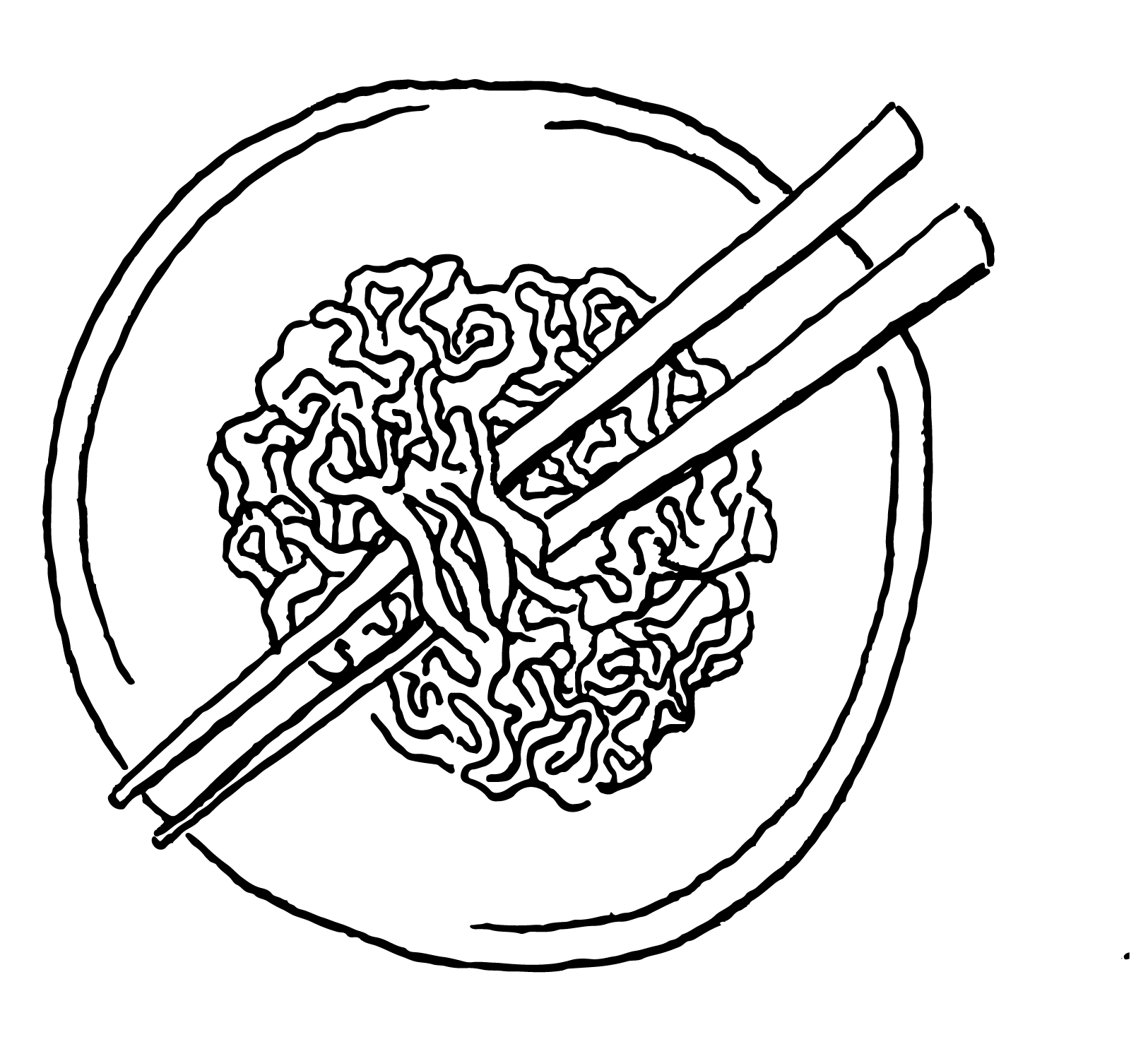
I did see you with a book once at the Tim Hortons, eating ramen noodles with a tome next to you, perhaps Eldest, its red coat and gilt letters sitting just out of reach of your hands and I wondered if your reading was banal and nostalgic—or, perhaps, sarcastic, self-assigned homework for a scathing critique of the novel’s oft-cited failings— I remember how snarky you were, or could be, latent gems of wit a backbone, buried so deep it rarely surfaced, emerging as defence after months of silence, swiftly cutting in its descent, or maybe it was always there, but only unveiled around friends— I saw you with your friend a few weeks ago, a girl I’d passed in hallways and classes and bus stops and she must have noticed, must have looked me up, because she followed me back on Instagram; and I keep seeing your hair, keep being startled when it sweeps past and I see it’s you, keep wondering what I’ll say when I’m brave— maybe hi, maybe I wish I could say I miss you, but I’ve never tried, since I barely knew you, and you can’t see my face with a mask on anyway.
Rebecca Kempe is a writer and multidisciplinary artist from Ottawa, Ontario. Her work has been published or is forthcoming in flo., The Ampersand Review, and elsewhere. Her plays Each on Our Side and Signal Breakdown were performed in the 2019 and 2021 editions of the Youth Infringement Festival, respectively. She recently self-published There’s Nothing to See Here/Nothing Happens Here, a two-part zine which explores the stagnant (but at times welcome) stillness of the suburbs she grew up in through photography and prose. More of her work can be found at www.rkempe.ca and you can find her online as @arbeeko.
Thick fog, hanging in the air like a bleak curtain. Remembering, picturing blurry silhouettes standing three feet away. Days like this are easiest, the atmosphere so washed out even dull echoes feel real. Days like this are hardest. A self-indulgent lie. On the ground, lying on a bed of pine leaves and moss and torn bits of receipts and oak leaves from last September. Fists clenched, gripping phantoms that will never heal. Rain falls and the echoes grow louder. If only they were here, corporeal, with matching droplets running down their faces. Would you scream, demand explanations? Or stare, until someone looked away?
Rebecca Kempe is a writer and multidisciplinary artist from Ottawa, Ontario. Her work has been published or is forthcoming in flo., The Ampersand Review, and elsewhere. Her plays Each on Our Side and Signal Breakdown were performed in the 2019 and 2021 editions of the Youth Infringement Festival, respectively. She recently self-published There’s Nothing to See Here/Nothing Happens Here, a two-part zine which explores the stagnant (but at times welcome) stillness of the suburbs she grew up in through photography and prose. More of her work can be found at www.rkempe.ca and you can find her online as @arbeeko.
your eyes protest | it shouldn’t be this dark when you wake up | turn the lights on | pack umbrellas, tickets and cameras | when the sun rises you will uncover its beauty | get dressed | stumble to the bus stop | board, crash asleep | when your brain wakes, uncover your destination | when the noise fails you will uncover your mother’s reticence | why leave when there’s everything you need, she said | is there anything to see there?
how do people breathe here | the wall of walls is suffocating and blind | alone, wandering among glass facades and jammed traffic | wires crisscrossed above your head | everything is timely, so orderly and narrow | could you survive the pool of raw ambition | when the crucible burns brighter, will you melt or will you harden?
gawk at city dwellers | walk in circles, puzzle your way through public maps | wander the busy parts of the city that aren’t real | so spoiled, does anyone actually live here | the fragments of scattered hopes are everywhere | buskers playing horns on a sidewalk | colourful graffiti fills entire streets | every door a history, every street a museum | is there quiet here, or is quiet for the weak of will | for those with shallow dreams
how exhilarating must it be to live here | not forever, but for a while | feeding on the energy but not adding to it
girls hover near a theatre, illuminated from behind by car light | the square is empty, announcing nothing but its own existence | you stumble back to the bus station | camera out, capturing skyscrapers and moving cars | everything you ever wanted was here | but nothing you truly needed
Rebecca Kempe is a writer and multidisciplinary artist from Ottawa, Ontario. Her work has been published or is forthcoming in flo., The Ampersand Review, and elsewhere. Her plays Each on Our Side and Signal Breakdown were performed in the 2019 and 2021 editions of the Youth Infringement Festival, respectively. She recently self-published There’s Nothing to See Here/Nothing Happens Here, a two-part zine which explores the stagnant (but at times welcome) stillness of the suburbs she grew up in through photography and prose. More of her work can be found at www.rkempe.ca and you can find her online as @arbeeko.
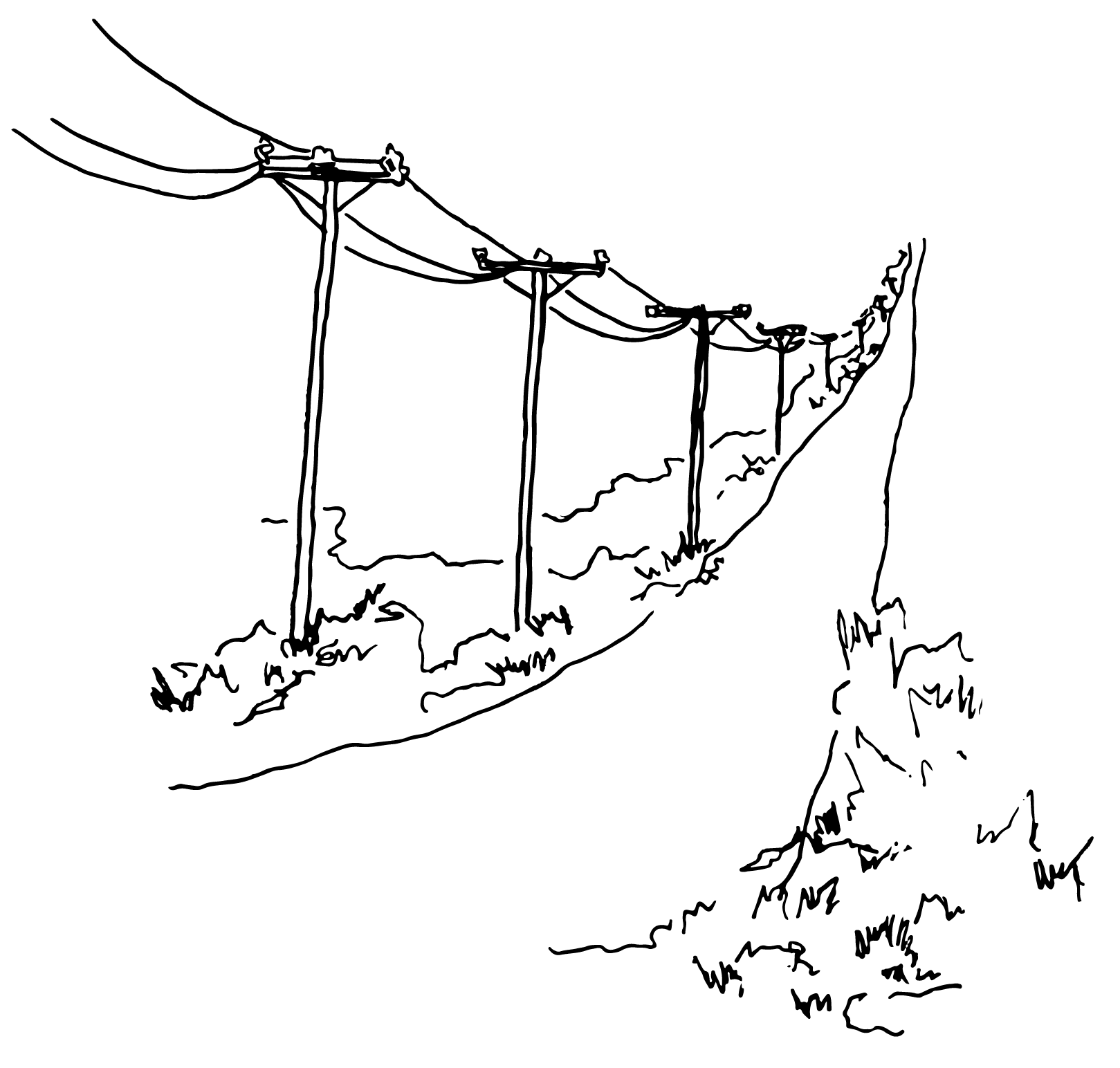
I remember a straight tarred line piercing this dry and arid land, there was a single powerline to the left of me as I headed to a murky lake, the shrubs that adorned the land were perpetually thirsty due to the seemai karuvelam, a thorny bush left behind by the british as a gift that matched their colonial tendencies, the seeds of the bush were thrown from planes to dry out the land and make it uninhabitable for the revolutionaries and now the only things it deters are pesky cyclists like me who enjoy peddling in deserted roads like this, heading to points of interest in the middle of nowhere, such as the murky lake which houses tiny fish, and then I cycle back home with the sun now leaning closer to the powerline, this road is as constant as my isolation, unceasing and persistent, though at times turning and showing signs of becoming less bumpy and less fraught with thorns. The land being consistent, the wind being the only noise I hear, it carries no scent with it except the sense of freedom that resonates with me.
Omar Shaji is a first year Undergraduate English Major with a concentration in Creative Writing. He hails from India and is an international student who’ll be going through his winter term from January 8th. He finds the act of talking about himself 3rd person odd and hopes that you bear with him as he tries to sound ‘correct’. Omar’s experiences with Carleton, resting on the unceded algonquin territory is acknowledged by him and the rest of the students at Carleton.
I then think to the light refracting through a summer rain,
To the rainbows you speak into existence.
Nick McKay is a 22 year old English major in their 4th year at Carleton University. They are a non-binary and pansexual poet, but enjoys writing in all its forms, from criticisms to fiction to poetry. While they have written many pieces, they are only at the beginning of what they hope to become a long journey of being published in many different spaces.
There are days I kiss my boulder and leave bloody prints of my love on it.
The boulder is rough, but my lips are bleeding for me.
I chew them away till they are soft enough for my boulder.
There are days I punch my boulder, and leave bloody prints of my hatred on it.
The boulder is rough, and my hands bleed because of it.
Yet while I grit my teeth and propel the boulder with my fury, I find I am smiling.
Nick McKay is a 22 year old English major in their 4th year at Carleton University. They are a non-binary and pansexual poet, but enjoys writing in all its forms, from criticisms to fiction to poetry. While they have written many pieces, they are only at the beginning of what they hope to become a long journey of being published in many different spaces.
your stanzas are like carefully painted blood draining straight out of a frida kahlo self-portrait
your speech bubbles look to me like wooden alphabet blocks that spell out
something along the lines of “i swear i’m all grown up”
the sky is past its expiration date
swirling bruise-purple accumulations
choke the construction-crane-ridden horizon
the highway roaring with jealousy
stuck in its unilateral dimension
a small tendril of greenery reaches out to a pool of motor oil because it looks like a rainbow.
then it recoils, reminded once again.
Li Conde (they/them), a nonbinary amateur artist and writer, submitted three short poems: Coming of age in manic depression, Trying to moult when young, and It’s maybe 30% trauma. These works offer a glimpse of their life after having been diagnosed with type one manic depression (bipolar disorder) in September of 2021, at eighteen, after suffering a psychotic episode and being hospitalized for it. What followed was the pressures resulting from being sub-textually told they were insane by the medical establishment. Their attitude to writing and art is a therapeutic one. They ask: how can we increase our aliveness in a system that tells us we can never heal? How can young, queer, mentally ill people be finally allowed to be treated more like adults when no one trusts them? How do we “fix” lifelong diagnoses and gender dysphoria that are not supposed to be fixable?
Conde’s poetry is meant to be meticulously paced and easy to absorb. They strive to create art moments that are meaningful to everyone, and are fostering an impulse of imbibing their life with as much art and literature as possible.
you will always maintain a trace, fainter and fainter but still solid and in some ways new,
of this pizza place and
of that young face
Li Conde (they/them), a nonbinary amateur artist and writer, submitted three short poems: Coming of age in manic depression, Trying to moult when young, and It’s maybe 30% trauma. These works offer a glimpse of their life after having been diagnosed with type one manic depression (bipolar disorder) in September of 2021, at eighteen, after suffering a psychotic episode and being hospitalized for it. What followed was the pressures resulting from being sub-textually told they were insane by the medical establishment. Their attitude to writing and art is a therapeutic one. They ask: how can we increase our aliveness in a system that tells us we can never heal? How can young, queer, mentally ill people be finally allowed to be treated more like adults when no one trusts them? How do we “fix” lifelong diagnoses and gender dysphoria that are not supposed to be fixable?
Conde’s poetry is meant to be meticulously paced and easy to absorb. They strive to create art moments that are meaningful to everyone, and are fostering an impulse of imbibing their life with as much art and literature as possible.
I am tainted—oh my god, I didn’t write “God” with a big G.
Oh my GOD,
Forgive the blood on my hands,
Forgive the blood on my lips.
I am tainted, stained, and twisted.
I ask for your love once more.
I promise I won’t do it again,
I won’t live in sin.
I’ll sing a symphony slowly,
So you can love me properly.
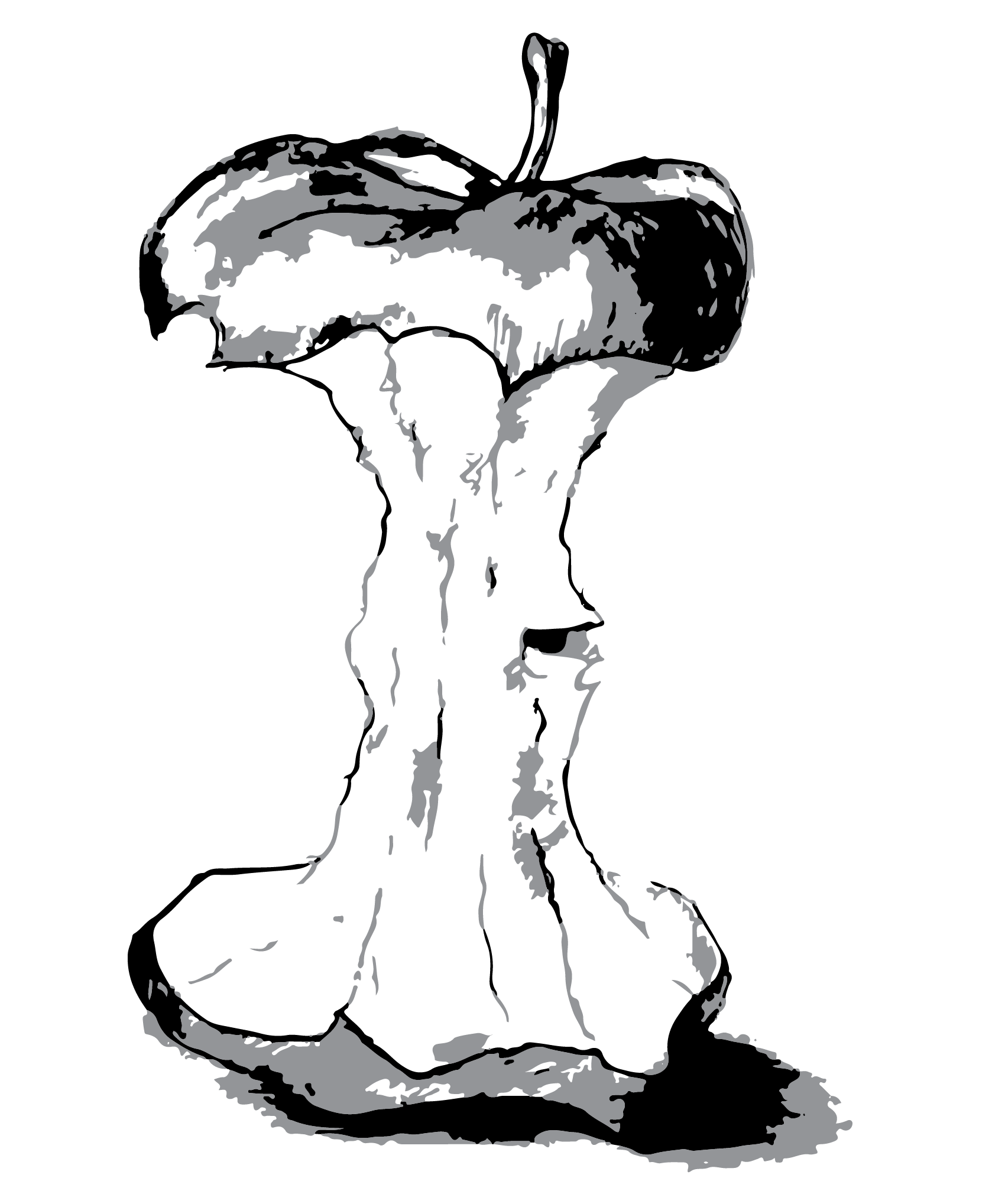
I have fallen, rotten,
An apple forgotten.
I’m moldy, filthy,
Green fuzz with small worms eating my core. An apple falling apart,
Luscious red becoming wrinkled papers,
Like the veins on my mother’s neck when she yells
That I am a sinner.
Danie Maxelus, a fourth-year English student and dedicated advocate for women’s rights, is a black immigrant Haitian woman with a profound passion for writing and reading. Danie Maxelus developed an interest in Carleton University’s writing program when she immigrated to Canada, and as a student, she continues to pursue her passion for writing. Beyond academic pursuits, Danie aspires to contribute to the university community through her advocacy, seamlessly integrated into her writing. Enclosed are three pieces that showcase her creativity and commitment to storytelling, the first is Ancestral Song. The second is The Story of my Fall. And last, The Prayer of a Sinner. Despite lacking prior published works, she is enthusiastic about learning and evolving as a writer within the Carleton community.