Author: Sumac Lit Mag

  • The King of Ithaca

    The King of Ithaca

    This Piece Features a Content Warning

    Descriptions of physical disfigurement present.


    The letter said, “I’m not as pretty as I used to be.” Underneath was written the time his train would arrive. 

    In those days you could hear a train arrive in town. The locomotive’s whistle, and its shove-shove-shove, sound across the valley. Cars were a rarity enough that we could sit in the street on hot days, stirring at stray pools of tarmac with sticks broken from the elderflower bush on the corner. 

    James is seven years old and has been preparing for this day all his life. Now he can no longer wait and sets off at a canter along the street, the flats of his leather school sandals slapping the brick of the sidewalk. “Dad! It’s dad’s train!” The railway station is a mile away so I don’t know what he thinks he’s doing.

    “Jimmy,” I call after him on that Spring afternoon. “We’re to wait here! The taxi cab will bring dad.”

    The little ones, Billy and Robbie, sit in stifled confusion on the front step, itchy Sunday shirts pestering their necks. I am happy to be in the sharp folds of my smart summer dress, as violet as this morning’s sky, the short sleeves crisp and adult. Billy trundles a small wooden horse between his feet, a toy that dad had originally crafted for James from bits of leftover wood at the building site. It overcomes little indents and tufts of weeds in between the bricks, but it stops sometimes, jarred against one of the more stubborn patches of growth. When this happens, the whinnying sound Billy makes rises in his throat, a little louder with every shove of the toy. Sometimes it takes six shunts or seven, Billy’s horse impression fuller and throatier until it is the only sound we can hear. 

    “Billy!” I hiss at him. “Hush now.” But as I say it the horse suddenly progresses along the pavement and his horse sounds return to a whisper. He looks up at me. 

    They remember nothing of their father. Robbie was born in the final year before the war. The Czechoslovakia child, he was the last, best hope for peace. Looking back now, I wonder if there were a thousand children like him, or a million—their conception executed in furious action, countless parents rubbing together in the night time of so many countries back in 1938, that fevered final season of love. Desperately did they aim to stave off the tanks and trucks and rumbling divisions that were to march across Europe. 

    And Billy is the war child, bred of it, dressed in it, fed the barren starch of it. He knows nothing else but adults with their constant worries, and curtains that are guarded and drawn tight. Like Robbie, he refers to the man we await today as father, not dad. Having known powdered egg and whale meat all his life, he is the easiest to feed for he knows nothing else. Sweets and treats are merely myths imparted to him by me and James, simultaneously abstract and real, a pantheon of chocolate bars and chewy candies of which he has only ever heard tell. As we regale him with these tales, recounted by the fireside, curtains pulled firmly as the first lamps of evening are lit, I think beyond these nights and imagine how it will be for him when he understands. There is more than war. Mum tells me that it will be over in a number of weeks. Then there will be sweets and oranges and bananas, for which I long, not to feed to myself, but to give to my little brother, to cram into him, to pour him hot chocolate, and to force feed him biscuits and cakes and cream puffs and sweet buns. It’s over, Billy, I will whisper, it’s all over, and I will push more chocolate bars and walnuts and peppermint candy canes into his hungry little mouth.

    I am ten years old: half peace and half war.  “Mum!” I shout over the little boys’ heads and up into the house. “We heard the train!” Our home is tiny and can barely contain us—two rooms upstairs and two down. “Workers’ cottages” they optimistically label these row houses. The tin bath by the stove in the kitchen, the outhouse in the yard. Only dad is strong enough to latch the coal hatch door properly, and he has been away since 1942. 

    There is a harlequin pattern of tape crisscrossing the window panes to stop the glass flying should a bomb drop nearby. Once—when had that been? Last year? The year before?—Mum heard a clattering outside and went to see. Along the rooftops of the houses opposite, as merry as a performing horse, danced a Messerschmidt 109, rattling the terracotta tiles with cannon fire. Horrified, she realized all four of us were upstairs that morning, bouncing on our beds. “Get down here NOW!” screamed that quiet women. But the plane flew on, to impart different deaths to different children.

    James, cut short by my shout, turns now and runs back toward us. From the bottom of the hill we hear the gentle trap-trap-trap of the milk cart horse. We pay it no attention as it trundles past us. Nor to the posse of Spitfires that immediately afterward shudders the skies with its gallop, France-ward in its flight. We have seen a thousand flurries of planes this year, seen them chase the Nazis down, seen them burst open in flight, spill their flaming passenger into the blue night, seen them hit each other and fail with florid trails across the robin’s egg of a July sky.

    The train whistles again. It is going to pull out. Dad will be on the platform, helped down from the carriage by the porter or the station–master. All we know is that he was in Italy when it happened. He has made his way back on hospital boats through multiple stations of the injured, places that mean nothing but news stories on the wireless: man pitted against armour–clad man, clashes of steel swords and high–prowed war ships, monstrous sieges and flames in the night. Names romantic and fearful: Syracuse, Tunis, Cairo, Gibraltar, Casablanca; then a year in a hospital in Glasgow; and finally to nearby Brighton. The blindness from the blast lasted only six weeks; he is recuperated sufficiently to hobble on crutches, his last letter said. He has a cage of ironmongery to heal the shattered leg, but he can move on his own now. His chest wound is also better.

    But we have also been prepared by Mum, as she read from his letter: I was injured in the face, Love. I’m not as pretty as I used to be. We don’t know what that means. We’ve seen the ones they call the “guinea pigs,” the pilots who made it out of their burning planes but may have wished they hadn’t—noses, lips, eyelids no longer as distinct as once they were. We have seen men come back with jaws blown off, noses or eyes left on the bitter beaches of Dieppe or the salty meadows of Carthage. We don’t know what Dad will have wrong with him, but we know it is something. 

    I stare down the empty street. After knowing for weeks that this day would come but never picturing him, I suddenly imagine a man with Dad’s vest and trousers, his brilliantined hair, dark as a pit pony, but his face skewed, blurred, ripped and pink, mysteriously obscured.

    I’m not as pretty as I used to be. Silly Daddy: Men aren’t pretty. But then I understand. This is that same blithe understatement I hear them use all the time. Since the war has started I have heard men who have lost a leg say, “My dancing days might be over.” And a man blinded by gas in the last war might say, “Read that to me, love. I don’t have my glasses.”  

    I turn away from my little brothers. Dad’s letter—breezy, quietly funny, all chuckles and silliness—was patching over a broken face, like he’d nicked himself in the front of that winter mirror and was dabbing at it with a little patch of toilet tissue. What did it matter to the little boys? They never knew him when he was strong and handsome. 

    Out comes Mum now, almost as short as me. She wears her “Sunday best” although we haven’t bothered with church, not since the war began. I glance around at her. Billy and Robbie stand up, they hold hands, and then Billy takes Mum’s hand. I don’t go over to them. It will be minutes now, just minutes, until the taxi cab turns up the road and to our front door. There has never been a taxi call at our house before. Who would we know with that kind of money? And then I know I won’t be there to greet it.  As much as I want him back, I don’t want to see him.

    “Sally? Where are you going now?” I hear my Mum’s voice but I don’t listen to it. I walk down the street, the herringbone of bricks dissolving to a blur under my scuffed Mary-Janes. I don’t have to go far; Auntie’s house, identical to ours, is just twenty yards down the street. By the time I reach the front door, which is open to the summer’s breeze, I have broken into a run. I push my way straight through to the kitchen. She is making a pie. 

    “Is he here?” Auntie Edith drops the pot on the table and rubs flour from her hands. “Is the taxi here?”

    Then she sees it is something else. “What is it?” First she is scared—too many people have walked through the door with the ultimate news in the past six years for us all not to feel that sickness whenever anyone enters our house. Then she understands: this is nothing more than a child, over-wrought, utterly exhausted by five years of dealing with this mess, this war of men. So instead of speaking more, she holds my head in her apron as I cry.

    There is nothing more essential and nutritious than the breaths you take as you sob into the apron skirts of your favourite aunt when you are ten years old. In a minute I can speak again, and in two I can elaborate. She sits me on a stool and gives me a plum to eat. She disappears into the street for a moment. I hear her call to her sister, “I’ve got Sal in here. She won’t be a minute.” In the intervening silence I imagine she has signaled my upset in that invisible language these sisters have.  

    “He’s still your Dad, Sal. And he needs you to be brave. You are the bravest girl I know, doing all these years without him. Now you can be brave one more time.” Auntie makes it sound so easy, like putting one foot in front of the other. Then she is holding my hand, and we are walking back along the brickwork. 

    “Are you alright, Sal?” asks Mum. The boys are oblivious. 

    “She’s great,” says Edith, and she squeezes my hand as she looks down at me. And then we hear the laboured shift of a gear box negotiating from first to second gear. A car is coming up the hill. When we hear the gears shift again we know the moment the cab will turn the corner and appear. I can see it now as I saw it in that moment, and as I did then, I wonder always: Where did this man go? What did he see? Tied to the mast with resin in his ears, this lowly brick layer—my father, transported and transformed, in Carthage, Pompeii, under the smoldering slopes of Vesuvius, to the very gates of Rome. He, and ten million more, the no-ones who destroy the Cyclops. My father, in the land of the Lotus-Eaters.

    Now he is there, out of the taxi, hobbling across the street and into our clasp. He is returned to Albion. His leg is in its scaffolds, but his arms are already hoisting me up so I can look and at him and kiss him on that wounded face which is so much prettier than before. 

    Andrew Riddles is originally from Britain and moved to Canada in 2003. He has worked at Carleton University for fifteen years, during which time he has won two prizes in the CU Writing Competition. As well as writing, his hobbies include singing opera, getting tattooed, and travelling at every opportunity he can find, with Japan, Syria, and Armenia among the highlights.
  • Unpunctual Buses and Growing Sideways

    Unpunctual Buses and Growing Sideways

    The expectation that my first step on campus this fall would declaw the kindred estrangement that had latched onto me since 2020 was one I should never have set. For the second year in a row, I was late to my first class of the semester. At least the unreliability of public transportation was a familiar constant. I arrived 15 minutes into the psychology lecture and was forced to crawl over the stuffed backpacks of first-year students to find a seat in the massive auditorium filled to the brim with hundreds of faces—a stark contrast to the complete anonymity of last year, when everyone’s yawns were concealed by thick fabric that had become a second skin. I hadn’t realized just how deserted the campus had been last fall, until it had seemingly transformed into Times Square over the summer. I’d become so accustomed to desolate hallways in my senior year of high school that I’d become ignorant of its characteristic hustle and bustle. I wondered if the first-years—the first wave of students to have had a proper high school graduation in two years—could conceive that I got lost on my first day of university because orientation was online when I was their age and I was no longer familiar with the imminence of in-person classes. I wondered how I could ever be whole again after a global overturning severed my life in two, split me open, and unravelled my insides. I wondered how I could grow if all my formative memories were from a time when the world was an entirely different place—one that no longer existed. And I wondered why everyone around me seemed to believe it still did.

    The Thursday before March Break of 2020 my English teacher asked our class for advice regarding whether she should cancel her family’s trip to Disney World now that “coronavirus” was becoming a household name. The replies were mixed, some echoing her concerns about being quarantined in the United States, others suggesting she go in case this were the last time in a while that she could travel outside the country. However, the prospect of our very own suburban school getting shut down over this hypothetical, distant danger was absurd to us—except for one guy in the class, who confidently claimed we wouldn’t be coming back after the March Break. We dismissed this allegation as being “too drastic,” yet that evening, my mother somberly announced all schools would be closing. The teenage prophet was nowhere to be seen on Friday. 

    Most of my teachers went about our last day as if it wasn’t about to become a historical date, reminding us that the flu was just as bad as this new virus. My biology teacher, who chose not to cover any new material, was the exception to this mindset. He had decided pulling out a textbook was futile because he was positive we wouldn’t see each other for at least a year. Instead, he taught us an Italian card game. It all seemed melodramatic at the time, but given we had just covered the unit about viruses before the one about animals “due to current circumstances,” I began to wonder if he was right. That evening, I booted up the PS4 I had received for Christmas, figuring that—if nothing else—I would have time to explore a fantastical land, from the comfort of my basement, while my parents were gone the grocery store for over two hours because the panic that we would soon grow numb to had only just set in. I had just turned 16 at the time. I was coming off the high of directing my first short film, sinking back into an untreated depression that I quietly knew would not be helped by isolation—but I had no clue just how much it would worsen, especially now that I would be stuck 24/7 with parents who didn’t believe a teenager could be having a quarter life crisis.

    Ironically, I stopped wearing a metaphorical mask during the quarantine that lasted two weeks, then three weeks, then six months, as. I didn’t have to perform an identity for my classmates anymore. For as long as I can remember, I had been muting myself to please my friends even though I never seemed to be enough for them. In the confines of the four walls of my room, I didn’t have to pretend to have a crush on a guy I would haphazardly select from our grade to fit in with my friends who were already anxious about finding a date for prom while I had been repressing my sexuality for ages, paranoid they suspected me of lesbianism at our French Catholic school. Instead, I found solace in online communities where I could rave about my interests without being ridiculed for them in the cafeteria at lunch because I couldn’t fathom what other people thought about in their free time. Online, I didn’t have to face judgemental stares at my fidgeting and panic attacks. But it was also incredibly isolating for my only safety to be found in the phone that my parents would regularly confiscate, convinced technology was the cause of my depression. I regularly forgot the outside world existed. I pulled away from old friend groups because I had finally realized I might be better off without their diatribes, but also because they made me aware that my slew of neglected mental health problems was burdensome for them to see. I became friends with the five a.m. glow of the sky, unable to sleep because I knew that if I did I would have to wake up to yet another day of hazy disappointment.

    As soon as schools reopened in September 2020, I relapsed into old habits of keeping suffocating company because it was the only constant I knew in my life. During my senior year, all my friend groups, old and new, imploded. Some quietly, and others very dramatically. I went through my first relationship and what I hoped would be my last all in the span of a week. The year I anticipated would be like a coming-of-age film went from a disaster movie to a soap opera that had no series finale in sight, despite being a dozen seasons too long. I emailed my English teacher, venting the grievances my parents discredited after I had flipped through the grainy, decade-old pictures populating my pink DSi’s photo gallery, crying over how the girl looking at me through the screen could never have predicted she wouldn’t have the opportunity to wear a prom dress like the ones she had been drawing. I wanted closure more than anything; some confirmation I could move onto the next stage of my life instead of my childhood and adulthood blurring together in a muddled, premature growth spurt.

    And now, in my psychology class, I found myself steeped in jealousy for the sea of first-year students that populated the massive, foreign auditorium. I’m ashamed of the juvenile envy that knots my insides, and yet I can’t shake my resentment of the fact that they had a normal senior year, and I didn’t. We were told our sacrifices would be worth it because we would get a normal first year of university, unlike the class of 2020, though, that ended up being a lie. I still cry when I think of how they got to walk across a stage of applause to collect their diplomas, whereas I sat in my living room watching a malfunctioning PowerPoint livestream on my television. Sometimes I bite my lip so hard it bleeds when I wonder if they know how good they have it. That they are actually experiencing university. That they might actually transition from being teenagers to being adults thanks to these rituals I was denied—and yet, I am happy for them. I am bitterly happy that they are the first wave of students in two years to complete a proper transition, because all I can hope for is that they might be slightly more prepared for the challenges ahead. Without these ceremonies, it’s as if I was cryogenized at 16 years old while simultaneously being totally disconnected from that version of myself. I’m sure Freud would’ve loved me. I would never wish this disorientation on anyone.

    My face mask marked me as a minority among the hundreds of uncovered faces, rendering it hard to believe there was ever a time when we would get reprimanded for standing too close to our friends because we were trying to have a conversation without constantly needing to repeat ourselves through thick fabric—but all these protocols had dissipated over the summer. This first day of school was overwhelmingly conventional, and I was left wondering why there was a gaping cavity in my stomach at all times when there were barely any imprints of this pandemic left. After chopping the hair I hid behind for 17 years, going to the university I never expected to attend, getting a driver’s license, and hitting the legal drinking age, I am virtually unrecognizable from the person I was when we were naïve enough to think quarantine would be nothing more than an extended March Break. I often lay awake in my room, which I rearranged to escape its overbearing intimacy, questioning if the last two years even happened, if there had ever been a time when my hair was long enough to collect the cobwebs of old friendships.

    For two years, I expected I would be overjoyed when life finally made sense again, but I could never have predicted that after the last two hellish years, I would be craving the familiar state of limbo between real life and the alternate, sterile reality that reeked of the clinical tang of hand sanitizer. At times, I catch myself dubbing the latter a “fake life,” but I keep trying to remind myself that there really was a time when the word “mask” was connoted with Halloween and not a horror movie come to life. How do you reconcile two parts of yourself? Was I shrouded in the darkness of my own mind for too long to avoid growing sideways?

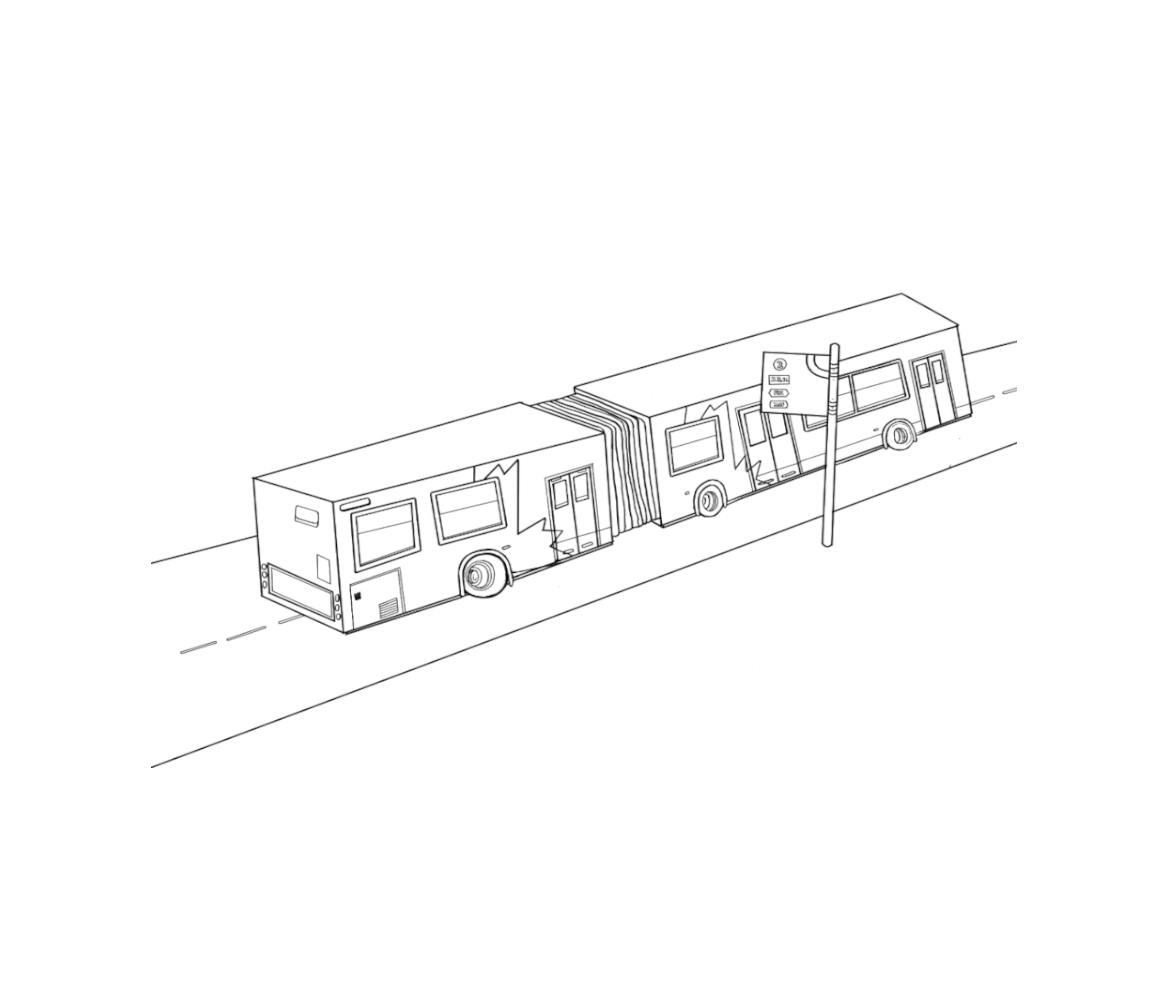
    The amphitheatre reanimated itself at the professor’s dismissal, and a flurry of students barrelled down the stairs, keen to be anywhere but here. Last year, I could bolt down the sidewalk to catch the bus, but that proved problematic with the swarm of students now populating the pavement. I was less than 10 meters away from the platform when the bus left me in the dust. But it’s okay. I’ll just wait for the next one. I’ve got time.

    Maya Meloche is currently completing a major in Film Studies with a minor in English. If they aren’t spending time with their cat, they’re probably watching a movie, or watching a movie with their cat. Maya’s passion for writing goes back to dictating stories for her mother to type on an old laptop in the late 2000s and writing fantastical stories concocted from the boredom of after-school programs in the suburbs. In 2019, Maya and their high school friends’ short film was screened at the DIGI 60 film festival in Ottawa. Maya aims to work as a screenwriter someday.

  • How Far We’ve Come

    How Far We’ve Come

    If you said, long ago when we were
    young, when the Sun flew like an idol
    and mothered us, that we’d crouch here…
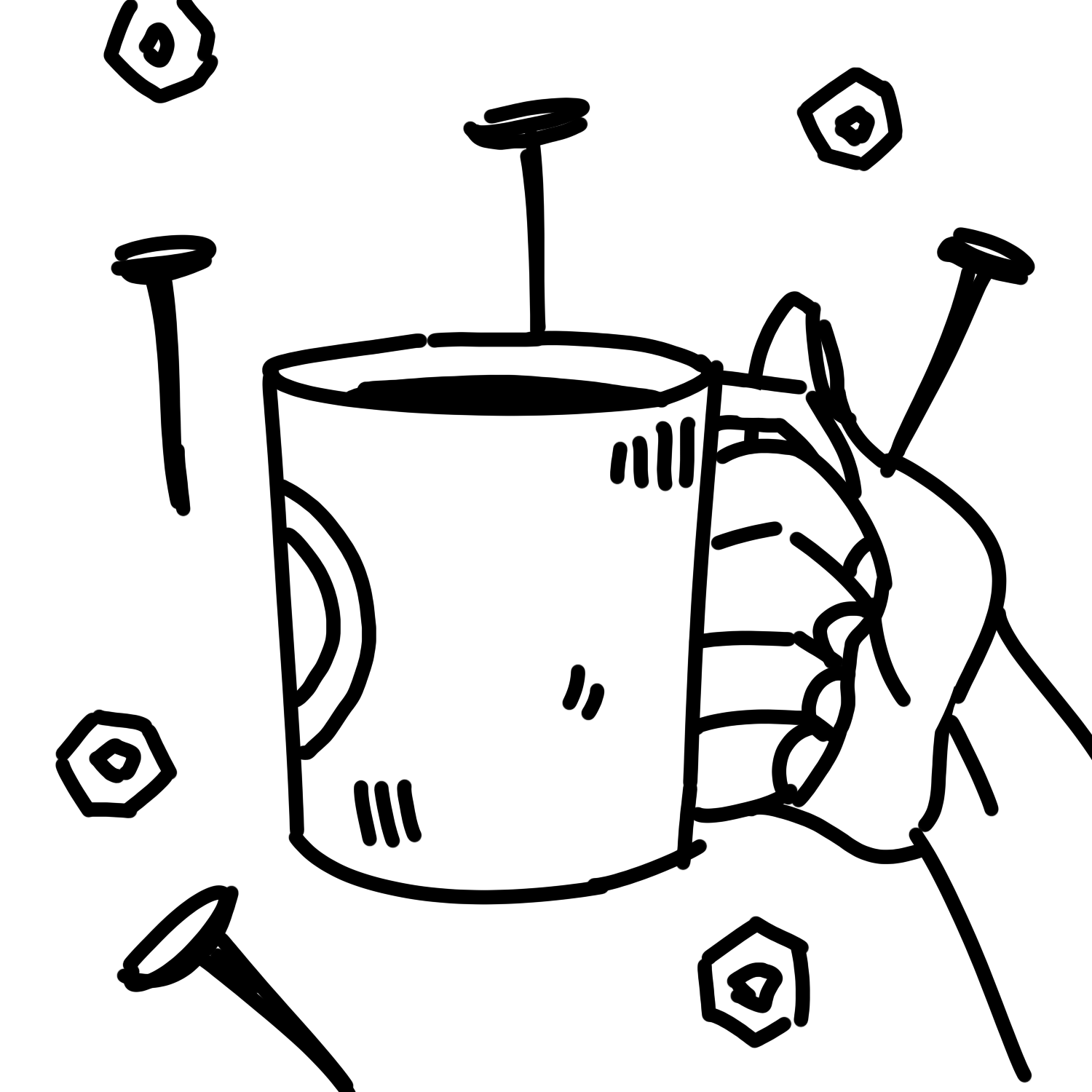
    that we’d bang together this composite
    house—hands on mugs, our porcelain tools,
    and sink nails into Ikea parts,
    I might have shrieked chimpish grunt-words
    at you—become suddenly, bloodily single.

    But we’re here, hunched over glue-
    bound slabs of sawdust, grain painted on.
    The sunset fists through hung blinds—
    its knuckleprint on dust fleck gravestones
    set in bedframe. We mimic reproduction
    on our mattress, grasp thighs and
    pin each other down. A haircut
    held in wax, stupid-looking
    against your nakedness. And the dust
    stirs, only to land on the mug-hammers,
    so, we speed up our construction.

    Nathan Erb is an undergraduate student in Carleton’s English program, concentrating in creative writing. His work has been published by the Carleton English department and FASS.


  • Wistful Seasons

    Wistful Seasons

    sunscreen-covered cheeks mark late spring
    when blisters blossom on palms and a waft
    of overripe coconut dances with freshly cut grass
    and morning dew mixes with smiles
    that grow with each jubilant bell ring
    all too soon giving in to the greedy sun swallowing
    pigtails and acrylic rings with no regard
    for SPF 50

    and autumn comes when
    the curtains open again
    and taught lips carry a pre-recorded script
    for it is impossible for someone
    to whisper me my lines
    in the never-ending riot
    i’ve harboured in my chest

    on Sunday mornings, roaring lawn mowers are
    silenced by thick blankets that engulf the disquieting
    voices whispering a million reasons to fear Monday
    birthing an echo chamber
    a furious cacophony
    a monster

    a monster dark like midnight
    stealing the moon, robbing the stars
    its tempestuous moods forging
    a twisted mutualistic marriage
    in a world where divorce papers
    don’t exist

    but I will save the moon
    tear it from the black hole
    and break character for once
    because summer always comes
    and the breeze will hold the scent of
    apple blossoms blue skies
    and sunscreen

    Maya Meloche is currently completing a major in Film Studies with a minor in English. If they aren’t spending time with their cat, they’re probably watching a movie, or watching a movie with their cat. Maya’s passion for writing goes back to dictating stories for her mother to type on an old laptop in the late 2000s and writing fantastical stories concocted from the boredom of after-school programs in the suburbs. In 2019, Maya and their high school friends’ short film was screened at the DIGI 60 film festival in Ottawa. Maya aims to work as a screenwriter someday.

  • Your Favourite Red Pen

    Your Favourite Red Pen

    A Note on Formatting

    This poem is formatted differently. Because of that, it can’t appear as text on this page. Instead, the poem is inserted as an image. Alt-text is available.


    Amid the achromic graphite pencils and the fine-tip washable markers and the ballpoint gel pens, you pick her out from the bucket. You believe that you can have any one you want. The fresh red pen catches your eye, and you lazily decide that it means she wants you too. No. You uncap her, revealing innocence that you crave: a shiny new toy. No second or third or fourth or fifth thoughts. You call it a painting: the ink that spills along the blank paper. But it’s nothing like that. You cannot cultivate art from this. No drawing between the lines. No. You decide rules don’t apply. Casting permanent stains on the open notebook, you line the pages in crimson. You write no words yet you leave nothing unsaid. [new stanza] You use up her ink until you decide you no longer like the colour red. And that night she washes two and three and four and five times with soap and water. Out damned spot. Footnote: Shakespeare, W. (1992). Macbeth. Wordsworth Editions.

    Jennifer Goodman is a third-year student majoring in English with a concentration in creative writing. She has had a passion for writing her whole life and it has only grown with age. In 2021, she began working as a ghostwriter for The Urban Writers and has published numerous non-fiction novels under a pseudonym. In 2021, Jennifer was longlisted for the CBC Non-Fiction Short Story prize for her story, “Raining Glitter.” She hopes to be a full-time writer in the future.

  • Grocery List

    Grocery List

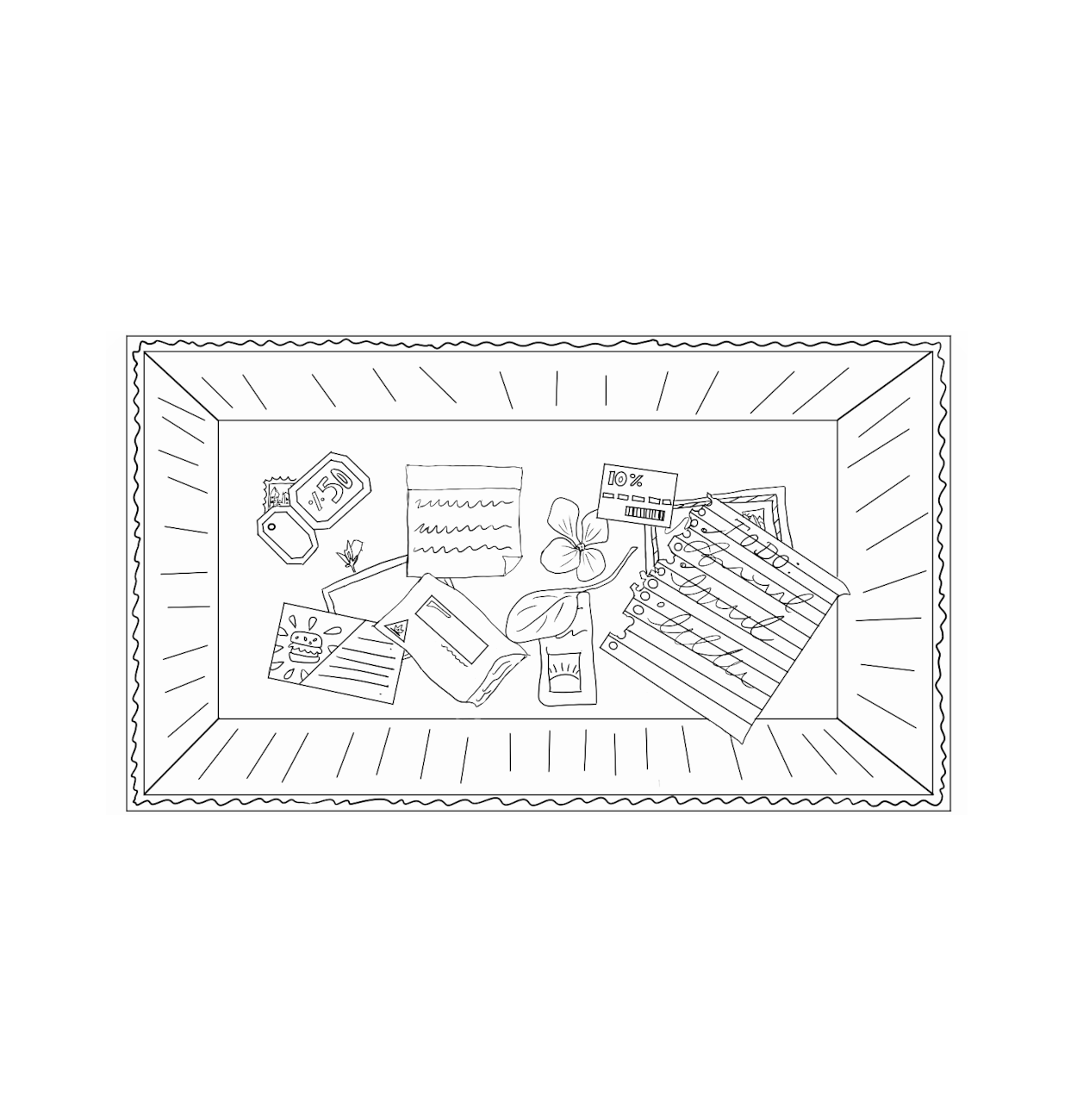
    I started collecting them
    like a middle-aged woman
    collects coupons
    saving them
    like mementos
    of strangers
    whose faces I’ve never seen
    but shopping habits
    I know all about

    The busy man
    writes his
    on the back side
    of a ripped
    gas bill envelope
    listing
    TV dinners
    Chef Boyardee
    Flowers for mum’s bday

    The mother
    writes hers
    on the lined sheet
    of a bright blue notepad
    A white chevron print
    frames the words
    TO DO
    1 x condensed milk
    Tomato sauce14 oz can
    Cherry tomatoes
    Wagon wheels for Chloe

    The college student
    (male, presumably)
    scribbles
    Pickles
    Frozen food
    and chicken titties
    on a crumpled
    green post-it note

    I’m not sure
    what made me start
    holding onto them
    but now
    whenever
    I find myself worrying
    about inflation
    or humanity
    or the state of the world
    I open my box
    of found grocery lists
    and can’t help
    but chuckle

    Danielle (Dani) Pybus (she/her) is a third-year English and creative writing major. She loves all things whimsical and silly and writes mostly about the small things. She is minoring in French.

  • Do We Ever Really Forget Our Parents

    Do We Ever Really Forget Our Parents

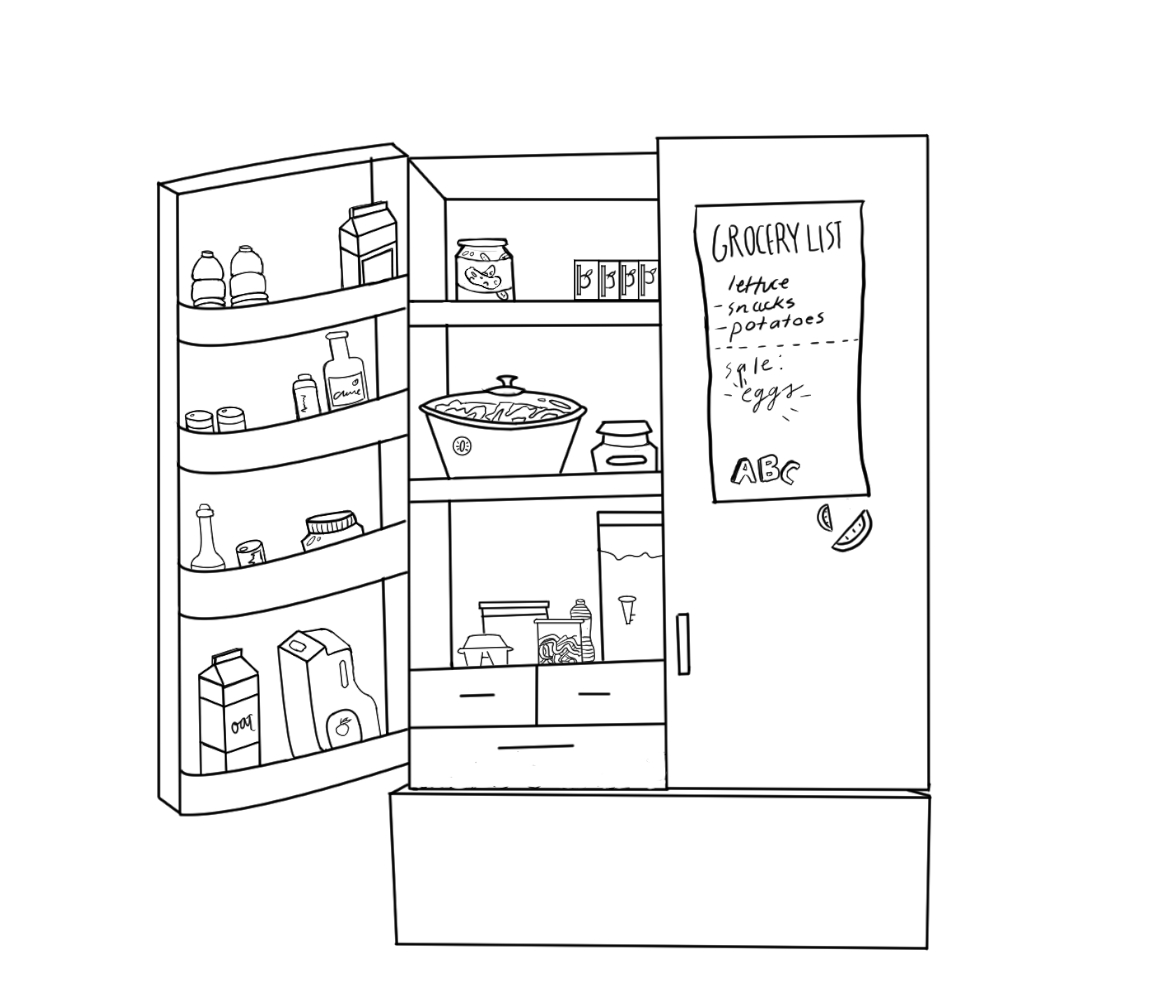
    I went into the Superstore looking for a head of lettuce.
    In the snack aisle, I found my sixth grade classroom:
    Go-Go squeeze and fruit cup,
    cherries eaten first, pears last.

    I haven’t spoken to my mother in a few weeks,
    but I could have sworn she was standing right next to me
    in the fluorescent light of the supermarket,
    rummaging through the clearance rack
    looking for discounted shampoo and conditioner,
    maybe a cheap treat:
    This is something I learned from her,
    along with the universal truth
    that you always forget to buy something
    even if it was on your grocery list.

    My father has never been the conversational type
    but I called him last night
    to ask how he cooks his brussel sprouts.
    I found a pack of them in the back of my fridge,
    whispering that they would start to rot
    (Turn to sludge)
    if I ignored them one day longer.
    So I called up my dad
    knowing that I could only ever eat them
    if they were made his special way.

    When I finally got home from the store:
    snacks stacked in the cupboard,
    produce stuffed in the fridge,
    but the lettuce drawer still empty.

    You always forget something.

    Danielle (Dani) Pybus (she/her) is a third-year English and creative writing major. She loves all things whimsical and silly and writes mostly about the small things. She is minoring in French.

  • Baba Yaga’s Breakfast Cereal

    Baba Yaga’s Breakfast Cereal

                            Remember 
                               the three 
                               little pigs 
                              how they 
                            smoked 
                          upthe 
                    chimneys 
            and rafters, 
            how they

            sang like 
            moths? 

    Wallpaper’s 
               peeling 
    again— 
                    but it’s 
    any wonder, 
                    given
                    it’s halfw 
               ay between the 
            sill and the frame,

            halfway between
               light and dusk. 

                                                And then, 
                                           some
                                                days 
                                                                 are just 
                                              for red sweaters, 
                                     peach-flavoured 
                                 candy, and yellow

                                               stitches like
                                                      daffodils.

    Simon Turner’s poetry has been published in places, most recently by The Fiddlehead and flo. Simon lives in Ottawa with a potato of a cat, and has had four plays staged in Peterborough/Nogojiwanong, either at or in collaboration with The Theatre On King.

  • Tales of Wild Rice

    Tales of Wild Rice

    My lola was a teacher, a young 
    visionary. She taught her sons how to plant rice 
    fields that stretch to the Pacific Ocean. 
    She taught her daughter, my mama, English 
    until she spoke it with a fluent tongue, 
    ready for a life far from home. 

    In Toronto, mama tells us, “This is home.” 
    My sister cries in Tagalog, too young 
    to understand she must exchange her tongue 
    for one that prefers pasta over rice. 
    Soon, she’ll be fluent in English 
    and will no longer smell like the ocean.

    I search my memories for this ocean 
    —for remnants of a faraway home. 
    I try to recall, but English 
    makes me forget. When I was young, 
    I disliked the taste of rice: 
    too plain, too sticky—a Canadian tongue 

    my titas would say. Old memories rip at my tongue.
    So close now, I can taste salt from the ocean 
    and smell jasmine off freshly plucked rice— 
    “When are you coming back home?” 
    Lola’s voice is brittle, like flakes of young 
    coconut toasted in a pan. Over the phone, English 

    is an abandoned language. English 
    cannot capture the music in the native tongue. 
    “Soon,” mama lies, unaware her youngest 
    is listening. For years, I believed this ocean 
    of a promise. But going back home 
    is not as cheap as the wild rice 

    in the flooded fields. “First you soak the rice—”
    mama instructs me in English, 
    “—measure it with your fingers like back home.” 
    Lessons and stories flow from her tongue, 
    distracting me from the decades that go by. The scent of the ocean
    still lingers on her skin: a perfume made out of dreams and youth.

    When I cook rice with mama, I exchange my
    tongue for one that forgets English. I’m transported back to the ocean,
    back to lola’s home where she sits unchanged, forever young.

    -maia c.

    Maia Corsame is an English Masters student at Carleton. Her research interests mainly lie in feminism within Early Modern and Medieval studies. When Maia isn’t slumped over her desk writing papers, she passes the time by crocheting tiny stuffed animals.

  • Pablo

    Pablo

    The cat eats plastic, obsessively,
    like a real freak, and it seems we’re always
    ripping something out of his mouth, paper,
    some days, if he’s not too picky,
    but mostly plastic — candy wrappers,
    especially, or the bagged tortillas
    we keep in the fridge especially
    so he can’t get them. Today alone,
    he’s caught and gnawed the cellophane
    sleeve I pulled from the card for your mom,
    and the bag of litter in the closet,
    which he’s learned to open, and the chip bags
    I bought myself after my big grant proposal
    failed, and at first we laid in bed together
    and I wept, and then the cat went after
    the toilet paper under the sink
    while we were distracted, such alluring
    packages to chew, so neatly wrapped
    and stacked in their plastic cocoons.
    He drags one out for us to look at,
    laying in bed like that, and attacks it
    quietly, almost tenderly, in the doorway,
    as if to say See? I’ve brought it right to you.
    We have what we need. Dry your poor face
    and we’ll open it together. 

    Dessa Bayrock lives in Ottawa with two cats, one of whom is very loud and almost always nearby. She recently completed a doctorate about Canadian literary awards. You can find her, or at least more about her, at dessabayrock.com, or at @dessayo on Instagram, where she posts book reviews and anti-capitalist memes.